
Cranberry tipworm
Cecidomyia oxycoccana
Description
How to identify
The cranberry tipworm, scientifically known as Cecidomyia oxycoccana, is a minute dipteran insect belonging to the Cecidomyiidae family. It is a highly specialized pest primarily affecting commercial cranberry crops.
The adult stage consists of very small, fragile midges that measure approximately 1.5 to 2 mm in length. Due to their small size and rapid movement, they are rarely seen by growers in the field without using sticky traps for monitoring.
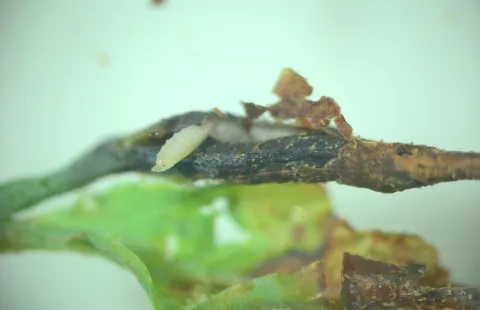
Larvae are the damaging stage of the life cycle. They are legless, maggot-like creatures that appear cream-colored or bright orange when they reach maturity. They are typically found nestled within the tightly folded terminal leaves of the plant.
The life cycle encompasses a complete metamorphosis, including egg, larva, pupa, and adult stages. Depending on climatic conditions, the entire life cycle can be completed in as little as 14 to 21 days.
Pupation occurs in protected environments, either deep within the terminal growth of the cranberry plant or in the layer of organic debris and soil beneath the canopy, which aids in their overwintering success.
What it damages
The pest specifically targets the meristematic tissue of terminal buds on cranberry plants. By feeding on these tissues, the larvae effectively destroy the growth point of the vine.
This feeding activity causes the terminal leaves to curl tightly around the larvae, forming a structure known as a tipworm gall. Once the terminal bud is damaged, the plant's natural apical dominance is disrupted.
The primary consequence of this damage is the cessation of upright growth. In response to the loss of the central growth point, the vine may attempt to produce secondary lateral shoots, which are often less productive.
If infestations are widespread, the yield potential for the following season is significantly reduced. This occurs because the flower buds, which are formed on the terminals, are destroyed during the vegetative stage.
Young, newly established plantings are particularly vulnerable to severe damage, which can lead to stunted development and prolonged recovery periods, impacting the long-term profitability of the bed.
When it appears
Adult activity typically begins in the spring, coinciding with the initiation of vegetative growth in cranberries. As temperatures rise above a certain threshold, adults emerge from the soil to mate.
Females deposit their eggs directly into the opening terminal buds. The larvae hatch and begin feeding almost immediately, continuing the cycle throughout the growing season.
Multiple generations occur throughout the summer, often with significant overlap between different stages of the insect. High temperatures usually correlate with increased reproductive rates.
Activity remains high until the plants begin to enter dormancy in late summer or early autumn. By this time, the number of generations produced depends on the latitude and local climate conditions.
Overwintering occurs primarily in the pupal stage, buried within the organic matter of the bog floor, where the insect remains dormant until the return of favorable spring conditions.
Signs of infestation
The most diagnostic sign of a cranberry tipworm infestation is the presence of tightly curled, deformed terminal leaves at the top of the uprights, often referred to as a rosette appearance.
Affected terminals often fail to elongate normally. If you pull apart the distorted leaves, you will frequently find the orange or cream-colored larvae residing inside the chamber.
Another indicator is the sudden loss of apical dominance, where a single upright shoot begins to develop multiple side branches in an irregular pattern instead of growing straight up.
Increased presence of tipworm can also be detected by observing a higher number of adult midges on pheromone or yellow sticky traps placed specifically for pest monitoring in the bog.
- Tightly curled terminal leaves.
- Formation of tipworm galls.
- Stunted upright growth.
- Presence of orange larvae in buds.
Control measures
Effective management begins with regular scouting. Using sticky traps and periodic hand-checks of the uprights allows growers to determine the timing and intensity of the infestation.
Cultural control measures, such as maintaining optimal plant vigor and avoiding excessive nitrogen fertilization that promotes overly succulent growth, can help plants withstand minor infestations.
Chemical control focuses on the application of systemic insecticides at the onset of adult activity or during the early larval stage to prevent terminal damage before it occurs.
Biological control agents, including various species of parasitic wasps and predatory insects, can naturally suppress populations but are rarely sufficient as a sole management strategy in commercial settings.
Integrated Pest Management (IPM) is essential. Growers should rotate chemical modes of action to prevent the development of pesticide resistance and carefully time applications to minimize impact on beneficial pollinators.
Discussion
No discussions yet — be the first.