
Catopsilia grandidieri
Catopsilia grandidieri
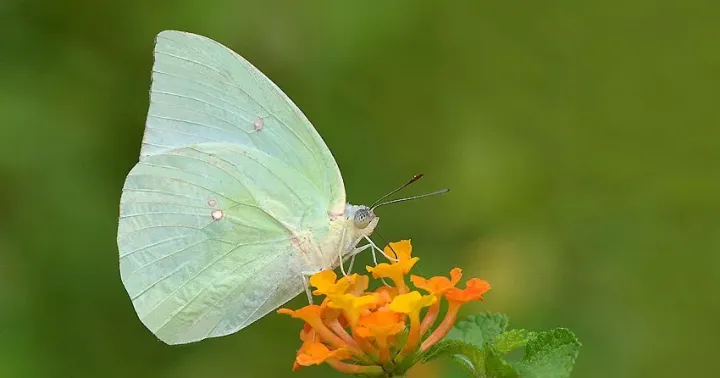
Description
How to identify
Catopsilia grandidieri is a butterfly species belonging to the family Pieridae. These insects undergo a complete metamorphosis including egg, larva, pupa, and adult stages.
The adult butterflies are characterized by a significant wingspan and coloration ranging from pale yellow to greenish-white, typical for the genus Catopsilia.
Larvae are cylindrical in shape, typically green, which provides camouflage against the foliage of their host plants, making them difficult to detect during early instars.
The species biology is highly adapted to warm climates, where they can complete multiple life cycles per growing season depending on environmental conditions.
As part of the Pieridae family, they share common physiological features, including specialized mouthparts adapted for chewing plant tissues during the larval stage.
What it damages
The primary hosts for Catopsilia grandidieri are plants within the Fabaceae family. The larvae are voracious feeders, causing significant defoliation of leaves.
High infestation levels can lead to the near-total destruction of the leaf surface, which severely hampers the photosynthetic capacity of the plants.
Damaged tissues are susceptible to secondary infections from opportunistic pathogens such as fungi and bacteria, which can exacerbate the total crop loss.
Seedlings and young plants are at the highest risk, as their limited leaf area means even moderate larval feeding can result in stunted growth or death.
In mature crops, the damage directly correlates with a reduction in yield quality and volume, necessitating active monitoring and timely mitigation.
Signs of infestation
The most early sign of infestation is the appearance of irregular holes on leaves, caused by the feeding activity of young larvae.
Accumulation of frass (larval excrement) on the leaf surfaces or beneath the host plants is a strong indicator of an active and growing pest population.
Direct observation of larvae hiding along the veins of leaves or on the underside of foliage provides definitive proof of presence.
Advanced stages of infestation lead to visible defoliation, where only the skeletal structure of the leaves remains, indicating a severe pest pressure.
The presence of adult butterflies hovering over the field indicates that egg-laying is likely occurring, signaling the need for immediate field scouting.
Control measures
Managing this pest involves an integrated approach combining biological, chemical, and cultural practices to minimize impact on crop yield.
Biological control, particularly the application of Bacillus thuringiensis, is an effective and environmentally friendly method for managing larval populations.
Chemical control should rely on the application of selective insecticides applied during the early larval stages to prevent significant damage.
Cultural practices, such as maintaining weed-free fields and proper crop rotation, can disrupt the lifecycle of the butterfly and reduce local populations.
- Use of pheromone traps for tracking and timing control measures.
- Regular field scouting to identify egg masses and early instars.
- Application of environmentally safe bio-pesticides where possible.
Discussion
No discussions yet — be the first.