
Carneocephala
Carneocephala
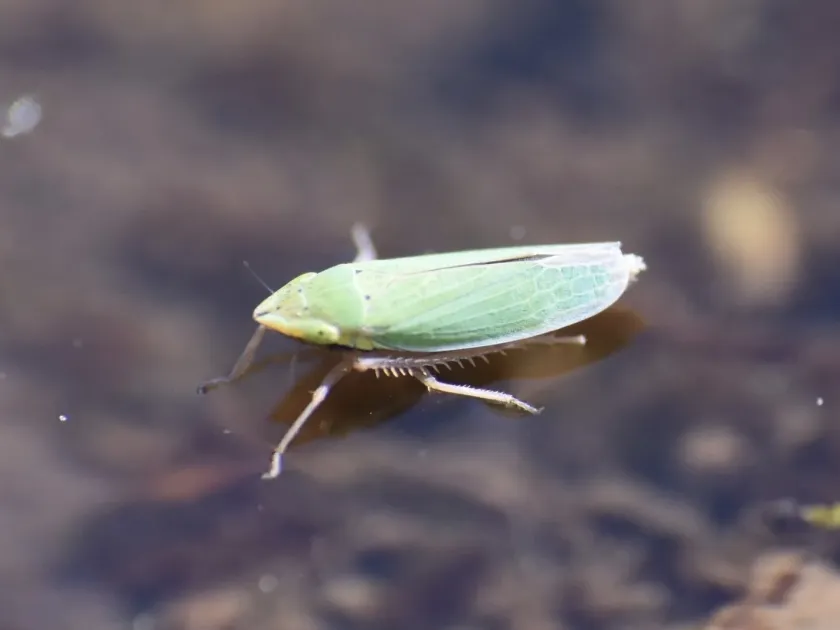
Description
How to identify
Carneocephala is a genus of leafhoppers belonging to the family Cicadellidae. These small insects are characterized by a distinct elongated head that tapers forward, which is a key trait for taxonomical identification.
Adult insects are typically light green or yellowish-green, providing effective camouflage against the foliage of host plants, which makes them difficult to spot during early infestations.
Measuring between 5 and 8 millimeters in length, these insects are equipped with powerful hind legs designed for jumping, allowing them to escape threats quickly by leaping off the host plant.
The nymphs resemble smaller, wingless versions of the adults. They are highly active and primarily reside on the underside of leaves to avoid direct sunlight and predation.
Their mouthparts are specialized for piercing and sucking, which they use to extract nutrient-rich sap from the vascular system of various host plants throughout their development.
What it damages
Carneocephala species primarily infest a wide range of monocots, including cereal crops like wheat, barley, and corn, as well as several species of wild grasses.
The feeding process involves direct withdrawal of plant sap, which causes the cells to collapse, leading to visible chlorosis and loss of vigor in the affected plant tissues.
Beyond physical damage, these leafhoppers are known to be significant vectors for various plant pathogens, including viruses and phytoplasmas that cause severe growth stunting.
Affected plants often display symptoms such as leaf curling, yellowing, and necrotic spots, which significantly reduce the rate of photosynthesis and overall plant health.
In high-density populations, the damage can become severe, leading to significant yield loss and even total crop failure if the plants are infested during their early seedling stage.
When it appears
The life cycle of Carneocephala is highly dependent on ambient temperature, with peak activity typically occurring throughout the late spring and summer months.
They overwinter as adults, finding shelter in plant debris, thick mulch, or deep within the crowns of perennial grasses, which serves as a reservoir for spring infestations.
When temperatures consistently rise above 15 degrees Celsius, the overwintered adults emerge, migrate to nearby crops, and begin their cycle of feeding and reproduction.
Depending on the climatic zone and environmental conditions, multiple generations can occur within a single growing season, maintaining constant pressure on the crops.
Infestations are often most severe during hot, dry weather patterns, as stressed plants are less capable of compensating for the feeding damage caused by these insects.
Signs of infestation
Initial signs of a Carneocephala infestation include the appearance of small, whitish stippling or bleaching on the leaves, which gradually expands as the feeding continues.
A sticky substance known as honeydew is often found on the leaf surfaces, which may lead to the secondary development of sooty mold, further hindering the plant's ability to photosynthesize.
Viral infections transmitted by these insects cause systemic symptoms such as premature yellowing of leaf margins and the overall deformation of new growth patterns.
Sudden, synchronized jumping of insects when foliage is disturbed or brushed against is a primary visual cue that indicates a significant population is present in the field.
- Whitish spotting on the leaf surface.
- Honeydew accumulation and subsequent sooty mold.
- Distorted or curled new leaf growth.
- Visible stunting of plant height.
Control measures
Effective management of Carneocephala requires an integrated approach that focuses on habitat modification and the disruption of the insect's life cycle within the agricultural environment.
Weed control is the most critical cultural practice, as wild grasses serve as primary host sites that facilitate the buildup of insect populations before they migrate to crops.
If economic thresholds are exceeded, the application of systemic insecticides may be necessary to target the insects directly while minimizing the impact on non-target species.
Biological control methods involve supporting natural enemies, such as egg parasitoids and predatory bugs, which can naturally reduce the density of leafhopper populations.
Routine monitoring using yellow sticky traps is a recommended proactive measure to detect early migration and inform timely intervention before the pest population expands.
Discussion
No discussions yet — be the first.