
White-tailed deer
Canis virginianus
Description
How to identify
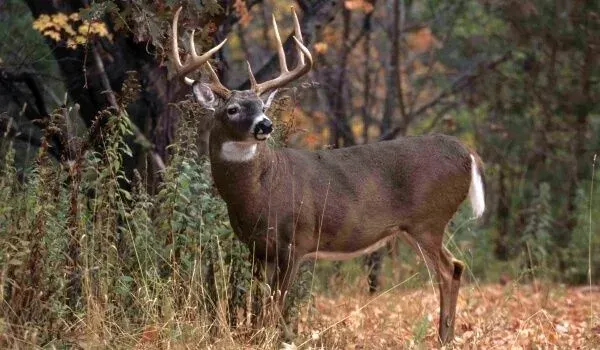
The white-tailed deer (Latin: Odocoileus virginianus) is a medium-sized ungulate mammal belonging to the Cervidae family. They are well-known for their adaptability to both wild and agricultural environments.
Adults are easily recognized by their reddish-brown summer coats and greyish-brown winter coats. The most prominent feature is the bright white underside of the tail, which is flashed when they are startled.
These animals are primarily crepuscular, meaning they are most active during dawn and dusk, which often makes them elusive to farm owners.
They are highly social animals that often move in groups, leading to concentrated feeding pressure on specific agricultural plots near their habitat.
Their biological success is linked to their high reproductive rate and their ability to thrive in a wide range of climates and food sources.
What it damages
White-tailed deer cause significant financial losses to farmers by consuming a variety of crops including soybeans, corn, and winter wheat.
Orchards face severe damage as deer browse on buds, leaves, and young twigs, which stunts tree growth and significantly reduces future fruit yields.
Bark stripping during winter months is a major problem, as it leaves the trunk exposed to infections and insect attacks, often resulting in tree mortality.
High-value vegetable crops are also highly susceptible, with entire garden beds often destroyed in a single night of feeding.
- Browsing on fruit tree buds and leaves.
- Trampling and consuming cereal crops.
- Stripping tree bark during the rut.
- Destroying vegetable garden produce.
When it appears
During the spring, deer are most active in consuming emerging cereal sprouts and tender greenery, causing early-season damage to fields.
Summer is the peak time for damage to row crops like corn and soybeans, as these provide both high-energy nutrition and cover for the animals.
In the autumn and winter, as natural food sources diminish, deer shift their focus to woody plants, damaging orchard trees and ornamental shrubs.
The seasonal movement of deer is entirely dependent on the nutritional availability of the landscape, making farms near woodlots particularly vulnerable.
Severe winter weather pushes deer into larger herds, which increases the impact on specific sites where winter forage is easier to access.
Signs of infestation
The most common sign of deer activity is the presence of heart-shaped hoof prints, which are easily visible in soft, moist soil or mud.
Deer browsing is distinct because they lack upper incisors; they tear plants, leaving ragged, frayed edges rather than clean cuts made by rodents.
Deer droppings, which appear as small, oval-shaped pellets, are frequently found along the trails they use to enter and exit farm fields.
Rubbing marks on tree trunks, where bark is stripped away, are clear indicators of male deer (bucks) marking their territory during the breeding season.
Visible trails or "paths" through tall crops indicate frequent movement patterns of a herd across the farmland.
Control measures
Physical fencing is the most effective long-term deterrent. Woven wire fences at least 8 feet high are necessary to reliably exclude deer from sensitive areas.
Chemical repellents that emit foul odors or have bitter tastes can protect individual plants, though they must be reapplied frequently, especially after rain.
Scare tactics like noise cannons or motion-activated lights can be used but often lose effectiveness over time as deer habituate to the disturbances.
Cultural methods, such as planting less attractive crops near the field edges, can serve as a buffer to minimize the damage to the main harvest.
Integrated pest management strategies, combining exclusion and population control, are recommended for farms experiencing heavy deer pressure.
Discussion
No discussions yet — be the first.