
Six-spotted carpenter ant
Camponotus sexguttatus
Description
How to identify
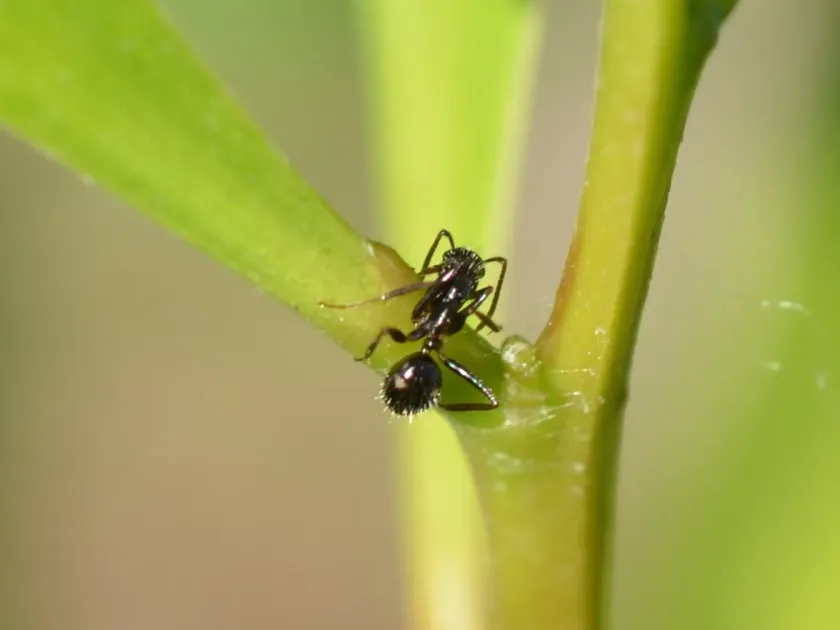
The six-spotted carpenter ant (Camponotus sexguttatus) belongs to the order Hymenoptera and the family Formicidae. These ants are known for their distinct appearance and their ability to nest in wood.
The species exhibits physical polymorphism, with workers of different sizes performing various tasks within the colony. Their robust bodies allow them to navigate and modify wooden substrates effectively.
They are primarily identified by the specific patterns on their abdomen, which distinguish them from other closely related carpenter ant species.
Like other members of the Camponotus genus, these ants have a strong, large head and mandibles capable of excavating galleries in timber and woody plants.
The colony structure is highly organized, centered around a queen, with workers responsible for both nest expansion and foraging activities.
What it damages
This species primarily causes damage to woody plants, shrubs, and trees by excavating galleries within the wood. This weakens the structural integrity of the affected plant parts.
By creating internal tunnels, the ants expose the wood to moisture, leading to decay and rot, which further invites secondary fungal infections and pathogens.
They have a symbiotic relationship with honeydew-producing insects like aphids and scale insects, which they protect, thereby increasing the population of these sap-sucking pests on the plant.
Heavy infestations can lead to limb breakage, stunted growth, and in severe cases, the gradual decline and death of the infested tree.
- Internal structural damage to trunks and branches.
- Increased susceptibility to plant diseases.
- Promotion of sap-sucking pest populations.
- General decline in tree vitality and vigor.
When it appears
Activity typically begins in the spring as temperatures rise, signaling the colony to resume foraging and nest expansion after the winter dormant period.
Summer is the peak season for colony activity, characterized by high rates of reproduction and increased foraging to support the growing brood.
As autumn approaches and temperatures drop, foraging activity decreases, and the colony moves deeper into the nest to prepare for winter hibernation.
Environmental conditions in tropical or subtropical regions may allow for year-round activity, though peak cycles usually correlate with humidity and food availability.
Monitoring for signs of activity is most effective during the active growth season when workers are consistently moving between nesting sites and food sources.
Signs of infestation
The presence of fine sawdust or "frass" near the base of a tree is a primary indicator of carpenter ant activity inside the wood.
Visible trails of ants moving up and down the trunk indicate established pathways between the colony and their primary food sources or aphid colonies.
Small, exit holes in the bark or wood, from which debris is ejected, serve as clear physical evidence of an internal nesting site.
When tapping on infested wood, a hollow sound may indicate significant gallery excavation within the trunk or branches.
Wilting foliage or localized dieback of branches often suggests that the internal wood structure has been severely compromised by ant activity.
Control measures
The use of slow-acting toxic baits is highly effective, as worker ants transport the bait back to the nest, ultimately eliminating the queen and the entire colony.
Sanitation measures, including the removal of dead or rotting wood from the garden, help eliminate potential nesting sites for these ants.
Applying sticky barriers or ant guards to the base of tree trunks physically prevents workers from reaching the canopy and protecting aphids.
Managing populations of aphids and other honeydew-secreting insects on the trees reduces the attractiveness of the plant to the ants.
For persistent or severe infestations, localized injections of professional-grade insecticides into the gallery holes can provide direct control of the internal colony.
Taxonomy
- Latin name
- Camponotus sexguttatus
- Order
- Hymenoptera
- Family
- Formicidae
- EPPO code
- CAMOSX
Discussion
No discussions yet — be the first.