
Chinese hat snail
Calyptraea chinensis
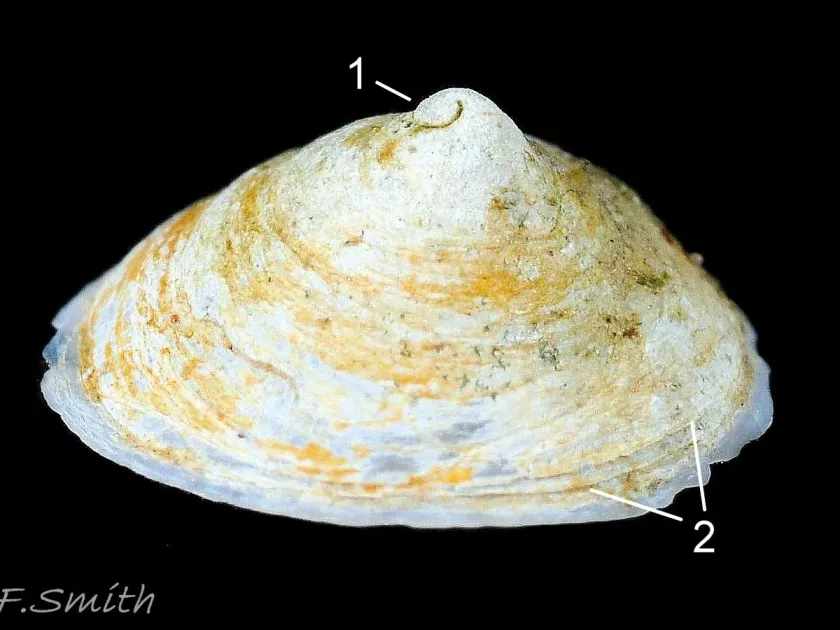
Description
How to identify
The Chinese hat snail (Calyptraea chinensis) is a marine gastropod mollusk belonging to the family Calyptraeidae. Its shell is easily recognizable by its conical shape, resembling a traditional Chinese hat.
The animal is sessile, meaning it attaches itself firmly to hard substrates throughout its adult life. The shells are generally white to pale brown, providing effective camouflage in their natural environment.
Adult individuals typically reach a diameter of about 2–3 centimeters. As hermaphrodites, they possess a high reproductive efficiency, allowing for rapid colonization once established in a new area.
They are primarily found in shallow coastal waters, where they live in clusters, creating dense aggregations that can dominate local surfaces.
Their ability to travel as planktonic larvae via currents or ship ballast water makes them a persistent threat to marine ecological balance in new territories.
What it damages
The primary economic damage caused by the Chinese hat snail is the competition with farmed shellfish, such as oysters and mussels, for food resources.
As filter feeders, these snails consume significant amounts of phytoplankton, thereby reducing the available food source for cultured species and stunting their growth.
By settling on collectors and natural substrates, they physically obstruct the space required for larval settlement of commercial shellfish, hindering population renewal.
Heavy fouling caused by these snails can increase the structural load on aquaculture equipment, leading to maintenance issues and potential equipment failure.
The reduction in the quality and size of harvested commercial mollusks directly impacts the profitability and sustainability of aquaculture operations.
When it appears
The life cycle and reproductive activity of Calyptraea chinensis are heavily influenced by water temperature, peaking during spring and summer months.
Larval dispersal occurs when water temperatures are optimal, allowing the planktonic larvae to be transported by currents to new colonization sites.
Settlement intensity is highest during the warmer months, which represents the critical window for management and prevention efforts in marine farming zones.
Although their metabolic rate slows during winter, they remain hardy organisms capable of surviving low temperatures and maintaining their hold on substrates.
Understanding these seasonal dynamics is essential for scheduling cleaning activities and implementing control measures at the right time in the biological cycle.
Signs of infestation
The most visible sign of an infestation is the presence of numerous small, conical shells covering farm structures, collectors, or even the shells of live oysters.
Decreased productivity and slower growth rates in commercial mollusk populations, despite favorable conditions, are often indicative of a hidden infestation.
During regular underwater inspections, farmers can identify dense clusters of these snails that compete directly with their target stock for space.
The texture of infrastructure becomes increasingly rough and uneven, which interferes with the standard biological processes of the farm's primary species.
An accumulation of empty shells on the sea floor or around farming structures can serve as a warning sign of a well-established and thriving local population.
Control measures
Mechanical removal is the most effective approach to protect aquaculture crops from heavy fouling by Chinese hat snails before their settlement phase concludes.
Rigorous management of ballast water in maritime transport is crucial to prevent the accidental introduction of this species into non-native coastal areas.
Applying specialized anti-fouling coatings to equipment can discourage the larvae from attaching to structures, thereby reducing the initial infestation pressure.
Ongoing monitoring of plankton levels and the health of cultured stocks allows for early detection, enabling farmers to intervene before the infestation escalates.
Future research is focused on developing environmentally safe biological control methods that target the snail population without harming the ecosystem.
Taxonomy
- Latin name
- Calyptraea chinensis
- Order
- Molluscs
- Family
- Calyptraeidae
- EPPO code
- KALYCH
Discussion
No discussions yet — be the first.