
Florida fern caterpillar
Callopistria floridensis
Description
How to identify
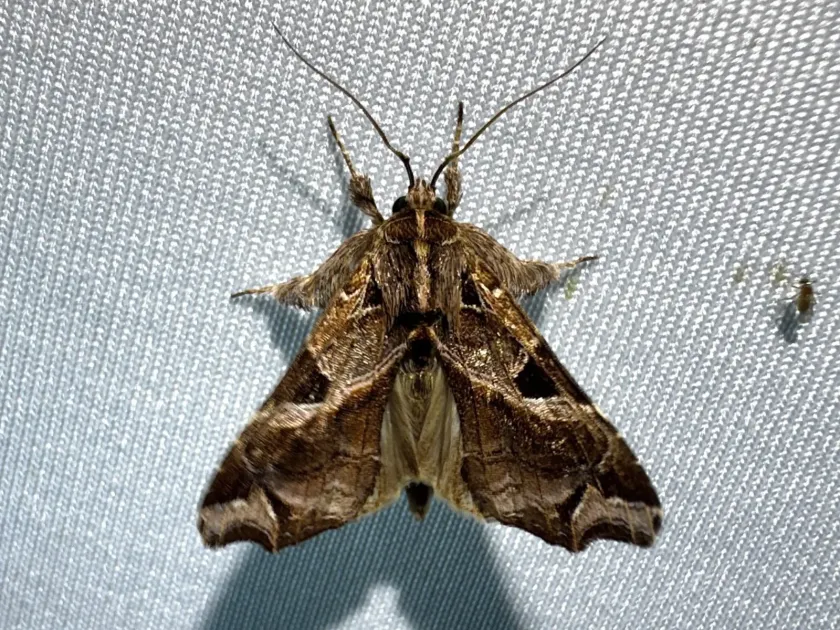
The Florida fern caterpillar (Callopistria floridensis) belongs to the Noctuidae family. Adult moths are relatively small with a wingspan of about 1 inch, exhibiting a reddish-brown coloration that allows them to blend in perfectly with plant foliage during their resting phase.
The larvae, or caterpillars, are quite variable in appearance, displaying shades of green, yellow, or brown, which often match the color of the fern stems. They possess a smooth body and are typically found feeding on the undersides of the leaves or hidden near the crown of the plant.
The insect follows a complete metamorphosis life cycle. Eggs are laid on the leaves, and the larvae progress through several instars. The pupal stage occurs in the soil or potting medium, where the insect constructs a silk-lined chamber to protect itself until the adult emerges.
This species is a specialized feeder, primarily focusing its life cycle on various Pteridophyta species. In tropical and greenhouse environments, it can reproduce continuously, with multiple generations developing throughout the year if temperatures remain favorable.
Adult moths are nocturnal, exhibiting high activity after dusk. During the day, they remain stationary in dark, concealed spots within the foliage, making visual detection of the adult population difficult for greenhouse managers.
What it damages
The primary damage is caused by the larval stage, which feeds on the foliage of various ferns, including Nephrolepis, Adiantum, and other ornamental varieties. Caterpillars chew irregular holes in the fronds, often starting from the edges and moving inward.
In cases of heavy infestation, the caterpillars can strip a plant completely, leaving only the main stems. This extensive defoliation prevents proper photosynthesis and severely weakens the plant, often leading to death if not addressed promptly.
Beyond physical consumption, the larvae produce significant amounts of frass (excrement), which can accumulate on the plant surface. This organic matter provides a substrate for secondary pathogens, such as fungi or bacteria, to colonize and cause further tissue decay.
Commercial ornamental nurseries face substantial economic risks from this pest, as aesthetic quality is paramount. A single damaged frond can render an entire plant unsellable, forcing growers to discard stock or increase spending on control measures.
Young, developing fronds are particularly sensitive to caterpillar activity. Damage to these delicate structures can cause stunted growth or irreversible malformation of the plant's architecture, reducing its long-term health and ornamental value.
Signs of infestation
The most common sign of infestation is the presence of irregular, ragged holes in the fern fronds. If you notice portions of the leaf tissue disappearing while the rest of the plant remains relatively green, it is likely a caterpillar-related issue.
Small, dark, granular deposits scattered on the leaves or the surface of the soil are clear indicators of larval presence. These excrement pellets are usually the first thing growers notice before actually seeing the larvae themselves.
Careful nocturnal inspection using a flashlight can reveal the caterpillars in action. As they feed at night, they are easily visible as they crawl along the fronds; however, they may drop to the soil or hide within the crown if disturbed.
Presence of fine silk webbing near the base of the plant or among the fronds suggests the larvae are either preparing to pupate or seeking protection for molting. This activity is a sign that the pest population has reached a more advanced stage.
Yellowing or wilting of individual fronds without a clear watering issue might indicate that the caterpillar has fed on the stem, disrupting the vascular supply and causing the foliage to collapse prematurely.
Control measures
Effective control begins with rigorous quarantine protocols for all new plant stock. Inspecting both the tops and bottoms of fronds before introducing new plants into a greenhouse or conservatory is essential to prevent entry.
For small collections, manual removal of larvae during evening hours is highly effective. By catching the caterpillars while they are active, growers can drastically reduce the damage potential without using chemicals.
Biological control using formulations of Bacillus thuringiensis (Bt) is highly recommended. These bacteria specifically target Lepidopteran larvae, making them a safe and effective option for indoor ornamental crops where chemical use is restricted.
Systemic insecticides may be used for severe infestations in commercial settings. However, it is crucial to rotate chemical classes to prevent the population from developing resistance to commonly used active ingredients.
- Maintain good sanitation by clearing away dead foliage and debris.
- Use pheromone traps to monitor adult flight and time control applications.
- Maintain optimal environmental conditions to discourage fungal growth.
- Apply biological pesticides early in the larval stage for maximum efficiency.
Taxonomy
- Latin name
- Callopistria floridensis
- Order
- Lepidoptera (butterflies)
- Family
- Noctuidae
- EPPO code
- CAOPFL
Discussion
No discussions yet — be the first.