
Callopistria
Callopistria
Description
How to identify
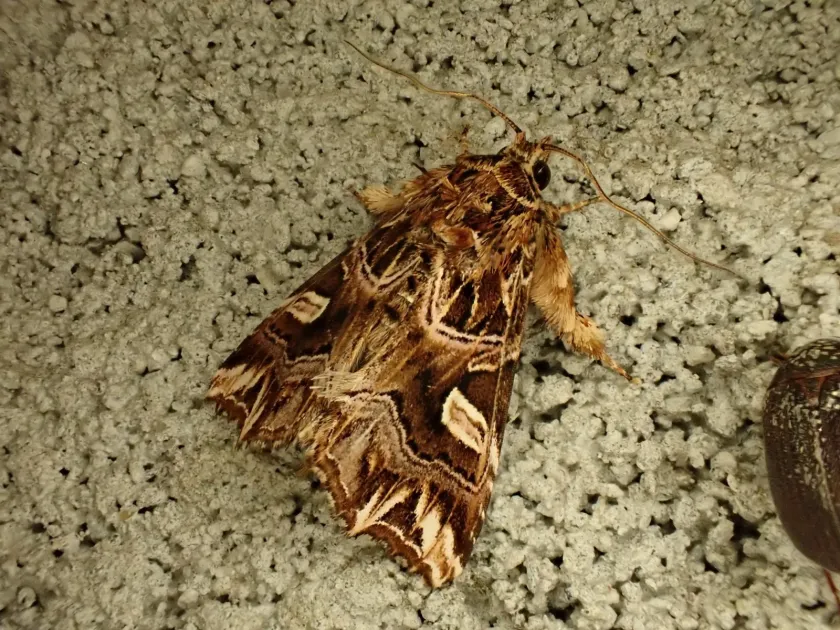
Callopistria is a genus of moths belonging to the Noctuidae family. These insects are characterized by their intricate wing patterns, which provide excellent camouflage against various natural backgrounds.
The larvae, or caterpillars, are the primary stage of the pest. They are typically smooth-bodied and display colors ranging from vibrant green to brown, allowing them to blend perfectly with fern foliage.
The life cycle encompasses four stages: egg, larva, pupa, and adult. Depending on the environment, particularly in greenhouses, they can complete multiple generations in a single year.
Pupation usually occurs in the soil or within leaf litter, where the insects remain protected during their transformation into adult moths.
The genus is widely distributed, and within the horticultural sector, it is primarily recognized as a specialized pest of pteridophytes.
What it damages
The main hosts for Callopistria are ferns. Species such as Nephrolepis, Adiantum, and Pteris are particularly susceptible to their feeding habits.
The larvae consume the leaflets and rachis of the fronds, often leading to severe defoliation and a total loss of the plant's aesthetic value in greenhouse production.
In cases of heavy infestation, larvae may consume the entire green biomass, leaving only the structural veins, which weakens the plant and arrests its further development.
Secondary infections, such as fungal rots, often occur at the sites of larval feeding, further damaging the already stressed plant tissues.
Damage is typically cumulative, starting from small, isolated holes and progressing to widespread destruction if management actions are delayed.
Signs of infestation
The most visible sign of an infestation is the presence of irregular notches along the margins of the fern fronds and small holes in the leaf blades.
Accumulation of frass (dark, granular excrement) at the base of the plant or on the surface of the growing medium is a clear indicator of larval activity.
Because the larvae are nocturnal, they are rarely seen during daylight hours, as they hide deep within the crown or at the base of the stems.
Affected plants often display signs of stunted growth and general decline, as the loss of photosynthetic area prevents the plant from maintaining its physiological functions.
The sudden appearance of browned, wilted, or ragged foliage in a healthy collection is a strong signal that an active pest population is present.
Control measures
Strict quarantine measures should be applied to all new plant acquisitions to prevent the introduction of eggs or larvae into existing greenhouse collections.
Physical control involves hand-picking the larvae during late evening hours when they are most active and visible on the foliage.
Chemical control can be achieved using specific insecticides; however, care must be taken to ensure the chosen chemical is safe for the specific species of fern.
Biological control, such as the application of Bacillus thuringiensis, offers an effective and environmentally friendly way to manage caterpillar populations.
- Regular sanitation of the greenhouse floor and removal of plant debris.
- Monitoring adult moths with pheromone or light traps.
- Maintenance of proper humidity levels to reduce the stress on plants.
Taxonomy
- Latin name
- Callopistria
- Order
- Lepidoptera (butterflies)
- Family
- Noctuidae
- EPPO code
- CAOPSP
Discussion
No discussions yet — be the first.