
Blue bottle fly
Calliphora phormia
Description
How to identify
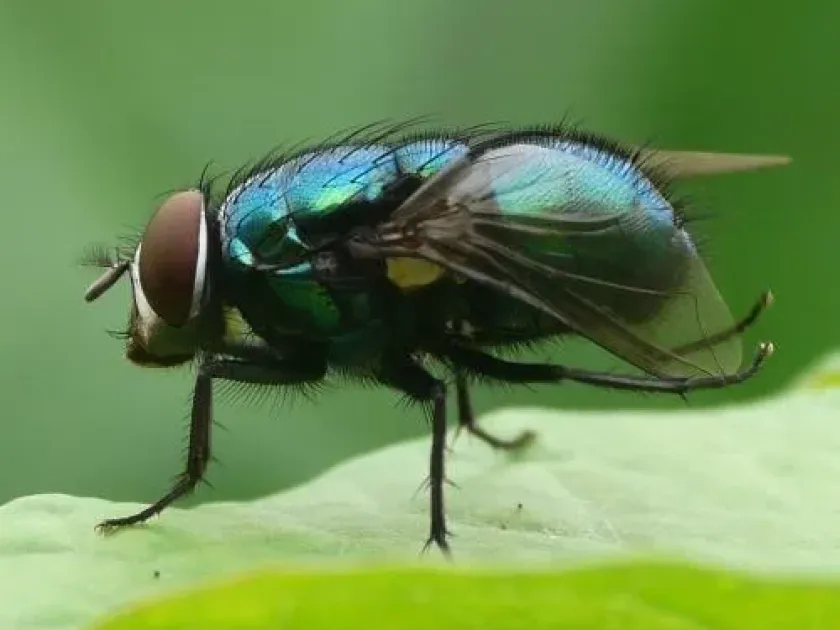
The blue bottle fly (Calliphora vomitoria) is a common insect easily recognized by its metallic, bright blue or bluish-black abdomen and thorax.
Adult flies typically measure 8 to 14 millimeters in length, possessing large reddish eyes and transparent wings with distinct, dark wing veins.
Their larvae, often referred to as maggots, have a creamy-white, cylindrical body and are equipped with sharp mouth hooks for feeding on organic tissue.
The life cycle consists of four distinct stages: egg, three larval stages, pupation, and the adult stage, with the entire process highly dependent on temperature.
These flies are known for their strong flight and a loud, buzzing sound, which makes them highly noticeable when they are present in large numbers.
What it damages
While not a direct threat to growing plants, the blue bottle fly is a significant pest in agricultural storage facilities, slaughterhouses, and processing plants.
The primary damage occurs when females lay eggs on meat, fish, or high-protein feed supplements, rendering the products unfit for consumption or sale.
Their presence leads to rapid decay of animal-based products, causing substantial economic losses through spoilage and strict hygiene violations.
These flies act as vectors for various pathogens, including bacteria and parasites, which can spread diseases to livestock and contaminate human food sources.
By breaking down the structure of organic matter through larval feeding, they accelerate spoilage and create unsanitary environments in agricultural workspaces.
When it appears
Blue bottle flies become active in the early spring as temperatures begin to rise consistently above 8–10 degrees Celsius.
Their population peaks during the warm summer months, as high temperatures accelerate development and enable a faster turnover of generations.
As autumn approaches, the flies seek out sheltered locations to overwinter, often entering buildings, barns, and storage areas for protection.
They overwinter primarily as adults or pupae in protected cracks, crevices, or decaying organic material that remains warm enough for survival.
Multiple generations can occur throughout the season, which allows for rapid re-infestation if the breeding sources are not systematically eliminated.
Signs of infestation
A foul, putrid odor in storage or production areas is often the first indicator of a blue bottle fly infestation.
Visual confirmation of egg clusters on surfaces or the presence of visible maggots in organic materials confirms active breeding sites.
The appearance of irregular holes or tunnels in stored animal products is a sign of larval feeding activity and internal tissue destruction.
Finding brown, hardened pupal cases (puparia) in floor gaps or near waste disposal areas indicates a long-standing presence of the pest.
High numbers of adult flies congregating near windows, light sources, or waste bins signify a high-pressure infestation that requires control.
Control measures
Effective management begins with stringent sanitation practices, such as the prompt removal and secure disposal of all animal-based waste.
Installing fine-mesh screens on windows and doors of barns and storage units is a highly effective way to prevent fly entry.
Utilizing light traps and adhesive insect strips helps to suppress adult fly populations within indoor environments without the need for toxic chemicals.
Regular disinfection of storage facilities and the use of targeted insecticides can help manage population levels in areas where flies congregate.
- Maintain strict hygiene around animal processing zones.
- Use airtight containers for storing high-protein feed.
- Keep storage temperatures below 5 degrees Celsius to inhibit growth.
- Implement mechanical exclusion methods around building openings.
Discussion
No discussions yet — be the first.