
Callimome
Callimome
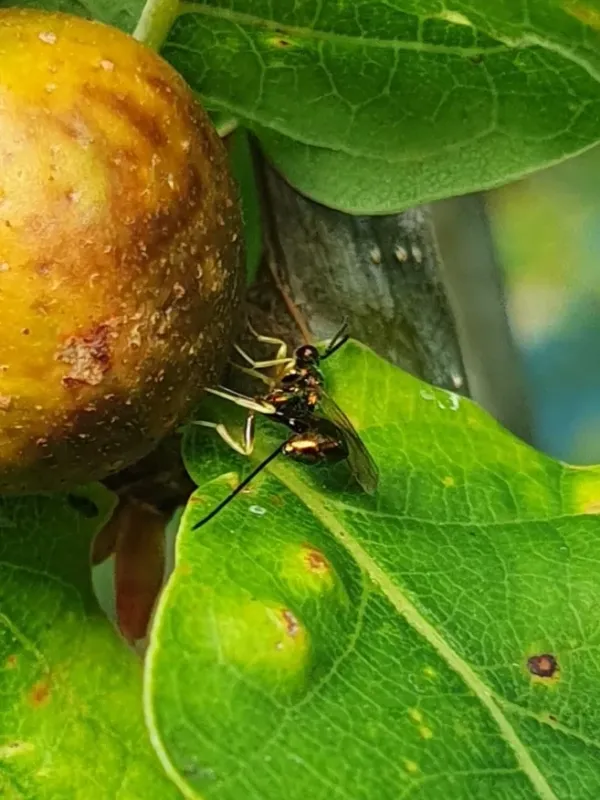
Description
How to identify
Callimome is a genus of parasitic wasps belonging to the family Torymidae within the order Hymenoptera.
These insects are characterized by a slender body, often featuring a distinct metallic sheen in green, copper, or blue colors.
The females are easily identified by their long, prominent ovipositors, which allow them to drill into plant tissues to deposit eggs.
These wasps are highly specialized, with different species often linked to a narrow range of specific host plants or other insects.
They are part of a complex ecological group that balances insect populations, though in agricultural settings, they are often considered pests of seed crops.
What it damages
The primary damage caused by Callimome occurs when larvae develop inside seeds, consuming the nutrient-rich endosperm or embryo.
As a result, the seeds become hollow and non-viable, which is particularly destructive for commercial seed production and forest nurseries.
This feeding behavior drastically reduces germination rates, leading to substantial economic losses for growers and forestry managers.
In addition to direct seed loss, the physical boring of the seed coat can introduce opportunistic pathogens, causing further decay of the fruit.
When infestation levels are high, entire batches of seeds can be rendered useless, affecting the regeneration potential of the affected plant species.
When it appears
The activity cycle of Callimome is synchronized with the phenological development of its host plants during the growing season.
Adult wasps emerge in spring and summer, coinciding with the period when seeds are beginning to form and fill with nutrients.
The larval stage is typically spent inside the seed, where they may remain dormant through the winter if conditions dictate, or emerge as the season concludes.
Temperature fluctuations significantly influence the emergence time, meaning that warmer springs often lead to earlier and more severe infestations.
Monitoring the flight activity of adult wasps is crucial for determining the timing of preventative measures in managed agricultural systems.
Signs of infestation
Early symptoms of an infestation include minute, almost invisible puncture marks on the seed coat created by the female's ovipositor.
Seeds might look outwardly healthy, but they will be significantly lighter in weight and may sound hollow when shaken or tapped.
Later in the development cycle, round exit holes will appear on the surface as the mature adult wasps emerge from the interior of the seed.
Sometimes, the plant reacts to the larval presence by forming irregular growths or galls, particularly on the seed pods or fruit structures.
Dissecting a suspect seed often reveals the white or yellowish larva curled inside, confirming the presence of the pest.
Control measures
Managing Callimome is challenging due to the protected nature of the larvae living deep inside the seeds, necessitating proactive strategies.
Chemical control focuses on the adult stage, requiring application during the brief window when the wasps are flying and searching for host seeds.
Good agricultural practices are the most effective way to reduce the overall population pressure within a seed orchard or nursery.
- Strict sanitation by removing and destroying infested fallen seeds.
- Using fine-mesh netting to protect developing fruit from adult wasps.
- Implementing biological control using natural predators or parasites.
- Regular inspection and monitoring with yellow sticky traps.
An integrated approach that combines scouting with targeted interventions remains the gold standard for protecting seed crops from Callimome.
Discussion
No discussions yet — be the first.