
Cereal root aphid
Byrsocrypta graminis
Description
How to identify
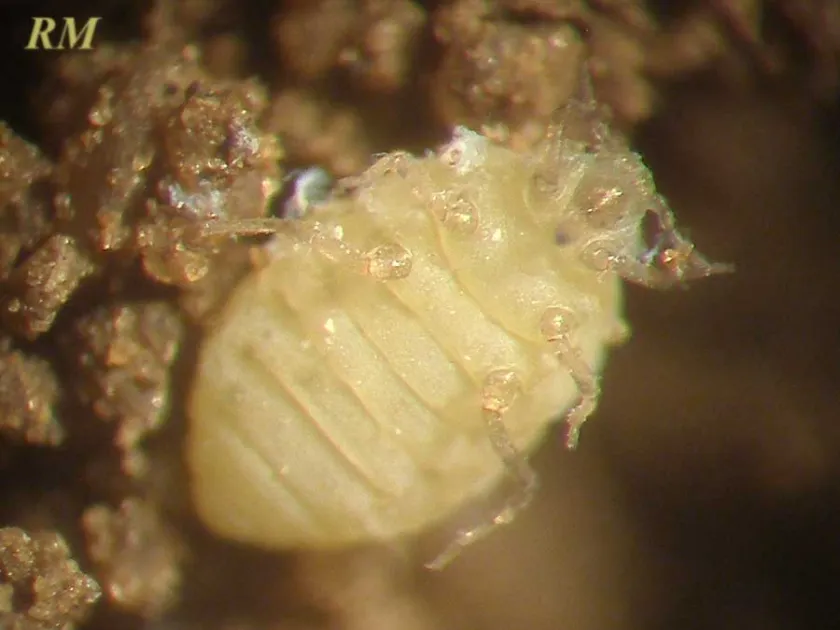
The cereal root aphid (Byrsocrypta graminis) is a member of the Pemphigidae family within the order Hemiptera. These insects are highly specialized for an underground lifestyle, making them cryptic pests that often go unnoticed until significant damage is already done.
The adult aphids and nymphs typically exhibit a pale yellow or whitish coloration, often covered in a protective waxy powder. Their morphology is adapted to living in the soil, with reduced limbs and antennae compared to their surface-dwelling relatives.
What it damages
This pest primarily attacks the root systems of various graminaceous plants. Key agricultural hosts include wheat, barley, and oats, alongside wild grasses that serve as overwintering reservoirs for the species in fields and field margins.
By extracting sap from the roots, the aphids deprive the plant of essential nutrients and moisture. The resulting physiological stress leads to stunted growth, reduced tillering, and an overall significant decrease in grain yield, which is often misidentified as nutrient deficiency.
When it appears
The life cycle begins in early spring as soil temperatures rise, triggering the emergence of overwintering populations. Throughout the growing season, multiple generations are produced via parthenogenesis, allowing for rapid colonization of healthy root systems.
During the peak of summer, if the soil becomes excessively dry or overheated, the aphids may migrate deeper into the root zone or move to moisture-rich areas near field borders. As autumn approaches, populations prepare for the dormancy period, remaining in the soil or on weed roots.
Signs of infestation
Detection is difficult and requires digging up suspect plants to inspect the root zone. Above-ground symptoms are non-specific, often appearing as patches of chlorotic, poorly growing plants that seem to lack vigor despite adequate fertilization.
- Presence of white, waxy, cottony-like secretions on the roots.
- Roots appear shriveled or have necrotic lesions from feeding sites.
- Ant activity at the base of the plants, as ants often tend the aphids for their honeydew.
- General lack of vigor and uneven canopy height in the field.
Control measures
Cultural control remains the most effective management strategy. Implementing a strict crop rotation cycle that minimizes the continuous cultivation of susceptible cereals is crucial to breaking the aphid's lifecycle and preventing population build-up.
Proper soil management, including effective weed control and thorough plowing, helps disrupt the aphid's habitat and reduces survival rates. In extreme cases, farmers should consult local agricultural advisors regarding the application of systemic soil-applied insecticides.
Discussion
No discussions yet — be the first.