
African maize stalk borer
Busseola
Description
How to identify
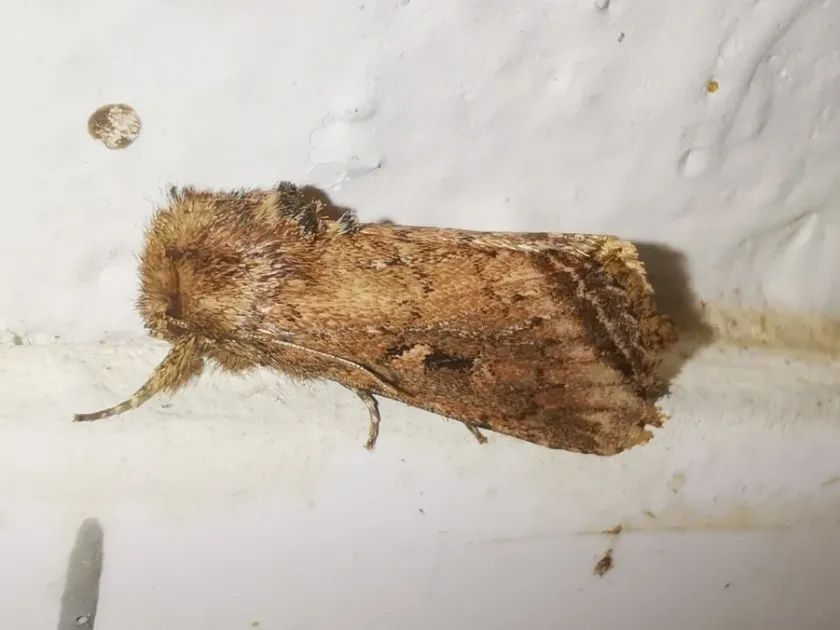
The African maize stalk borer (Busseola fusca) is a major lepidopteran pest belonging to the Noctuidae family. The adult moth is nocturnal, featuring a wingspan of approximately 35 mm with a brownish-grey coloration that provides excellent camouflage.
The larvae, which are the primary destructive stage, can reach up to 40 mm in length. They typically exhibit a creamy-white to light brown color with distinct longitudinal stripes and a dark, hardened head capsule.
Females lay their eggs in batches beneath the leaf sheaths of maize plants, often covering them with a thin layer of secretion. This behavior provides a crucial protective barrier for the eggs during their incubation period.
Busseola fusca is highly adaptable to environmental shifts. During the dry season, the larvae can enter a state of diapause within maize stalks or crop residues, allowing the species to survive until the next growing season.
The lifecycle and reproductive rate are heavily influenced by temperature and precipitation. Favorable conditions following the first rains typically trigger an emergence of adult moths, starting the infestation cycle.
What it damages
Maize is the preferred host for this pest, though it also infests sorghum and other cereal crops. The damage is primarily caused by the larvae, which bore into the stems to feed on the inner tissues.
Early-stage larvae feed on the leaf tissues before boring into the whorl. This activity often disrupts the vascular system, causing localized tissue death and reducing the plant's overall photosynthetic capacity.
When a larva reaches the growing point (apical meristem), it leads to the characteristic 'dead heart' symptom. The central leaf wilts and turns brown, ultimately stopping the plant's growth entirely.
Extensive tunneling by mature larvae weakens the stem structure significantly. This makes the maize crop highly susceptible to lodging, which is a major concern for farmers during windy or rainy weather conditions.
In the later stages of crop development, larvae may bore into the maize ears. This causes direct grain loss and creates entry points for secondary pathogens and fungal diseases that can produce harmful mycotoxins.
Signs of infestation
The first sign of an infestation is the appearance of small holes in the young leaves. These are often seen as rows of punctures, indicating where larvae fed before burrowing deeper into the plant.
Wilting of the central leaf, or the 'dead heart' phenomenon, is a clear visual indicator of established larval presence. Pulling the dead leaf often reveals the tunnel entrance or the larva itself inside.
Accumulation of larval frass, which looks like fine sawdust, is a common sign found in the leaf whorls or near holes in the stem. This debris confirms that the larvae are actively feeding inside.
Visible boreholes on the stalk, sometimes surrounded by discolored plant tissue, are clear signs of internal activity. Careful dissection of these stalks will usually show extensive tunnels filled with chewed plant material.
After harvest, checking for larvae or pupae inside the remaining stalks is essential for assessing population density. High counts in the residues suggest a high risk for the subsequent planting season.
Control measures
Cultural control remains the cornerstone of managing Busseola fusca. The most effective strategy is the destruction of crop residues immediately after harvest to eliminate the overwintering population.
Deep plowing after the harvest helps bury larvae and pupae deep in the soil, effectively preventing adult emergence. This simple agricultural practice significantly reduces the pest pressure for the next season.
Adopting resistant or Bt-maize varieties is highly recommended for regions with high pest pressure. These varieties produce proteins that inhibit larval growth, providing a reliable and sustainable line of defense.
Chemical control should be implemented only when the economic threshold is exceeded. Timing is critical; applications must be made while the larvae are still exposed on the leaves, before they bore into the stalks.
- Using biological control agents such as Bacillus thuringiensis.
- Conservation of natural predators and parasitoids.
- Monitoring adult flight with pheromone-based traps.
- Implementing intercropping systems to disrupt host location.
Taxonomy
- Latin name
- Busseola
- Order
- Lepidoptera (butterflies)
- Family
- Noctuidae
- EPPO code
- BUSSSP
Discussion
No discussions yet — be the first.