
Alfalfa seed chalcid
Bruchophagus kolobovae
Description
How to identify
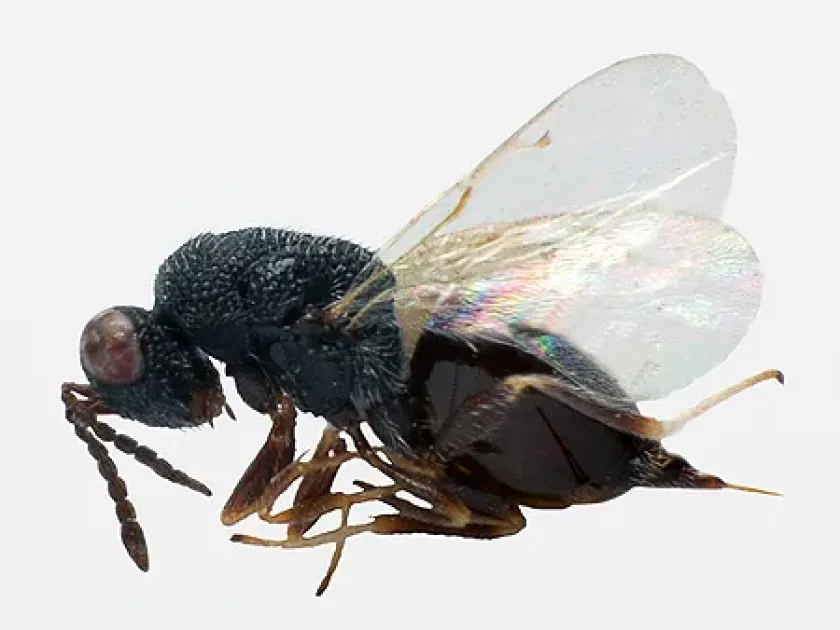
The Alfalfa seed chalcid (Bruchophagus kolobovae) is a small hymenopteran insect belonging to the family Eurytomidae. It is a major pest specifically targeting alfalfa seed production.
The adult insect is approximately 2 mm long, black, and has a shiny appearance. Its hind femurs are notably thickened, a distinguishing feature that makes identification possible under magnification.
The larval stage is white, legless, and curved. The larvae develop entirely inside the alfalfa seed, feeding on the internal tissues and rendering the seed sterile and hollow.
The life cycle involves overwintering as mature larvae within seeds left in the field. As temperatures rise in spring, they pupate and emerge as adults during the blossoming stage of the alfalfa.
Development is synchronized with the development of the host plant. Depending on the region, there may be one or two generations per year, which significantly impacts the severity of the infestation.
What it damages
The primary damage is caused by the larvae feeding on the seed content. This destruction of the endosperm and embryo prevents germination, causing significant economic losses to seed growers.
Infested seeds are empty and have significantly lower weight than healthy seeds. This leads to substantial reductions in total seed yield and quality, often making the harvest unusable for planting.
Adults also contribute to damage by piercing the young, succulent pods to deposit eggs. This physical damage can cause the pods to dry out or drop prematurely, further reducing the overall crop volume.
Because the larvae are hidden inside the seed, the external appearance of the pod often remains deceptive. Growers may be unaware of the scale of the damage until the harvest process reveals the infestation.
High infestation rates can exceed 50% of the seed yield in unprotected fields, creating a major financial threat for commercial alfalfa seed production enterprises.
Signs of infestation
The most visible sign of infestation is the presence of small, perfectly circular exit holes on the pods. These holes are created by the emerging adults once their development is complete.
Field observation during the flowering and pod-setting stages reveals the presence of flying adults over the crop canopy. They are highly active during warm, sunny days which favors mating and egg-laying.
Upon harvesting and processing, the presence of hollow seeds is a strong indicator of chalcid activity. Such seeds are light and can be separated from heavy, sound seeds using proper winnowing equipment.
Premature browning and shriveling of the pods may suggest high levels of larval feeding within the seed crop. This creates an uneven appearance across the field during the ripening stage.
Microscopic examination of seed samples can confirm the presence of larvae or pupae within the seed coat, allowing for accurate scouting before large-scale damage occurs.
Control measures
Spatial isolation is the most critical preventative measure. New seed crops should be located far away from older, infested alfalfa stands that serve as a source of the pest population.
Cultural practices such as deep plowing after harvest effectively bury the infested seeds. This prevents the adults from reaching the surface, thereby breaking the life cycle.
Rapid and efficient harvesting is necessary to prevent the population from completing its cycle or spreading further. Clean field conditions reduce the potential for overwintering sites.
Chemical control focuses on the early bud-to-bloom stage. Strategic applications of insecticides can reduce adult populations before they successfully lay eggs inside the developing pods.
- Use of certified, clean seed lots free from larval contamination.
- Elimination of volunteer alfalfa and wild legumes along fence lines.
- Strict crop rotation cycles to avoid long-term buildup of the pest in the soil.
Discussion
No discussions yet — be the first.