
Lily borer
Brithys crini
Description
How to identify
The lily borer (Brithys crini) belongs to the family Noctuidae, an extensive group of moths. It is a specialized pest known for targeting plants within the Amaryllidaceae family.
The adult moth is nocturnal, characterized by brownish-grey forewings that provide excellent camouflage against foliage or tree bark during the resting phase.
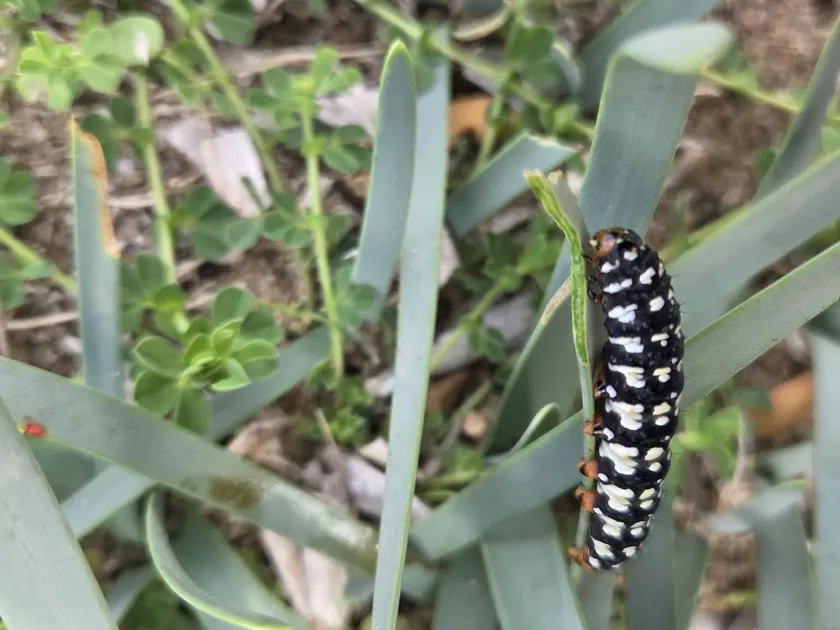
The larvae are easily recognized by their striking appearance, often featuring distinct bands or bright patterns that distinguish them from other common garden caterpillars.
The life cycle undergoes complete metamorphosis, consisting of four distinct stages: egg, larva, pupa, and adult, each playing a specific role in the pest's survival.
Pupation typically occurs underground, where the insect remains protected in a dormant state through the colder months before emerging as an adult in the spring.
What it damages
This pest primarily attacks plants belonging to the Amaryllidaceae family, including lilies, crinum, hippeastrum, and pancratium species common in horticulture.
Larvae are voracious feeders that consume leaves, flower stalks, and bulbs, often hollowing out the interior of the bulb, which leads to plant collapse.
Extensive feeding significantly reduces the plant's ability to undergo photosynthesis, thereby preventing it from storing sufficient energy for the next growing season.
The damage caused by the larvae is not just limited to tissue loss; it creates entry points for various secondary pathogens such as bacteria and fungi.
In dense plantings, the lily borer can decimate entire flower beds within a short duration if left unchecked, making early detection vital for plant survival.
Signs of infestation
Visible signs of infestation include irregular holes in the leaves and jagged leaf margins, which are clear indicators of larval activity.
Frass (larval excrement) is frequently visible on the foliage or the surface of the soil directly beneath the infested parts of the plant.
Wilting flower spikes and yellowing foliage are common symptoms, suggesting that the larvae have likely bored into the crown or the bulb of the plant.
During evening inspections, groups of larvae may be observed feeding on the underside of leaves or congregating near the base of the stems.
Stunted plant growth and a lack of flowering are typical long-term indicators that the root system or the bulb has been compromised by the pest.
Control measures
Hand-picking the larvae is a practical approach for small-scale gardening or hobbyist collections to minimize the use of harsh chemical agents.
Biological control agents, such as Bacillus thuringiensis (Bt), can be highly effective in targeting larvae while remaining safe for beneficial insects.
Systemic insecticides are often employed when infestation levels are high, as these chemicals are absorbed by the plant and ingested by the feeding larvae.
- Removing and destroying heavily infested plant material.
- Cultivating the soil around bulbs to expose and destroy pupae.
- Using sticky traps or light traps to reduce the population of adult moths.
Integrating these strategies into a broader pest management plan helps in maintaining the health and vigor of ornamental bulbs throughout the year.
Taxonomy
- Latin name
- Brithys crini
- Order
- Lepidoptera (butterflies)
- Family
- Noctuidae
- EPPO code
- BRIYCR
Discussion
No discussions yet — be the first.