
Brachystomella
Brachystomella
Description
How to identify
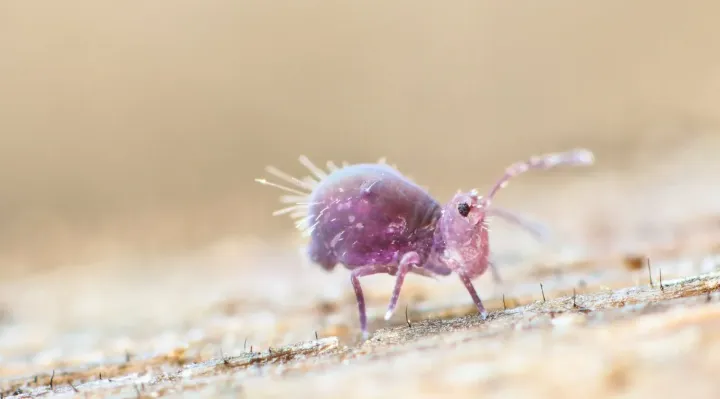
Brachystomella is a genus of springtails (Collembola) belonging to the family Neanuridae. These minute, wingless arthropods are common inhabitants of soils rich in organic matter worldwide.
The individuals typically measure 1–2 mm in length and possess a characteristic body shape often covered with specialized hairs or tubercles. Depending on the species, their color can range from white to gray or bluish-black.
Their biological cycle is ametabolous, meaning they do not undergo significant metamorphosis. Immature individuals look like miniatures of the adults, developing through a series of molts throughout their lifespan.
Springtails thrive in high-humidity environments. They require constant moisture to prevent desiccation, which is why they are most frequently found in damp soil, mulch, or near decomposing organic debris.
While many species feed harmlessly on fungi and decaying organic material, some members of the genus can become pests when their population density explodes in a controlled greenhouse environment.
What it damages
Brachystomella primarily damages young seedlings, vegetable crops, and ornamental plants kept in pots. The vulnerability is highest in the earliest stages of plant growth.
When fungi and decaying matter become scarce, these pests begin feeding on living plant tissues, specifically targeting fine root hairs, root tips, and the stem tissue near the soil line.
This feeding activity creates open wounds on the roots, which act as entry points for various soil-borne pathogens. This leads to the development of damping-off diseases and other root rots.
Visible damage includes stunted growth, wilting of seedlings, and chlorosis of the lower leaves. In severe infestations, the entire root system may be compromised, causing the total collapse of the plant.
In commercial plant production, high populations of these pests not only cause direct physical damage but also facilitate the spread of fungal spores throughout the growing medium.
Signs of infestation
The most obvious sign of an infestation is the sudden appearance of numerous tiny, jumping insects on the surface of the soil immediately after watering or misting.
A reduced germination rate or the sudden death of young seedlings is a strong indicator. Upon inspection, the base of the stems may show brownish, shallow ulcers caused by feeding.
The presence of fine, sandy-looking deposits on the soil surface can also be a telltale sign of their activity, often consisting of frass and debris moved by the springtails.
Affected plants often fail to respond to standard fertilization, as their root system is unable to effectively absorb nutrients due to the persistent feeding pressure from the pests.
Clusters of these insects can often be found near the drainage holes of pots, where moisture levels remain consistently high throughout the day.
Control measures
Effective management begins with strict moisture control. Allowing the top layer of the potting soil to dry out between waterings is often sufficient to discourage population growth.
Using sterile, high-quality growing media is essential to prevent the accidental introduction of eggs and nymphs into greenhouse environments.
Good sanitation practices, including the removal of dead leaves, old root systems, and weed debris, help eliminate the primary food sources for the springtail population.
In cases where biological or cultural methods are insufficient, targeted soil drench applications of approved insecticides can be used to suppress high populations.
- Regulate watering to keep the surface dry
- Use only pasteurized or sterile soil mixes
- Improve air circulation in greenhouses
- Remove organic debris from pots regularly
- Apply soil insecticides as a last resort
Taxonomy
- Latin name
- Brachystomella
- Family
- Brachystomellidae
- EPPO code
- BRSTSP
Discussion
No discussions yet — be the first.