
Borborus hamatus
Borborus hamatus
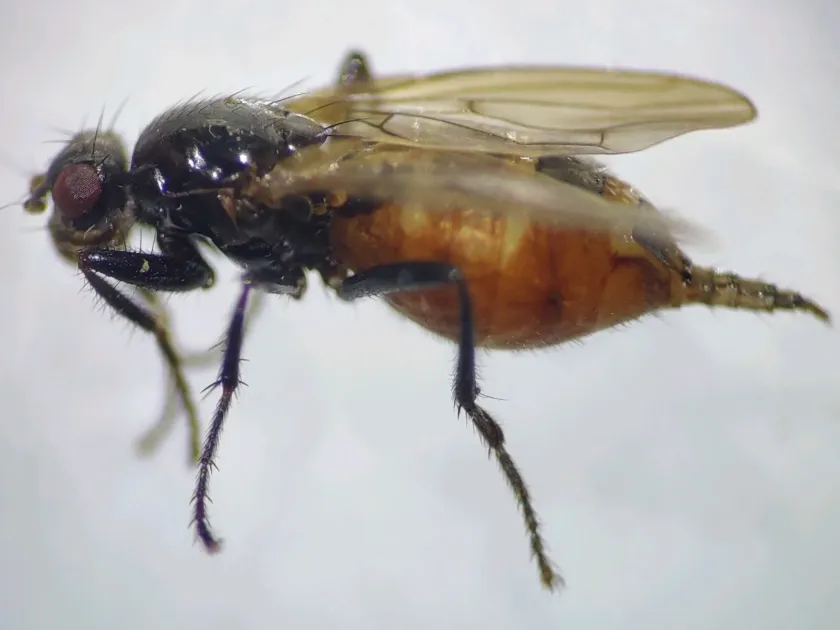
Description
How to identify
Borborus hamatus is a species of fly belonging to the family Sphaeroceridae, commonly known as lesser dung flies. While many members of this family are saprophagous, some larvae can become pests in horticultural environments.
Adult flies are small, dark, and often possess wings adapted for navigating dense organic matter or soil crevices. They are highly attracted to moist environments and decaying vegetative waste.
The larvae are typically whitish, legless maggots that inhabit moist soil or decomposing media. They thrive in conditions where organic matter provides both food and a humid microclimate for their development.
The life cycle is rapid under optimal conditions, allowing multiple generations to occur during the growing season. The population density is heavily dependent on moisture levels and the availability of organic debris.
Identification of the adult fly usually requires close observation of its movement patterns near the soil surface, especially during irrigation or when disturbing moist, organic-rich garden beds.
What it damages
The larvae are primarily responsible for crop damage, feeding on the roots, seeds, and hypocotyls of young seedlings. This feeding activity disrupts water and nutrient uptake, leading to stunted growth or total plant loss.
A wide range of vegetables can be affected, particularly those started in greenhouse conditions or sown in soils enriched with poorly composted manure. Cucumber, tomato, and cabbage seedlings are frequent hosts.
Damage often starts at the root-soil interface. As the larvae feed, they create lesions in the plant tissue, which frequently become secondary sites for bacterial and fungal rot infection.
In greenhouses, the impact can be severe when larvae infest potting mixes. Seedlings may fail to emerge, or those that do emerge may suddenly collapse due to severe root damage.
The severity of the damage is often exacerbated by slow seedling growth rates caused by cool, wet weather, which keeps the plants in a vulnerable stage for a longer period.
Signs of infestation
Symptoms of infestation include thinning stands of seedlings and sudden wilting of established young plants. Upon closer inspection, roots may appear pruned or completely decayed.
The presence of maggots at the base of the stem or within the root ball is a definitive sign of infestation. Affected plant tissues often emit a foul odor due to accompanying bacterial decay.
Adult flies may be observed fluttering around the base of plants or resting on the moist surface of the soil. Their presence in high numbers near seedbeds is a strong indicator of potential larval activity.
Yellowing of the foliage, despite adequate soil moisture, can suggest that the root system has been compromised by larvae, hindering the plant's ability to uptake water and nutrients.
In nursery settings, patches of dead or dying seedlings that spread in a mosaic pattern are classic signs of a localized infestation originating from a shared source of contaminated potting media.
Control measures
The most effective control method is the use of high-quality, pasteurized potting media and fully composted organic matter. Avoiding raw manure near sensitive crops is essential to prevent infestation.
Managing soil moisture is critical; allowing the surface of the soil to dry out between waterings can discourage flies from laying eggs and reduce larval survival rates.
Implementing good sanitation practices, such as removing crop debris and weeds from the growing area, helps eliminate breeding sites and breaks the fly's reproductive cycle.
In greenhouse environments, yellow sticky traps are highly effective for monitoring and reducing the population of adult flies before they have the chance to lay large quantities of eggs.
If chemical control is necessary, select soil-applied insecticides registered for the specific crop and pest. Always follow application guidelines to minimize impact on beneficial soil organisms.
Taxonomy
- Latin name
- Borborus hamatus
- Order
- Diptera (flies)
- Family
- Borboridae
- EPPO code
- BRBOHA
Discussion
No discussions yet — be the first.