
Grey flesh fly
Boettcherisca peregrina
Description
How to identify
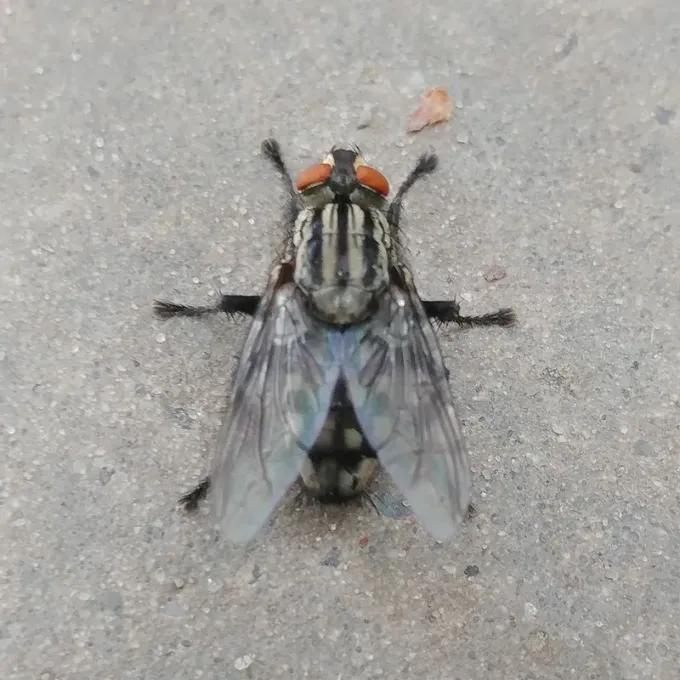
The grey flesh fly (Boettcherisca peregrina) is a member of the Sarcophagidae family. These flies are easily recognized by their three distinct longitudinal dark stripes on the thorax and a checkerboard pattern on the abdomen.
Adult flies typically measure 10–15 mm in length. They have a stout build and prominent reddish eyes, which distinguishes them from common houseflies.
A biological hallmark of this species is larviposition, meaning the female fly deposits live larvae instead of eggs. This adaptation allows the larvae to begin feeding immediately upon placement.
The larvae are creamy-white, maggot-like, and highly mobile. They possess specialized mouthparts that allow them to process decomposing organic matter effectively.
These flies are known as synanthropic organisms, frequently inhabiting areas near human settlements, food storage facilities, and livestock farming operations.
What it damages
While primarily saprophagous, the grey flesh fly can become a significant agricultural pest when it targets fleshy fruits and vegetables that have been compromised.
Vegetable crops such as tomatoes, squash, and pumpkins are highly susceptible if their skin is damaged by mechanical injury or secondary pest activity.
The damage caused by larvae is rapid; they burrow into the fruit, consuming the interior tissue and accelerating the decomposition process significantly.
This feeding activity often introduces secondary pathogens, leading to widespread rot that can devastate an entire harvest if left unmonitored.
In greenhouse settings, larvae can also inhabit nutrient-rich potting media or organic fertilizers, potentially affecting the plant's root health through the spread of bacteria.
When it appears
The activity of grey flesh flies typically begins in late spring when temperatures consistently exceed 15°C. They are most prevalent during the warmest months.
Peak population levels are observed during mid-summer. Given favorable conditions, their development cycle is very fast, taking only a few weeks from birth to adulthood.
Multiple generations can occur throughout the growing season, which allows for a swift increase in fly numbers in areas with abundant food waste.
As temperatures drop in the autumn, the flies enter a dormant state, overwintering as pupae in the soil or protected crevices of farm structures.
Environmental moisture plays a critical role in their population dynamics, as damp conditions promote the decay of organic materials, providing the larvae with the ideal environment.
Signs of infestation
The primary visual sign of an infestation is the presence of small, moist holes on the surface of ripening fruit, often accompanied by a foul, rotting odor.
Upon closer inspection, clusters of active larvae can be found within the interior of the fruit, feeding on the decaying tissues.
Wilting of affected plants or unexpected fruit drop in greenhouses often indicates that the interior of the plant or fruit has been compromised by maggot feeding.
A high density of adult flies buzzing around compost bins or piles of discarded vegetables is a clear signal of an active population in the vicinity.
Finding pupae in the soil layer immediately beneath rotting organic debris is a definitive sign that the flies are completing their development cycle on-site.
Control measures
Sanitation is the cornerstone of controlling grey flesh flies. Removing all overripe or damaged produce from the fields and greenhouses is essential.
Proper management of compost piles, including covering them to prevent fly access, is a highly effective way to limit breeding grounds.
The use of fine mesh screening on greenhouse vents and doors prevents adult flies from entering and laying larvae on crops.
Employing attractant-based traps can help monitor and reduce the number of adult flies, especially during the peak fruit ripening stages.
- Deep cultivation of soil to disrupt the development of pupae.
- Maintaining physical distance from livestock facilities and waste disposal sites.
- Prompt harvest of vegetables to prevent long-term exposure to adult flies in the field.
Taxonomy
- Latin name
- Boettcherisca peregrina
- Order
- Diptera (flies)
- Family
- Sarcophagidae
- EPPO code
- BOETPE
Discussion
No discussions yet — be the first.