
Boettcherisca fly
Boettcherisca
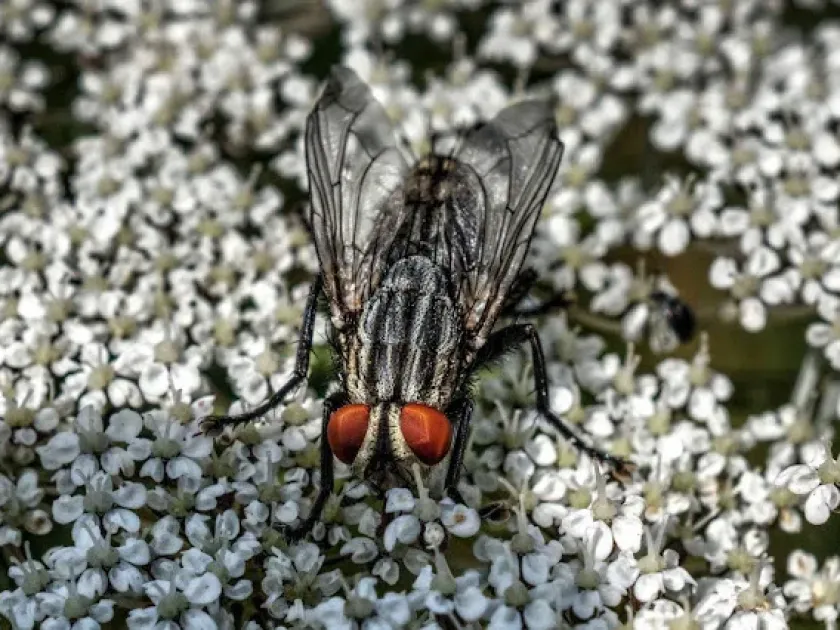
Description
How to identify
The genus Boettcherisca belongs to the Sarcophagidae family, commonly known as flesh flies, which are distinguished by their greyish coloration and specific markings.
Adult flies are typically medium to large in size, featuring three distinct longitudinal black stripes on the mesonotum, which is a key diagnostic feature.
The abdomen of Boettcherisca species often displays a characteristic "checkerboard" pattern, which is easily visible when observed under proper light conditions.
Larvae are maggot-like, footless, and possess highly developed oral hooks, allowing them to penetrate and feed on decaying or damaged plant tissues efficiently.
Identification of specific species within this genus is complex and usually requires an examination of the male genitalia, as external appearances are quite similar across species.
What it damages
Boettcherisca larvae primarily cause damage to vegetable crops, particularly fruits and succulent stems that have been compromised by mechanical injuries or diseases.
They act as secondary pests, invading tissues already weakened by environmental stress or primary pest attacks, thereby accelerating decay and tissue rot.
Commonly affected crops include various Solanaceae and Cucurbitaceae members, where the larvae feed internally, making the produce completely unmarketable.
Beyond direct feeding damage, these larvae facilitate the transmission of opportunistic fungi and bacteria, which rapidly expand the area of decay within the plant host.
Heavy infestations can lead to substantial crop loss, especially in high-humidity conditions where the rot progresses significantly faster due to the larvae's metabolic activities.
When it appears
The seasonal activity of Boettcherisca flies begins in late spring, as soon as temperatures consistently rise to levels suitable for insect flight and mating.
The peak period of abundance occurs during mid-summer, coinciding with the maturation phase of many popular vegetable crops, providing a high density of food sources.
Their life cycle is highly temperature-dependent, allowing for multiple generations per year under warm climatic conditions, which can rapidly increase the population size.
As temperatures begin to drop in autumn, the flies gradually reduce their activity, with pupae or larvae entering a state of diapause to survive the winter months.
Effective pest management schedules must account for these seasonal peaks to apply controls before the damage to fruit becomes irreversible.
Signs of infestation
Early signs of infestation include small, dark entry holes on the surface of fruits or stems, often surrounded by soft, discolored, and necrotic tissue areas.
The presence of an unpleasant odor emanating from the plant or fruit indicates that internal tissue decomposition is well underway due to larval feeding.
Wilting of entire plants or specific parts, despite adequate soil moisture, can suggest internal colonization of the stem or root crown by fly larvae.
Finding maggot activity near bruised or broken surfaces of mature crops is a definitive indicator of an active pest problem requiring immediate attention.
Visual observation of flies hovering around open wounds on plants or decomposing vegetation is a warning sign of high infestation risk in the nearby crop areas.
Control measures
Integrated pest management (IPM) for Boettcherisca starts with strict sanitation, including the removal of all decaying plant debris from the field and storage areas.
Cultural practices like deep tilling after harvest can effectively expose overwintering pupae to predators and harsh weather, significantly reducing the next season's population.
Physical barriers, such as protective mesh screens, are recommended for high-value greenhouse crops to prevent adult flies from accessing vulnerable fruits.
Biological control methods involving entomopathogenic nematodes or specialized microbial products have shown promise in reducing larval populations in the soil.
Chemical control should be considered a last resort, utilizing targeted insecticides only during identified peak flights while ensuring adherence to pre-harvest intervals.
Taxonomy
- Latin name
- Boettcherisca
- Order
- Diptera (flies)
- Family
- Sarcophagidae
- EPPO code
- BOETSP
Discussion
No discussions yet — be the first.