
Bodotria arenosa
Bodotria arenosa
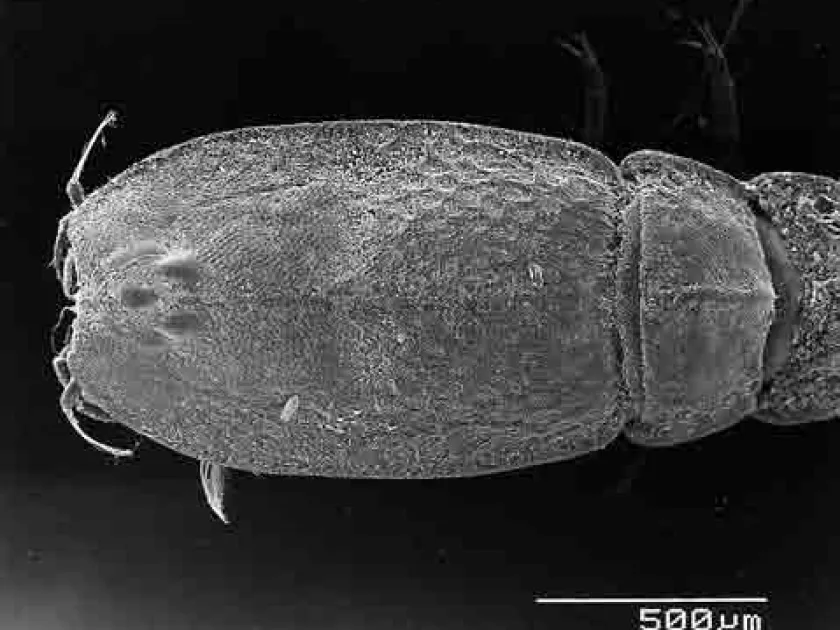
Description
How to identify
Bodotria arenosa belongs to the order Cumacea, family Bodotriidae. These are small marine crustaceans characterized by a distinct, hardened carapace covering the anterior part of their body.
The body is elongated, consisting of a robust cephalothorax and a slender abdomen. The coloration is usually sandy yellow or grey, providing effective camouflage against the sediment.
They are specialized for burrowing into sandy substrates, which serves as their primary mechanism for movement and protection. Their appendages are well-adapted for digging rapidly into loose soil.
Individuals are extremely small, typically measuring only a few millimeters. Despite their size, large populations can significantly disrupt the root environment of young plants.
Identification often requires professional entomological or carcinological examination. Morphological features of the limbs are typically used to distinguish this species from other soil-dwelling crustaceans.
What it damages
This species primarily damages young seedlings and root systems. It is most problematic in coastal agricultural lands or fields with high moisture levels and sandy soils.
The pests feed on tender root tissues and near the root collar. This feeding activity disrupts the plant's ability to uptake water and nutrients from the soil.
Structural damage to the roots causes severe stress to the plant, often resulting in stunted growth. The reduction in root surface area limits the overall vigor of the crop.
Root damage creates entry points for secondary pathogens. Fungal and bacterial infections often follow, leading to rotting of the stem base and potential plant death.
Economic losses arise from decreased plant density and uniform growth, often necessitating reseeding in heavily infested areas to maintain yield expectations.
When it appears
The activity of Bodotria arenosa is highly correlated with soil moisture and temperature. Peak activity typically occurs during spring and summer when conditions are favorable for growth.
During these warmer months, populations multiply rapidly within the surface layer of the soil. Optimal temperatures for development generally range between 18 and 24 degrees Celsius.
The life cycle includes multiple larval stages, each requiring specific environmental stability. Persistent soil moisture is essential for these stages to complete development successfully.
During dry spells or lower temperatures, these crustaceans migrate deeper into the soil substrate. They enter a state of reduced metabolism, effectively hiding from harsh surface conditions.
The critical risk period for agriculture is during the seed germination phase. Even minor infestations during this time can result in massive failures of seedling emergence.
Signs of infestation
A primary indicator of an infestation is a noticeable lag in crop development. Plants appear weak and chlorotic, showing clear signs of nutrient or water stress despite optimal irrigation.
Visual inspection of the soil near the root zone may reveal small tunnels or voids. These are signatures of crustacean burrowing and feeding activities.
Small, irregular lesions on the stem near the soil line are indicative of nocturnal feeding. Affected plants may also exhibit signs of lodging due to compromised root anchoring.
Yellowing leaves starting from the bottom of the plant suggest that the root system is malfunctioning. This is often the result of cumulative feeding damage on the roots.
- Unexplained thinning of plant stands.
- Presence of microscopic pits on root surfaces.
- Stunted plant development.
- Increased presence of crustaceans in soil samples after rain or irrigation.
Control measures
Strategic irrigation management is the most effective cultural control. Maintaining appropriate moisture levels and ensuring the surface soil dries out periodically discourages crustacean activity.
Agronomic practices, such as deep tillage and thorough soil aeration, destroy the crustacean’s habitat and interrupt its reproductive cycle, effectively reducing the population.
Implementing a crop rotation system is vital for limiting pest buildup. Alternating crops with different root structures prevents the species from dominating a specific area.
If population thresholds are exceeded, chemical control may be necessary. Soil-applied insecticides registered for specific crops can be used to manage localized infestations.
Regular field monitoring and soil sampling are essential. Early detection through systematic sampling allows for targeted interventions, minimizing the need for broad-spectrum pesticide use.
Taxonomy
- Latin name
- Bodotria arenosa
- Family
- Bodotriidae
- EPPO code
- BODOAR
Discussion
No discussions yet — be the first.