
Inconspicuous whitefly
Bemisia inconspicua
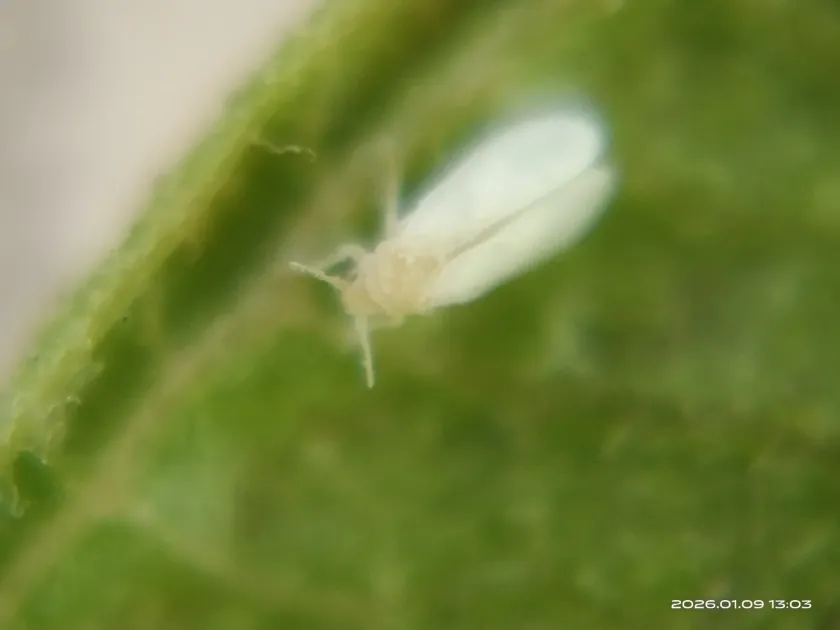
Description
How to identify
The Inconspicuous whitefly (Bemisia inconspicua) is a member of the order Hemiptera and the family Aleyrodidae. It is a tiny insect, typically measuring 1 to 1.5 mm in length, with a body often covered in a fine waxy powder.
Adults resemble minute white moths, though when resting, they hold their wings in a nearly horizontal position rather than a tent-like fashion. The nymphs are sessile, oval-shaped, and often blend into the leaf surface.
The life cycle consists of the egg, three larval stages, the puparium, and the adult stage. The species is highly prolific in warm environments, making it a significant challenge in greenhouse production.
As a polyphagous insect, it infests a wide range of botanical hosts. Females prefer to lay their eggs on the underside of leaves to protect the developing offspring from environmental stressors.
Positive identification of this species is difficult for non-specialists, as it shares significant morphological similarities with other whitefly species within the Bemisia complex.
What it damages
Both nymphs and adults cause direct damage by piercing the plant epidermis and extracting sap. This process severely stunts plant growth, causes wilting, and reduces overall vitality.
Key host plants include tomatoes, cucumbers, peppers, eggplants, and various ornamental greenhouse plants. Heavy infestations can lead to significant biomass loss.
The insects excrete honeydew, a sugary substance that coats the leaves and serves as a substrate for sooty mold fungi. This mold restricts photosynthesis and diminishes the aesthetic and commercial value of crops.
The whitefly is also a known vector for several plant viruses, which can cause leaf curling, yellowing, and necrotic symptoms, leading to significant yield reductions or total crop failure.
Continuous feeding stress disrupts the plant's metabolic functions, often resulting in uneven ripening of fruits and susceptibility to secondary infections by other pathogens.
When it appears
In greenhouse settings, this pest can maintain continuous populations year-round, provided that the climate remains warm and humid throughout the season.
In outdoor conditions, the activity begins in late spring and persists until the first hard frosts. The duration and intensity of the life cycle are highly temperature-dependent.
Ideal conditions for rapid population growth include temperatures between 20°C and 28°C and moderate to high humidity levels within the growing area.
In temperate climates, the species overwinters in protected environments like greenhouses or on weeds that survive in sheltered areas near crop production sites.
Population density typically peaks in mid-to-late summer, requiring rigorous monitoring and management efforts to prevent reaching economic injury levels.
Signs of infestation
The most recognizable sign is the presence of a "white cloud" of adults fluttering up from the foliage when plants are disturbed or shaken.
A closer inspection of the leaf undersides reveals small, yellowish, or translucent nymphs that are firmly attached to the veins of the leaves.
The presence of sticky honeydew or a black, powdery soot-like mold on the leaves is a definitive indicator of an established whitefly colony feeding on the plant.
Plants may show signs of yellowing, leaf curling, or stunted development, which are characteristic responses to the removal of phloem sap by the feeding nymphs.
Yellow sticky traps placed near the canopy are highly effective tools for detecting the early arrival of winged adults before a widespread outbreak occurs.
Control measures
Integrated pest management (IPM) is essential. Cultural controls include removing weeds, maintaining greenhouse hygiene, and ensuring proper airflow within the crop canopy.
Biological control, such as releasing parasitic wasps like Encarsia formosa or predatory insects like Macrolophus pygmaeus, effectively manages populations without chemical reliance.
Chemical control should be used judiciously, rotating between different classes of insecticides to prevent the development of resistance within the whitefly population.
Effective chemical options include neonicotinoids, insect growth regulators, and selective pyrethroids, though application timing is critical to protect the harvest.
- Use yellow sticky traps for population monitoring
- Release beneficial insects for natural control
- Regularly prune heavily infested foliage
- Apply insecticides during the early stages of infestation
- Sanitize greenhouses between cropping cycles
Discussion
No discussions yet — be the first.