
Tobacco whitefly
Bemisia emiliae
Description
How to identify
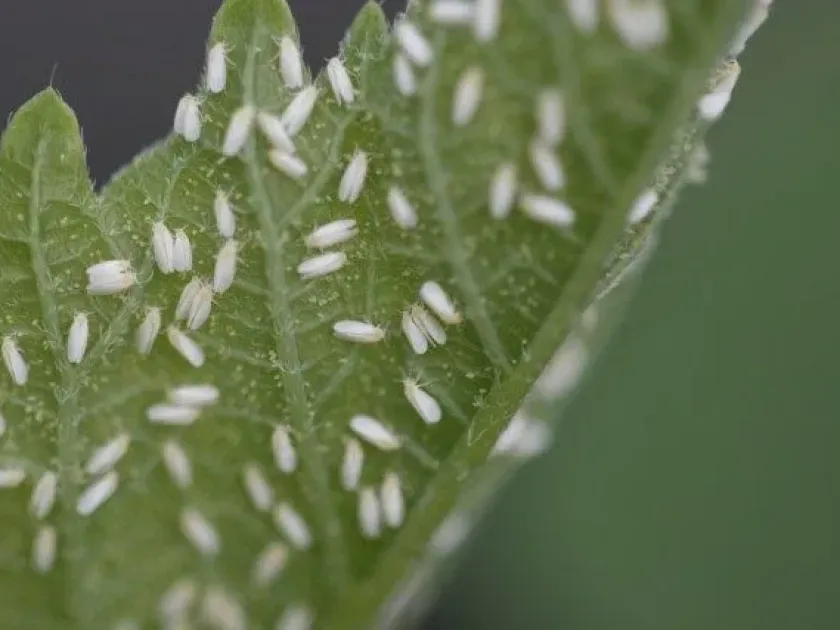
The tobacco whitefly (Bemisia tabaci) is a member of the family Aleyrodidae in the order Hemiptera. It is a tiny insect, typically measuring 1 to 1.5 mm in length, with two pairs of white wings.
Adults are usually found on the underside of leaves. The nymphs, often called "crawlers" in the first instar, eventually settle and remain stationary, appearing as translucent or yellowish scales on the leaf tissue.
This species is highly variable and consists of numerous biotypes, which significantly influences its resistance to various chemical control methods.
The life cycle progresses through the egg, four nymphal instars, and the adult stage. The speed of development depends heavily on ambient temperature and host plant quality.
Under optimal conditions (25–30°C), the generation time can be as short as two to three weeks, leading to massive population outbreaks if not managed early.
What it damages
This pest is highly polyphagous, attacking over 600 plant species including tomatoes, cucumbers, peppers, cotton, and various ornamental plants in greenhouse settings.
Feeding damage occurs as both adults and nymphs pierce the phloem to suck sap, causing plant weakness, chlorosis, and stunted growth.
Beyond physical feeding damage, B. tabaci is a major vector for over 100 plant viruses, most notably geminiviruses that devastate crop yields globally.
The excretion of honeydew promotes the growth of sooty mold, which coats leaves and blocks sunlight, further reducing the plant's photosynthetic capacity.
Severe infestations cause leaves to yellow, wilt, and eventually drop off, potentially leading to total economic loss of the harvested crop.
When it appears
In outdoor environments, populations usually peak during the warmest months of the summer, as high temperatures accelerate their reproductive rate.
In greenhouses and indoor farming systems, the whitefly can maintain continuous generations throughout the year, thriving in controlled artificial climates.
The transition between outdoor and greenhouse environments is critical, as infested plants or weeds can introduce the pest into protected cultivation areas.
Populations tend to increase rapidly during periods of low air movement and high humidity, which are common inside poorly ventilated greenhouses.
Management must be year-round, as the insect can survive on various weed hosts outside of the primary crop production season.
Signs of infestation
The most immediate sign is the presence of small white flies that flutter into the air when an infected plant is touched or shaken.
Examination of the lower leaf surfaces reveals small, oval-shaped nymphs that look like white or pale-yellow scales adhered to the foliage.
The presence of honeydew, a sticky substance, on the upper surface of lower leaves is a strong indicator of an active whitefly infestation.
Leaves may show yellowing or bleaching patterns (chlorosis) due to the removal of nutrients and damage to the plant's vascular system.
The development of black sooty mold on the foliage is a late-stage symptom, indicating that the infestation has been present for a significant period.
Control measures
Managing the tobacco whitefly requires an Integrated Pest Management (IPM) strategy that combines physical, biological, and chemical interventions.
Sanitation is key: removing weeds from inside and around the greenhouse and eliminating host plants after the season prevents the overwintering of the pest.
Biological control agents, such as the parasitoid wasp Encarsia formosa or predatory bugs like Macrolophus pygmaeus, are highly effective in controlled environments.
Chemical control should involve rotating products with different modes of action to prevent the development of insecticide resistance, a common problem with this species.
- Use yellow sticky cards for early detection and monitoring of population levels.
- Employ biopesticides like Beauveria bassiana to target both nymphs and adults.
- Ensure proper greenhouse ventilation to lower humidity and make the environment less favorable for the pest.
Discussion
No discussions yet — be the first.