
Garfish
Belone belone
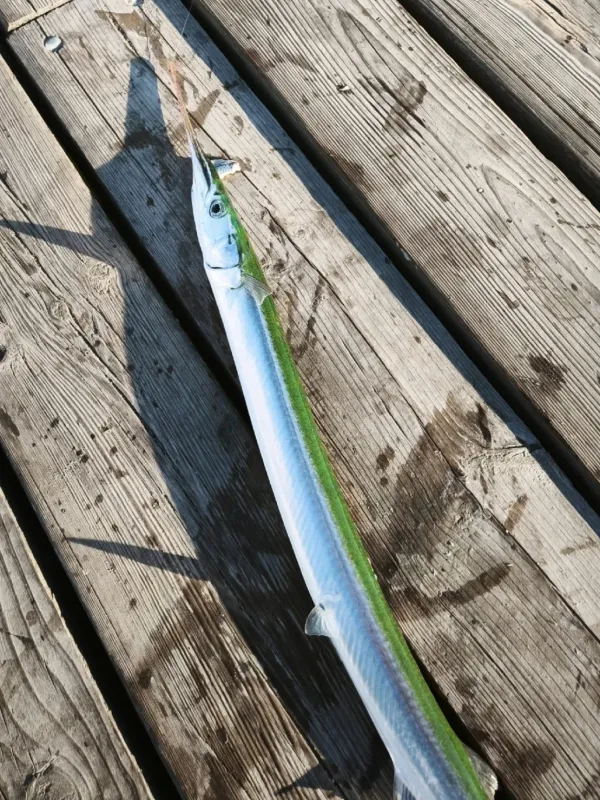
Description
How to identify
The garfish (Belone belone), also known as the European needlefish, is a marine predatory fish belonging to the order Beloniformes and the family Belonidae. It is characterized by an elongated, slender body and long, beak-like jaws filled with sharp teeth.
In biological classification, this species is strictly an aquatic organism. Its morphology is highly specialized for life in the pelagic zone of seas and oceans, where it functions as a fast-swimming predator.
It is crucial to clarify that the garfish is not a plant pest. The idea that this fish could be an agricultural threat is a misconception that lacks any basis in marine biology or plant pathology.
The anatomy of Belone belone is completely adapted for hunting prey in a water environment, specifically targeting small schooling fish and planktonic organisms.
Therefore, any identification of this fish as a threat to crops is scientifically incorrect and reflects a misunderstanding of its ecological niche.
What it damages
The garfish causes absolutely no damage to agricultural crops. As a saltwater species, it is confined to marine environments and has no physical contact with terrestrial farmlands or crops.
The diet of Belone belone is composed exclusively of animal protein, such as small forage fish. Plant material is not part of its nutritional requirements or its natural feeding behavior.
From an agronomical perspective, there is zero interaction between this species and agricultural productivity. The garfish does not possess the organs or behaviors required to feed on or damage plant tissue.
The economic significance of the garfish is restricted to the fishing industry. It is a valued food fish and holds no position as a pest in any global agricultural management system.
Any perceived damage in agricultural settings should be attributed to specific insect pests, mammals, or pathogens rather than marine fauna.
When it appears
The life cycle of the garfish is entirely confined to marine waters. Spawning occurs in coastal areas where eggs are attached to underwater structures, completely separated from agricultural activity.
The seasonal presence of this fish is dictated by water temperature shifts and the migration patterns of its marine prey. These cycles are independent of agricultural growing seasons.
Larval stages develop in planktonic conditions within the sea. There is no biological mechanism for the garfish to transition into an agricultural environment or to affect terrestrial ecosystems.
The seasonality of the garfish does not overlap with crop phenology. The two systems—marine ecology and agricultural plant growth—are completely distinct.
Labels describing this fish as a «seasonal pest» are categorically false and likely result from confusion with various types of insects or plant pathogens.
Signs of infestation
There are no signs of crop infestation by the garfish because it is biologically incapable of attacking or interacting with terrestrial crops.
If farmers notice signs of plant damage such as leaf skeletonization, root rot, or stem girdling, they should investigate common entomological or phytopathological pests.
Applying pest control measures designed for terrestrial pests against a marine fish would be ineffective and potentially harmful to the soil environment.
Correct identification of crop pests is essential for effective farm management. Always use reliable botanical or entomological references to diagnose plant issues.
We encourage farmers to consult with agronomists to distinguish between genuine threats and harmless organisms or simple misunderstandings.
Control measures
No control measures are necessary for the garfish in agricultural settings because it is not a pest. No management strategies have been developed for a species that poses zero threat to crops.
Efforts in farm management should be redirected toward the control of proven threats, such as aphids, mites, rodents, or soil-borne diseases.
Using chemical or mechanical control methods against non-pest organisms like fish is an inefficient use of resources and can disrupt the ecological balance of the field.
Adherence to Integrated Pest Management (IPM) guidelines ensures that resources are focused on confirmed biological threats to crop yields.
For professional guidance on managing actual pests that impact your specific crops, please visit our resources on agronom.info for verified expert advice.
Taxonomy
- Latin name
- Belone belone
- Family
- Belonidae
- EPPO code
- BELGBE
Discussion
No discussions yet — be the first.