
Hawaiian sweetpotato leaf miner
Bedellia orchilella
Description
How to identify
Bedellia orchilella is a species of moth in the family Bedelliidae, order Lepidoptera. It undergoes a complete metamorphosis, transitioning through egg, larva, pupa, and adult stages.
The larvae of this species are specialized leaf miners. Their physiological adaptations allow them to feed exclusively between the upper and lower epidermis of leaves, creating distinctive patterns known as mines.
Adult moths are small, delicate insects with narrow, fringed wings. Due to their size and cryptic coloration, they are often nocturnal and difficult to spot during the day.
The life cycle length depends heavily on ambient temperature. In tropical or warm temperate climates, the species can produce multiple overlapping generations throughout the growing season.
The pupal stage occurs in a silken cocoon, which the larvae often construct on the underside of leaves or in nearby debris, providing a transition phase for the emerging adults.
What it damages
The primary host plants for Bedellia orchilella are members of the Convolvulaceae family, specifically species within the genus Ipomoea, including sweet potatoes and morning glories.
Larval feeding destroys the palisade parenchyma within the leaf, which is the primary site of photosynthesis, thereby reducing the plant's ability to produce energy.
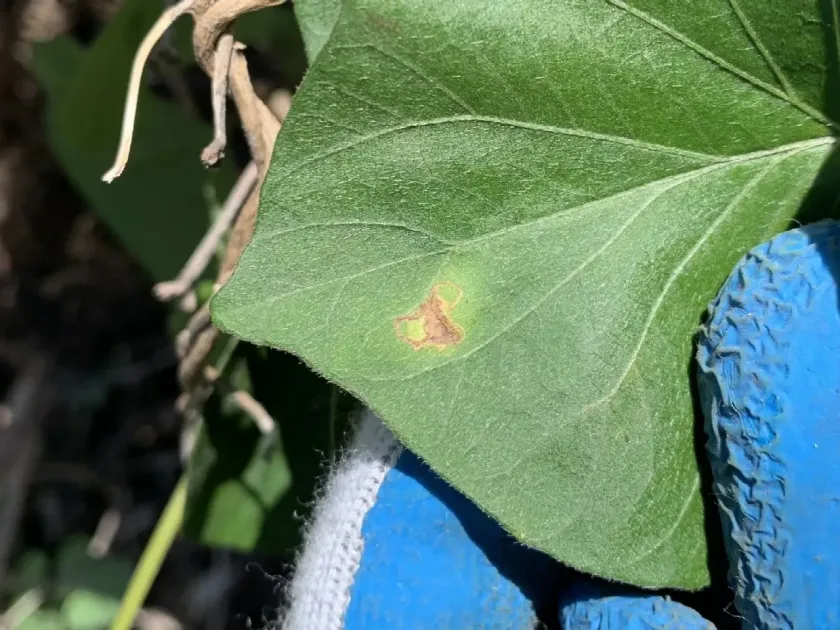
As the larvae mine through the foliage, the tissue becomes necrotic, leading to the development of irregular, serpentine, or blotchy patterns across the leaf surface.
In cases of severe infestation, the cumulative effect of mining activity causes significant leaf yellowing, browning, and premature senescence of the foliage.
Chronic damage reduces the overall growth rate and aesthetic quality of ornamental plants, potentially making them more susceptible to other pathogens or environmental stressors.
Signs of infestation
The most prominent sign is the appearance of winding, whitish or brownish trails within the leaf tissue, which are clearly visible against the green background of the leaf.
If examined closely, one can see the frass (waste) lines inside the mines, which are characteristic markers of the larval pathway as they consume plant tissue.
As the larvae grow, the mines may coalesce into larger patches, leading to leaf wilting, curling, and eventual drying of the affected leaf segments.
The presence of small, spindle-shaped pupae hanging by threads under the leaves or on stalks is a strong indicator of an active and established pest population.
Excessive leaf drop, especially during the peak growing season, often points to a high density of mining larvae affecting the plant's physiological stability.
Control measures
Sanitation is a critical management strategy; removing and destroying infested leaves at the first sign of mining helps to break the life cycle and reduce population numbers.
Cleaning up plant debris at the end of the season is essential, as the pest frequently pupates in the leaf litter, which can harbor the next generation of moths.
Biological control using microbial insecticides, such as those containing Bacillus thuringiensis, is highly effective, as it specifically targets the feeding larvae.
If chemical intervention is necessary, systemic insecticides applied to the foliage are most effective because they translocate into the leaf tissues where the larvae feed.
Cultural practices, including maintaining healthy soil conditions and providing adequate hydration, help plants withstand the stress caused by moderate pest pressure.
Discussion
No discussions yet — be the first.