
Cabbage moth
Barathra
Description
How to identify
The Cabbage moth (Mamestra brassicae) is a prominent member of the Noctuidae family, widely distributed across various agricultural zones and known as a significant pest.
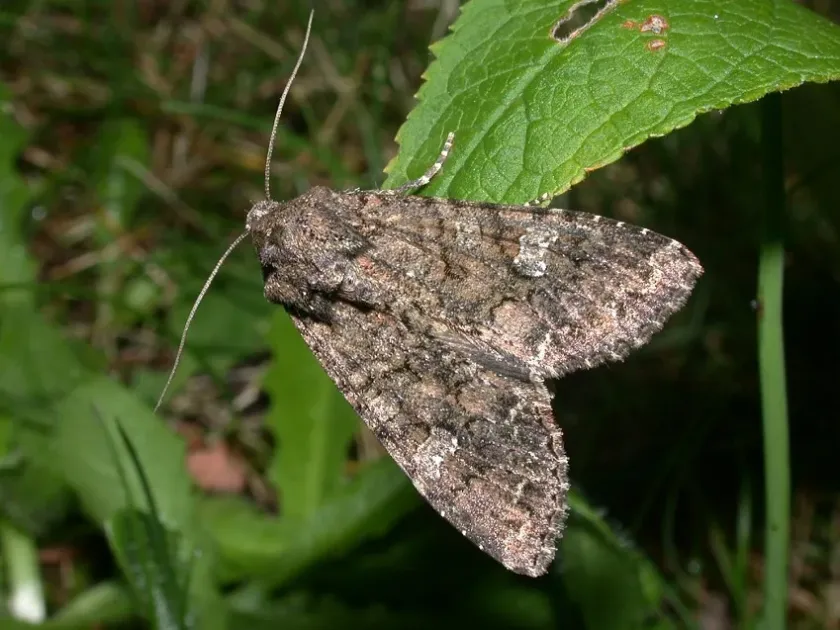
The adult moth features a wingspan of approximately 40–50 mm, with mottled brown and grey forewings adorned with distinctive white markings, aiding in camouflage.
The larvae, or caterpillars, undergo multiple developmental stages, transitioning from light green to a dark brown or blackish color as they reach maturity.
Pupation occurs within the soil, typically at a depth of 5–10 cm, where the pupae remain in a protective cocoon until the next cycle of emergence.
The life cycle is closely tied to local climatic conditions, usually spanning from one to two generations per year depending on the length of the growing season.
What it damages
As a polyphagous insect, the Cabbage moth attacks a wide range of host plants, including members of the Brassicaceae family, sugar beets, tomatoes, and peas.
Young larvae initially feed by skeletonizing the leaf surface, leaving behind only the veins, which significantly weakens the host plant's photosynthetic capacity.
Older larvae are responsible for the most severe damage, as they bore deep, irregular tunnels into the heart of cabbage heads, making them unmarketable.
Larval feeding activity often introduces pathogens into the plant tissues, leading to secondary infections such as bacterial soft rot, which can destroy the entire crop.
High infestation levels can result in massive yield losses, forcing farmers to implement rigorous monitoring and intervention programs to save the harvest.
When it appears
Adult moths typically emerge from their overwintering pupae during late spring, with the exact timing depending on soil temperature and moisture levels.
The first generation usually peaks in late May or June, while the second generation may emerge throughout July and August, extending the threat period.
Females are prolific egg-layers, placing clusters of eggs on the undersides of leaves, which hatch within a week under favorable warm conditions.
Larval activity reaches its peak during the mid-to-late summer months, coinciding with the rapid growth phase of many vegetable crops.
Monitoring using pheromone traps is standard practice, as it provides accurate data on the timing of adult activity and potential future larval outbreaks.
Signs of infestation
The initial signs of infestation are the presence of egg batches, which appear as yellowish-white clusters on the underside of plant leaves.
Visible feeding damage, characterized by large, ragged holes in the foliage, is a clear indicator that larvae are present in the field.
Dark, granular excrement (frass) found in leaf axils or on the surface of the cabbage head is a definitive marker of larval feeding activity.
Structural damage, such as distorted growth or internal tunnels in the core of the vegetable, indicates a mature larval infestation.
Nocturnal sightings of adult caterpillars feeding on the crop represent the most advanced stage of a potential infestation outbreak.
Control measures
Cultural control methods such as deep soil cultivation after harvest can significantly reduce the number of overwintering pupae in the soil.
Biological control, including the use of Bacillus thuringiensis or specific parasitic wasps, offers an effective way to manage larvae without harming beneficial insects.
Systemic insecticides should be applied as a last resort, strictly adhering to the economic threshold of infestation to minimize unnecessary chemical usage.
- Regular field scouting for early egg detection.
- Use of pheromone traps for population tracking.
- Rotation of chemical classes to prevent resistance development.
Maintaining crop hygiene by removing damaged plant remains promptly helps prevent the migration of larvae to healthy plants in the vicinity.
Discussion
No discussions yet — be the first.