
Bagrada bug
Bagrada cruciferarum
Description
How to identify
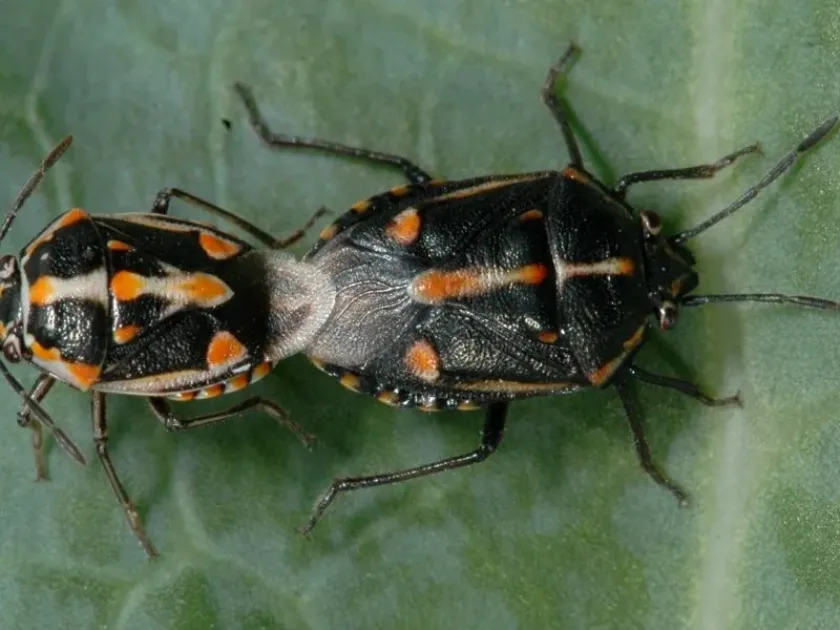
The Bagrada bug (Bagrada hilaris), also known as the painted bug, is a member of the Pentatomidae family, order Hemiptera. These insects are approximately 5–7 mm long and possess a distinct shield-like body shape.
Their coloration is striking, consisting of a black or dark brown background marked with vibrant orange or yellow spots and patterns, which gives them a unique appearance in the field.
Immature stages, known as nymphs, start as bright red and gradually transition to darker shades with white markings as they molt. They are highly active and typically remain in clusters.
Both adults and nymphs possess piercing-sucking mouthparts, allowing them to feed on plant juices. They thrive in hot, dry conditions, where their reproduction rates significantly increase.
They overwinter as adults, often hiding in soil cracks or under plant debris, which allows them to survive cold periods and emerge early in the growing season to begin feeding.
What it damages
The Bagrada bug primarily targets crops within the Brassicaceae family, including broccoli, cabbage, cauliflower, kale, mustard, and canola. They are considered significant agricultural pests.
In addition to cultivated vegetables, they readily infest various weeds belonging to the mustard family, allowing them to maintain stable populations throughout the year.
Damage is caused by both adults and nymphs as they pierce plant tissues and suck cell contents, injecting digestive enzymes that kill surrounding plant cells.
Young plants and seedlings are particularly vulnerable; severe infestation often results in stunted growth, wilting, and, in many cases, total plant mortality.
When infestation occurs during the reproductive stage, the bugs feed on developing buds and flowers, leading to bloom drop and a significant reduction in total yield quality.
Signs of infestation
The earliest symptom is the appearance of small, white, star-shaped spots on the foliage, which are caused by the insect's feeding punctures that kill the leaf tissue.
As the damage progresses, these spots coalesce into large necrotic lesions. Leaves often become chlorotic, wither, and eventually curl or appear deformed under heavy pressure.
Presence of the insects themselves is the most reliable sign. They are frequently found congregating on the undersides of leaves or along the stems of host plants.
Damage to the apical meristem often forces the plant to produce multiple secondary shoots, leading to an irregular growth pattern that prevents the formation of marketable heads or fruit.
In oilseed crops like canola, signs of infestation include the wilting of terminal inflorescences and the premature dropping of seed pods, leading to significant economic losses for farmers.
Control measures
Effective management begins with strict sanitation practices, including the removal of weeds within the Brassicaceae family, which act as host reservoirs for the bugs.
Deep plowing after harvest helps bury and destroy overwintering sites, significantly reducing the population density of the next generation of bugs before the following season.
Chemical control involves the application of registered insecticides effective against sucking pests, applied during the early stages of infestation to prevent population spikes.
Rotating insecticide classes is essential to manage resistance, as the Bagrada bug can quickly adapt to frequently used active ingredients in conventional crop management systems.
Integrated Pest Management (IPM) strategies, which include the use of beneficial insects or physical barriers like row covers for small gardens, provide sustainable alternatives to heavy pesticide use.
Discussion
No discussions yet — be the first.