
Invasive fruit fly
Bactrocera invadens
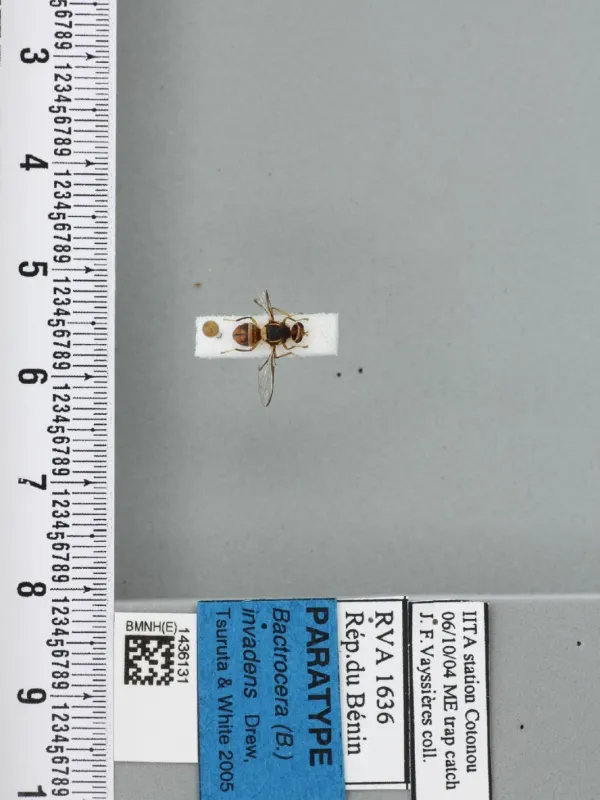
Description
How to identify
The invasive fruit fly (Bactrocera invadens, now widely considered synonymous with Bactrocera dorsalis) is a member of the Tephritidae family. It is a highly destructive insect known for its rapid spread and ability to colonize diverse fruit species.
Adult flies are roughly 6–8 mm long, characterized by their bright yellow markings on the abdomen and clear wings with dark veins. They are strong fliers, which facilitates their quick dispersal across orchards and regions.
The life cycle involves four distinct stages: egg, larva, pupa, and adult. Females use their sharp ovipositors to insert eggs directly into the fruit skin, typically laying several eggs in a single puncture, which hatch within a few days.
The larvae are small, creamy-white maggots that feed on the interior flesh of the host fruit. After completing their development, they exit the fruit and drop to the soil, where they pupate and eventually emerge as adult flies to begin the cycle again.
This species is highly adaptable, thriving in tropical and subtropical climates. Its high reproduction rate and lack of specific natural predators in new areas make it one of the most significant threats to global fruit production.
What it damages
Bactrocera invadens is a generalist pest, attacking an extensive range of commercial and wild fruits. Host crops include mango, citrus, guava, papaya, banana, and various solanaceous crops like tomatoes and peppers.
The fly causes direct economic losses by rendering fruits unmarketable and inedible. Infestation can lead to complete destruction of harvest if not monitored and managed properly, causing severe issues for international trade.
Signs of infestation
The initial signs of infestation include small, pin-prick puncture marks on the surface of the fruit. Over time, these spots may become sunken, discolored, or start to ooze juice as the fruit begins to decompose.
As larvae feed internally, the fruit loses its structural integrity. A tell-tale sign of advanced infestation is the presence of maggots burrowing deep into the flesh, which often leads to the fruit turning soft and rotting from the inside out.
Premature fruit drop is another indicator of infestation. If fallen fruit is cracked open, live larvae can usually be found, confirming the presence of the fly in the area and necessitating immediate quarantine actions.
Control measures
Quarantine and phytosanitary measures are the primary line of defense, restricting the movement of fruits from infested areas. Monitoring using pheromone-baited traps is essential for early detection and tracking population density.
Orchard sanitation is critical. Growers are encouraged to collect and dispose of all fallen and damaged fruits immediately, burying them deep or using heat treatment to kill larvae before they exit the fruit and pupate in the soil.
Chemical control focuses on the use of bait sprays that combine food attractants with selective insecticides. These methods are designed to target adult flies while minimizing harm to beneficial insects and the surrounding environment.
Discussion
No discussions yet — be the first.