
Autoplusia gammoides
Autoplusia gammoides
Description
How to identify
Autoplusia gammoides is a member of the Erebidae family, previously classified under the Noctuidae family, commonly known as a type of looper moth due to its movement pattern.
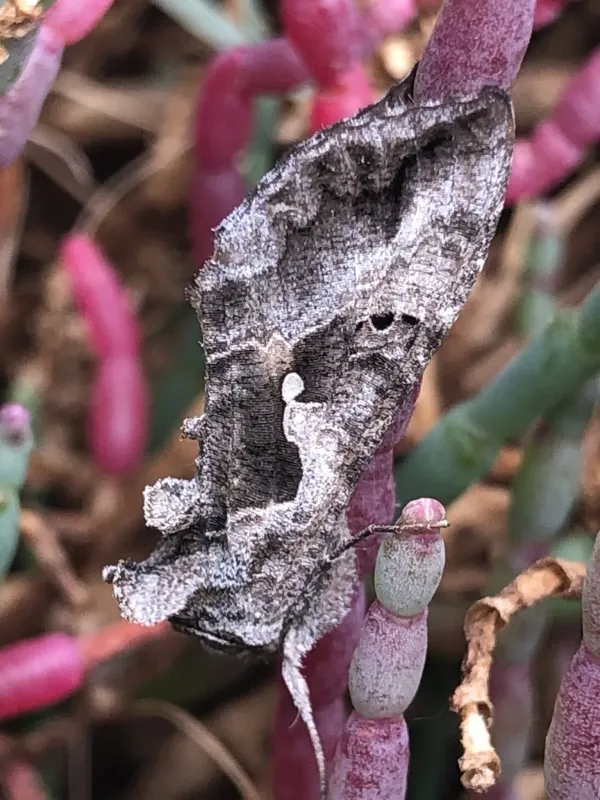
Adult moths are characterized by a medium size and a distinctive metallic silver or golden marking on the forewings, which resembles the Greek letter "gamma," providing a key diagnostic feature.
The larvae, known as loopers, possess fewer abdominal prolegs than other noctuid caterpillars, which forces them to move by arching their backs, a behavior that gives them their common name.
The larvae generally exhibit a green coloration, often with subtle longitudinal stripes that provide excellent camouflage against the foliage of their host plants.
Pupation occurs within delicate silken cocoons, which are typically constructed on the undersides of leaves or hidden among plant debris, making them difficult to locate during field scouting.
What it damages
This species is a known polyphagous pest, capable of feeding on a diverse range of host plants across several botanical families, which increases its agricultural impact.
Major damage is observed in vegetable crops, particularly within the Solanaceae and Fabaceae families, where larvae feed extensively on leaves and occasionally on reproductive parts.
Weed species often serve as alternative hosts, allowing the population to build up outside of the main crop cycle before infesting primary agricultural plantings.
In large-scale farming, the larvae can cause significant defoliation, which directly impacts the plant's ability to photosynthesize and store energy for fruit development.
High infestation levels can lead to severe losses, especially in young plants where the destruction of the apical meristem or significant leaf loss stunts growth and reduces yield.
Signs of infestation
The earliest signs of infestation are ragged, irregular holes in the leaf blades, often referred to as "windowing" when the epidermis remains intact.
The presence of frass (caterpillar droppings), which appears as small dark pellets on the leaves or soil, is a clear indication of active feeding within the crop canopy.
Scouting for the larvae themselves is best performed during cooler hours, as they often rest on the underside of foliage to avoid predation and high heat during the day.
Plant development issues, such as stunted growth and asymmetrical leaf development, serve as indirect signs that the plant's metabolic processes have been disrupted by feeding.
Damage to buds and flowers can be observed in severe cases, which is a major concern for growers as it directly translates to reduced crop quantity and market quality.
Control measures
Monitoring using pheromone traps is the most effective way to track adult moth activity and predict the arrival of larvae, allowing for timely decision-making.
Cultural practices, including thorough soil cultivation to disrupt overwintering pupae and rigorous weed control, are essential components of integrated pest management.
Biological control options, such as the application of microbial insecticides containing Bacillus thuringiensis, provide an effective and environmentally friendly management tactic.
Chemical control should be applied based on economic threshold levels, targeting the early larval stages when the caterpillars are most vulnerable to contact or systemic insecticides.
Maintaining crop rotation and managing edge habitats helps to break the life cycle of the moth and reduces the migration of larvae from reservoir hosts into the crop fields.
Taxonomy
- Latin name
- Autoplusia gammoides
- Order
- Lepidoptera (butterflies)
- Family
- Noctuidae
- EPPO code
- SYNGGA
Discussion
No discussions yet — be the first.