
Autoplusia egena
Autoplusia egena
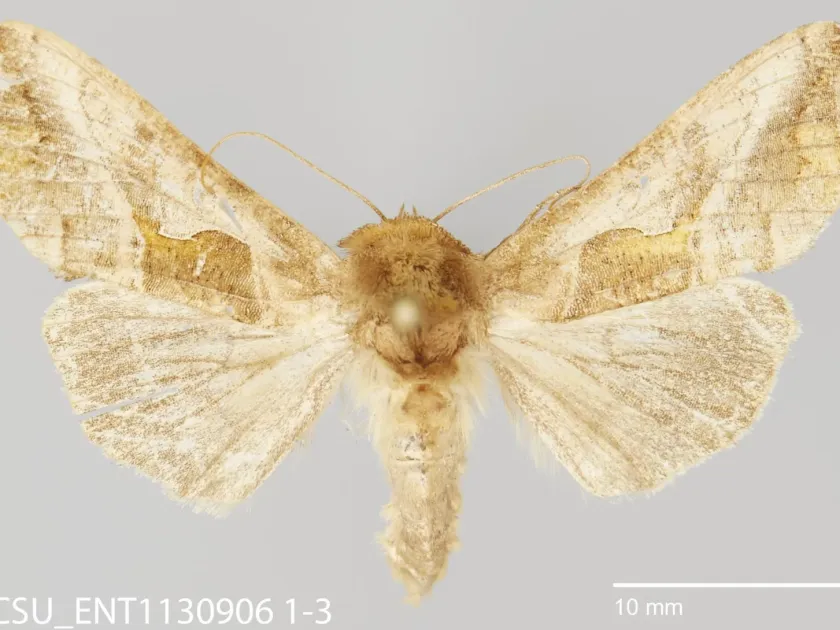
Description
How to identify
Autoplusia egena is a species of moth belonging to the order Lepidoptera and the family Noctuidae. These moths are recognized as significant pests in various agricultural systems due to their larvae's feeding habits.
The adult moth has a wing pattern that provides excellent camouflage, blending into dry vegetation and soil. Their body shape is typical of the Plusiinae subfamily, often displaying muted earth tones that aid in day-time concealment.
The larvae are characterized by their green coloration and unique looping movement when walking. This behavior is a result of the reduced number of prolegs, which is a classic taxonomic feature of this moth group.
Pupation occurs within a loose silk cocoon, often hidden within folded leaves or sheltered plant debris. This stage is crucial for surviving cold periods or adverse environmental conditions in the field.
Eggs are typically deposited on the underside of host plant leaves. They are small and hemispherical, often blending into the plant texture, which makes early-season scouting particularly difficult for farmers.
What it damages
The primary damage is caused by the larval stage, which consumes leaves voraciously. This defoliation reduces the plant's ability to photosynthesize, directly impacting growth rates and yield potential.
In addition to leaf consumption, larvae may feed on tender flower buds and young fruits. This is especially damaging to vegetable crops like beans, tomatoes, and various legumes, where fruit yield is the primary economic output.
Massive infestations can result in skeletonized leaves, leaving only the veins behind. This stress makes the plants significantly more susceptible to secondary stressors like drought, heat, and fungal infections.
Larval excrement deposited on leaves can promote the growth of secondary microorganisms, which further deteriorate the quality of the harvested crop and degrade the aesthetic value of the produce.
During peak population levels, the cumulative damage can lead to substantial economic losses, especially if the infestation remains undetected until significant plant destruction has already occurred.
When it appears
Autoplusia egena activity is strictly linked to ambient temperatures, with emergence beginning as the season warms. They are multi-generational, meaning multiple cycles can occur within a single growing season.
Adult moths are nocturnal, spending the daytime hours resting in hidden, shaded areas. Their activity levels generally peak during dusk and night-time, which is when most mating and egg-laying occur.
The life cycle duration is dependent on weather conditions; warmer temperatures significantly accelerate development from egg to pupa. This can lead to explosive population growth during mid-summer months.
Overwintering typically happens at the pupal stage in the soil or protected ground debris. This biological adaptation allows the species to persist in environments that experience distinct seasonal temperature changes.
Field scouting should begin early in the spring, tracking the arrival of adult moths via light traps or pheromone monitoring to predict the onset of larval activity.
Signs of infestation
The most common sign of Autoplusia egena is the presence of irregular, ragged holes in the leaves. Initially, these are small, but as larvae grow, the holes rapidly expand in size.
Frequent sightings of dark, pellet-like excrement on leaf surfaces are a definitive indicator of an active infestation. This is often the most reliable way to locate hidden larvae during field inspections.
Plants may show signs of wilting or stunted growth as the larval load consumes the energy reserves of the host plant. Careful observation might reveal the presence of small, green, looping larvae.
Silken webbing found on the foliage or between leaves is a clear indicator that the larvae are preparing for pupation or creating shelter for daytime resting.
Observation of damaged flower clusters or eaten fruit sets confirms that the infestation has reached a level where reproductive parts of the plant are being targeted.
Control measures
Managing this pest requires an integrated approach that focuses on prevention before resorting to chemical intervention. Cultural practices are the most effective long-term strategy.
Effective weed management is essential, as many weed species serve as alternative hosts for the moth, allowing them to bridge the gap between crop cycles.
Tilling the soil after harvest is a critical measure, as it disturbs the pupation sites and exposes the pupae to predators and environmental extremes, significantly reducing the overwintering population.
Biological control, including the release of egg parasitoids like Trichogramma, can provide excellent suppression when timed correctly with the moth's egg-laying periods.
- Implement crop rotation to break pest cycles.
- Remove host weeds from field borders.
- Use pheromone traps for early warning.
- Introduce beneficial predatory insects.
- Apply targeted bio-insecticides only when thresholds are exceeded.
Taxonomy
- Latin name
- Autoplusia egena
- Order
- Lepidoptera (butterflies)
- Family
- Noctuidae
- EPPO code
- AUTGEG
Discussion
No discussions yet — be the first.