
Ailanthus webworm
Atteva aurea
Description
How to identify
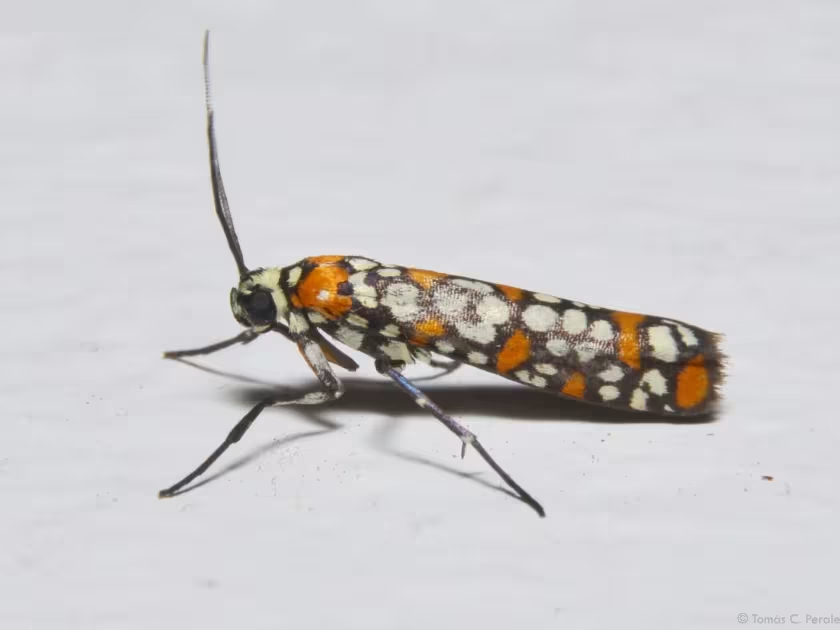
The Ailanthus webworm (Atteva aurea) belongs to the family Attevidae. The adult is a brightly colored moth with a wingspan of approximately 25–30 mm.
The wings feature a distinct pattern of white spots on an orange or brownish background, which serves as aposematic coloration to warn predators of their toxicity.
The larvae are up to 25 mm long, displaying a yellowish-green body with longitudinal white stripes and black spots, making them easily identifiable on foliage.
Pupation occurs within loose, silken cocoons spun by larvae, typically tucked inside rolled-up leaves or hidden in bark crevices.
While originally native to tropical regions, this species has expanded its range significantly alongside the spread of its primary host plant.
What it damages
The primary host plant for Atteva aurea is the Tree of Heaven (Ailanthus altissima), an invasive species in many parts of the world.
During outbreaks, larvae may feed on other related plants, potentially impacting decorative trees in urban or landscaped areas.
Larvae feed on leaves, often stripping them down to the central veins, which results in significant defoliation of the tree canopy.
Severe infestations impair the tree's photosynthetic ability, weakening it over time and making it more susceptible to secondary pests and diseases.
In nursery settings, the Ailanthus webworm can cause substantial economic losses by stunting the growth of young saplings.
When it appears
The activity cycle of the Ailanthus webworm is heavily dependent on regional climate, with multiple generations possible per year in warmer areas.
Active development begins in the spring once temperatures remain consistently warm enough for egg hatching and larval development.
Peak larval feeding typically occurs during the mid-summer months when host trees have fully developed their canopy foliage.
Late-season generations prepare for winter by pupating in protected locations, such as under leaf litter or within tree bark.
Monitoring the moth population in early spring is crucial for predicting potential outbreaks later in the growing season.
Signs of infestation
The most prominent sign of infestation is the formation of communal webbed nests on the tips of branches, where larvae congregate.
Leaves tied together with silk to form protective shelters indicate that Ailanthus webworms are actively feeding in the area.
- Accumulation of larval frass (droppings) on leaves beneath the webbing.
- Skeletonized leaves that appear as translucent or lacy networks of veins.
- Visible presence of adult moths flying around the host trees during sunny daylight hours.
Heavy infestations may give the tree an overall brown, withered appearance due to the extensive destruction of the foliage.
Control measures
Physical removal of webbed nests during the larval stage is an effective and environmentally friendly control method for individual trees.
Biological control using Bacillus thuringiensis (Bt) provides excellent results against young larvae with minimal impact on beneficial insects.
Systemic insecticides may be used in nursery environments, but they should be applied with caution to prevent harm to pollinators and predators.
Maintaining a healthy environment for natural predators, such as birds and predatory insects, can help keep webworm populations in check.
Sanitation practices, including the removal of infested twigs and leaf litter in the fall, can help reduce the number of overwintering pupae.
Discussion
No discussions yet — be the first.