
Ant-loving cockroach
Attaphila fungicola
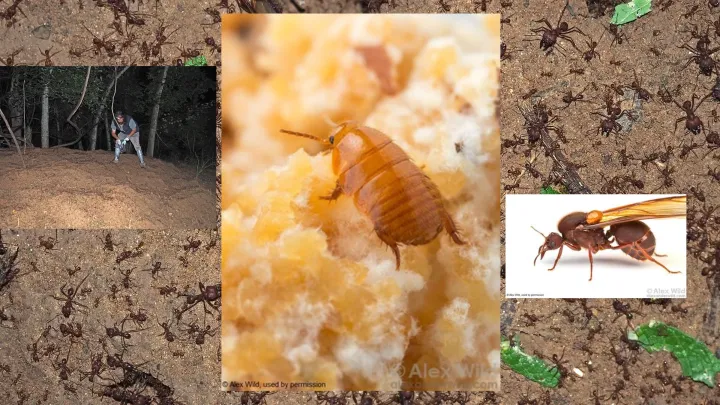
Description
How to identify
The ant-loving cockroach Attaphila fungicola is a tiny insect species that has evolved as a specialized symbiont living within the nests of leafcutter ants of the genus Atta.
Adult specimens grow only a few millimeters long and possess a flattened body structure perfectly adapted for maneuvering through the narrow tunnels of an ant colony.
Their coloration ranges from pale yellow to light brown, providing effective camouflage against the fungal substrate cultivated by the ants.
The wings of this species are severely reduced or completely absent, which is a structural adaptation to their strictly subterranean life inside the host colony.
Their mouthparts are specialized for feeding on the fungal mycelium, which serves as the primary nutritional source for the leafcutter ant colony.
What it damages
The direct impact on agricultural crops is minimal, but they exert an indirect influence on leafcutter ants, which are major agricultural pests in tropical regions.
As Attaphila fungicola lives in symbiosis with leafcutter ants, it can affect the internal stability and resource allocation within the ant nest.
The indirect damage occurs when leafcutter ants, potentially hindered or distracted by the presence of these symbionts, alter their foraging patterns or nest maintenance.
In natural habitats, this species is not considered a direct agricultural threat, but it remains a significant biological component of the ant colony's ecosystem.
The potential agronomic risk lies in the modulation of ant population dynamics, as leafcutter ants can devastate leaves on large-scale fruit and forest plantations.
When it appears
The developmental cycle of this species is inextricably linked to the biological rhythm of the host leafcutter ant colony, where a stable microclimate is maintained.
Reproduction and larval development occur year-round because the interior of the ant nest provides optimal and constant temperature and humidity levels.
Unlike many other agricultural pests, the ant-loving cockroach does not exhibit seasonal behavior influenced by external weather conditions or fluctuating temperatures.
Activity levels are typically at their peak when the fungal gardens, which provide food for both the ants and the cockroaches, are growing most rapidly.
The life cycle includes an egg phase, several nymphal stages, and the adult stage, all of which take place within the secure chambers of the host nest.
Signs of infestation
Detecting this species on the soil surface is nearly impossible due to their secretive and strictly subterranean lifestyle inside deep nest structures.
Signs of presence can only be identified through invasive procedures, such as excavating ant nests and performing a microscopic inspection of the fungal chambers.
Visual inspection of host plants offers no information about the presence of this species, as they never leave the confines of the ant colony.
An indirect indication might be abnormal behavior in the leafcutter ant population or localized suppression of colony growth at high symbiont densities.
For research monitoring, bait traps placed in the immediate vicinity of nest exits during nighttime hours are typically employed.
Control measures
Specific protective measures targeted solely against the ant-loving cockroach are virtually nonexistent in standard agronomic practice.
Pest management efforts are almost exclusively focused on the control of leafcutter ants, which are the primary economic pests in the affected areas.
The application of fumigants or chemical baits to eradicate ant nests results in the simultaneous elimination of the symbiont populations, including Attaphila fungicola.
Biological control methods include the use of entomopathogenic fungi, which infect both the ants and their associated organisms within the nest galleries.
Maintaining a healthy balance of natural predators is essential to prevent the uncontrolled spread of both the leafcutter ants and their complex of symbionts.
Taxonomy
- Latin name
- Attaphila fungicola
- Family
- Blattellidae
- EPPO code
- ATTPFU
Discussion
No discussions yet — be the first.