
Black carpet beetle
Attagenus unicolor
Description
How to identify
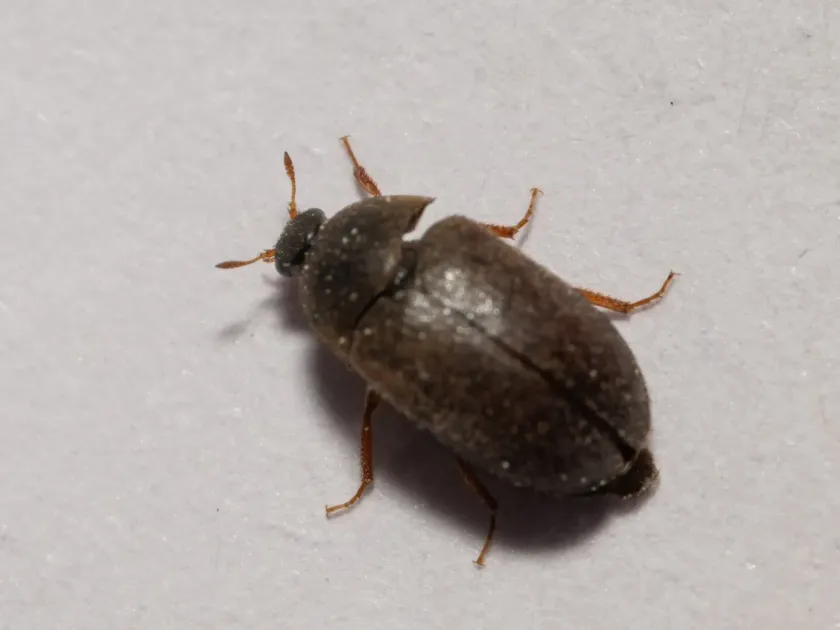
The black carpet beetle (Attagenus unicolor) belongs to the family Dermestidae, order Coleoptera. The adult insect is a small beetle, typically 3 to 5 mm long, with an oval-shaped body that is black or dark brown in color with a matte texture.
The larvae are elongated and spindle-shaped, covered with thick, stiff hairs, which earns them the nickname "woolly bears." A distinctive characteristic is the tuft of long hairs located at the posterior end of the larva's body.
Eggs are small, oval, and white, usually laid by females singly or in small clusters within floor cracks, wall crevices, or directly inside the substrate that provides food for the developing larvae.
The life cycle consists of four stages: egg, larva, pupa, and adult. In favorable conditions within storage facilities, a single generation can complete its development in anywhere from several months to a full year.
Adult beetles are capable of flight, which allows them to actively disperse throughout warehouses, infesting new batches of stored products and reaching difficult-to-access areas.
What it damages
The black carpet beetle is a serious stored-product pest that damages a wide variety of plant and animal-based materials. In agriculture, it poses a significant threat to grain elevators and food processing plants.
The pest targets stored wheat, corn, rice, oats, and processed products such as flour, cereal, bran, and animal feed. Products stored for extended periods without adequate monitoring are at the highest risk.
In addition to grain crops, this beetle can damage legume seeds, dried fruits, vegetables, and animal-derived products including dried meat, leather goods, wool, and furs.
The larvae are the most destructive life stage. They tunnel into the interior of grain kernels, leaving behind hollowed-out shells mixed with frass (excrement) and shed larval skins.
The economic impact involves not only the direct loss of grain mass but also severe contamination of the product, rendering it unfit for consumption or market distribution.
When it appears
In temperature-controlled storage facilities, the black carpet beetle can develop continuously throughout the year, provided that optimal temperature and humidity levels are maintained.
The optimal temperature for development is between +22 and +28 degrees Celsius, which accelerates larval growth and leads to rapid population increases within the stored material.
In unheated facilities, insect activity drops significantly during the winter months, although larvae can survive low temperatures by entering a state of diapause in protected crevices.
Rising spring temperatures trigger adult activity, leading to mating and oviposition, which often coincides with the arrival of new harvest batches in storage.
Adult sightings are most frequent during warmer months, when active reproduction occurs, often accompanied by the beetles flying within the storage areas.
Signs of infestation
The primary sign of an infestation is the presence of numerous shed larval skins within the grain mass, which are easily identifiable by their dark brown color.
Visual inspection often reveals the presence of hollow, damaged kernels that break apart easily when handled due to the destruction of their internal structure.
Finding live larvae in floor cracks, under baseboards, or within dust and spilled grain near storage walls confirms an active infestation of the facility.
The presence of adult beetles on walls, ceilings, or near window frames during daylight hours indicates that the population has already reached a high density.
A foul odor originating from the product, often accompanied by discoloration and clumping caused by larval waste and webbing, is a common indicator of significant damage.
Control measures
The foundation of effective management is maintaining strict sanitation standards within storage facilities, including regular cleaning of all equipment and hard-to-reach corners.
Employing deep cooling or aeration methods during the winter can significantly reduce the beetle population and inhibit further development within the grain mass.
Chemical disinfestation of the facility using contact insecticides or fumigation is the most reliable method for eliminating the pest in heavily infested areas.
- Sealing cracks and crevices to prevent new beetle entry.
- Implementing regular monitoring using sticky traps and pheromone lures.
- Conducting timely fumigation of grain batches according to regulatory standards.
- Isolating contaminated products to prevent the spread of the infestation.
Biological control methods, such as the use of natural predators, are less common in industrial warehouses but may provide effective supplemental support within integrated pest management programs.
Taxonomy
- Latin name
- Attagenus unicolor
- Order
- Coleoptera (beetles)
- Family
- Dermestidae
- EPPO code
- ATTGMJ
Discussion
No discussions yet — be the first.