
Black carpet beetle
Attagenus megatoma
Description
How to identify
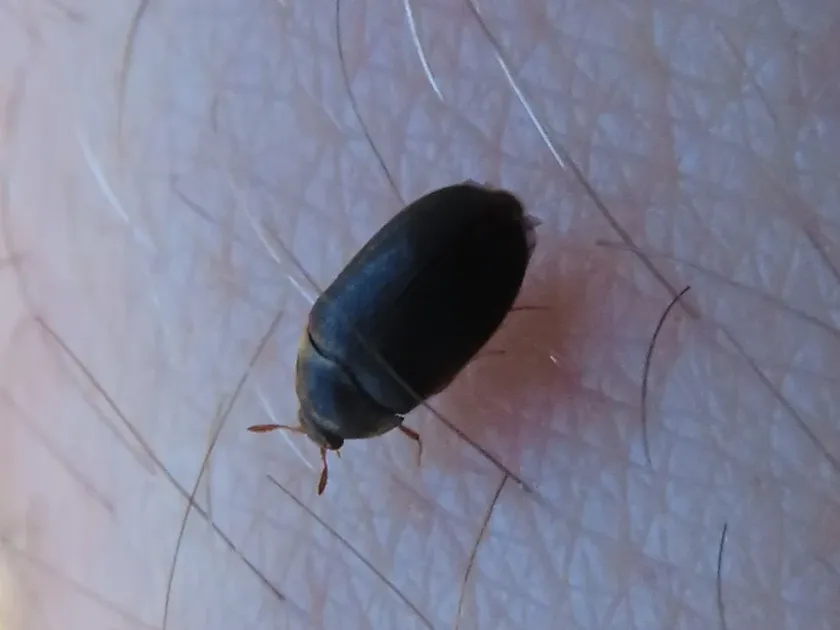
The black carpet beetle Attagenus megatoma belongs to the family Dermestidae within the order Coleoptera. Adult beetles are small, oval-shaped insects ranging from 3 to 5 mm in length, typically displaying a solid black or dark brown coloration.
The larvae are distinct, featuring an elongated body covered in dense, bristle-like hairs, which gives them a furry appearance. This larval stage is the most destructive phase, as the insects are highly active feeders during this period.
The life cycle duration is heavily influenced by ambient temperature and humidity. Under optimal conditions, a single generation can develop within several months, though development may extend up to a year in less favorable warehouse environments.
Adult beetles are often elusive and may not feed at all, relying on energy reserves accumulated during the larval stage. They are highly mobile and can easily be transported between locations along with contaminated goods or equipment.
Precise identification requires careful inspection, as larvae can be easily confused with other carpet beetle species. Professionals utilize entomological references and pheromone traps to accurately identify the presence and density of the pest.
What it damages
The black carpet beetle is a notorious stored product pest that infests a wide range of goods of both plant and animal origin. It frequently targets cereal grains, flour, processed grain products, and various types of agricultural seeds.
In storage facilities, they may also damage animal feeds, dry goods, and even fabrics like wool or leather if stored in close proximity to food supplies. This versatility makes them a persistent threat to warehouses and food processing plants.
Larvae feed by boring into kernels, leaving behind hollowed-out husks. This causes significant weight loss in stored commodities and destroys the germination viability of seeds, making the product entirely unsuitable for commercial use.
Beyond physical consumption, the larvae's excrement and shed skins significantly degrade the sanitary quality of the product. This accumulation promotes the growth of mold and harmful bacteria, further compromising the stored inventory.
The damage is often hidden, as larvae prefer to develop deep inside grain bulks or within inaccessible crevices in machinery. Consequently, by the time an infestation becomes visible, a substantial portion of the stock may already be damaged.
Signs of infestation
The most common sign of an infestation is the presence of discarded larval skins, which tend to accumulate in corners, floor cracks, and throughout the grain bulk. These light-brown skins are a clear indicator of active or previous larval growth.
Inspection of the grain mass may reveal fine, flour-like dust and scattered excrement pellets. Upon closer examination, individual grains often show entry holes and internal feeding damage, which can be confirmed by breaking the grain apart.
Sightings of adult beetles near windows, lighting fixtures, or wall edges indicate that the population has reached maturity and spread across the facility, necessitating immediate intervention to prevent further contamination.
Infected commodities may exhibit a musty or damp odor, which is often a secondary result of fungal activity triggered by the pests. This odor is a major quality red flag and usually signifies that the product is no longer fit for market.
Using specialized pheromone monitoring traps allows managers to detect low-level infestations early. Consistent monitoring is a vital component of integrated pest management (IPM) to minimize economic losses before they escalate.
Control measures
Sanitation is the cornerstone of control. Regularly cleaning storage areas, removing dust, and vacuuming debris from machinery prevents the accumulation of food sources that allow larvae to thrive and complete their life cycle.
For established infestations, fumigation using phosphine-based products is the standard procedure for grain stores. These treatments must be handled exclusively by certified professionals following stringent safety and environmental protocols.
Managing the storage climate is essential. Lowering grain temperatures below 10°C significantly slows larval metabolism and halts population expansion. Aeration systems are critical tools in maintaining these unfavorable conditions for pests.
Surface treatment with residual insecticides is effective for warehouse structures, walls, and flooring to eliminate hiding spots. The choice of insecticide must be compatible with food safety regulations and the specific type of storage surface.
- Sealing all physical cracks and structural gaps in the warehouse.
- Conducting strict incoming quality control on all new grain shipments.
- Installing fine-mesh screens on all ventilation and intake ducts.
- Replacing or thoroughly sanitizing storage bags and transport containers.
Discussion
No discussions yet — be the first.