
Khapra beetle (related species / Varied carpet beetle type)
Attagenus fasciatus
Description
How to identify
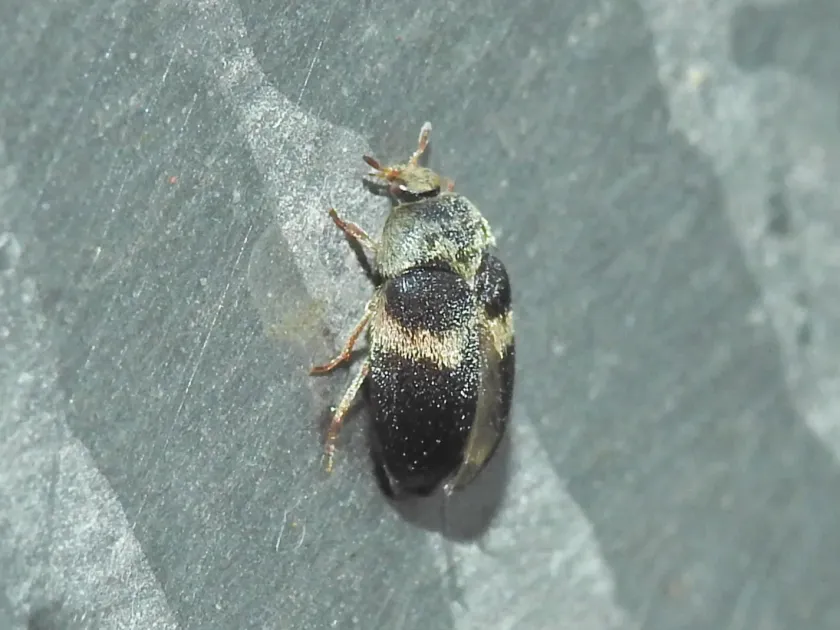
Attagenus fasciatus belongs to the order Coleoptera and the family Dermestidae. Adult beetles are small, typically ranging from 3 to 5 mm in length, and possess an oval body shape.
The insect's coloration is dark brown to black, featuring a distinctive light-colored transverse band across the elytra, which serves as a primary identification feature.
The larvae are spindle-shaped and covered with dense, stiff bristles. A characteristic tuft of long hairs at the posterior end of the larva is a key diagnostic indicator for this species.
The life cycle includes complete metamorphosis: egg, larva, pupa, and adult. Adult beetles are capable of flight, which facilitates their rapid spread within storage facilities and warehouses.
The developmental rate is highly temperature-dependent, with warm conditions significantly shortening the time required for the transition from larva to adult.
What it damages
Attagenus fasciatus is a significant pest of both plant and animal-derived stored products. It poses a substantial threat to stored pulses, cereal grains, and processed grain products.
Within warehouse environments, this beetle infests animal feeds, flour, and cereals. Larvae are known to penetrate soft packaging materials, causing physical damage to storage containers.
Beyond plant-based products, these beetles can feed on protein-rich materials such as dried fish, meat concentrates, wool, and leather goods, threatening mixed-stock facilities.
The larval stage is the most destructive, as they use their developed mouthparts to consume the grain contents, leaving behind only the outer husks mixed with frass and excrement.
Infested grain lots suffer from decreased germination rates and reduced quality, leading to significant economic losses for agricultural producers and storage managers.
When it appears
As a stored-product pest, Attagenus fasciatus remains active throughout the year, provided that storage facilities maintain moderate to high temperatures.
In unheated warehouses, population growth peaks during the spring and summer months when rising ambient temperatures trigger the emergence of adults from overwintering sites.
The full developmental cycle from egg to adult usually takes between 3 to 5 months, though this period may be extended under cooler conditions.
Females oviposit directly into the substrate, ensuring that emerging larvae have immediate access to nutrients required for their rapid development.
Adult dispersal is most pronounced during warmer weather, as beetles exploit ventilation ducts, structural cracks, and doorways to infest new grain supplies.
Signs of infestation
Initial signs of infestation often include the visual presence of adult beetles on floors, walls, or the surface of stored grain, especially during evening hours.
The presence of cast larval skins (exuviae) is a reliable indicator of infestation, as larvae shed these skins periodically, accumulating them in corners and crevices.
Grain piles may show accumulations of "flour dust," fine frass, and hollowed-out grains that exhibit irregular feeding damage characteristic of dermestid larvae.
Packaging materials such as cloth bags may show small, round holes, confirming the activity of larvae boring through the fabric to reach the food source.
A distinct musty odor in storage rooms, caused by the collective metabolic activity of a large larval population, often signals an advanced stage of infestation.
Control measures
Effective management begins with strict sanitation, including the thorough cleaning of storage areas and removal of debris before introducing new grain loads.
Maintaining low grain moisture and cooling the storage environment are crucial strategies to limit the reproductive rate and developmental speed of the pest.
In cases of confirmed infestation, fumigation of grain bulk using phosphine-based products is the standard procedure to eliminate all developmental stages of the beetle.
Deploying pheromone-based monitoring traps assists in tracking adult beetle populations, allowing for precise timing of chemical treatments and minimizing pesticide usage.
- Thorough warehouse sanitation and debris removal.
- Storage of grain under cool and dry conditions.
- Fumigation of infested grain lots.
- Use of pheromone traps for population monitoring.
Taxonomy
- Latin name
- Attagenus fasciatus
- Order
- Coleoptera (beetles)
- Family
- Dermestidae
- EPPO code
- ATTGFA
Discussion
No discussions yet — be the first.