
Cecropia moth
Attacus cecropia
Description
How to identify
The Cecropia moth (Hyalophora cecropia) is a member of the Saturniidae family, order Lepidoptera. It is recognized as North America's largest native moth species.
The adult moth is large with a wingspan of up to 6 inches, featuring intricate patterns of reddish, brown, and white colors, although they do not feed as adults.
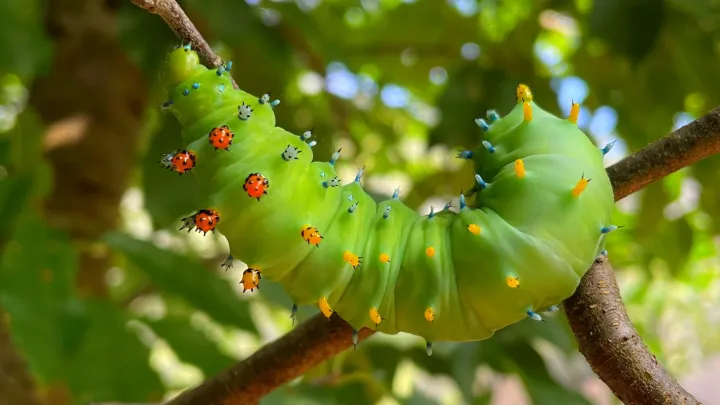
The larvae go through five stages, known as instars. In the final stage, the caterpillar is large, green, and adorned with colorful, spiky tubercles.
The species has a single annual generation, overwintering as a pupa protected within a tough, silk-spun cocoon attached to the host tree branches.
This life history makes them highly visible during the pupal stage, as the cocoons persist on twigs throughout the dormant winter months.
What it damages
The Cecropia caterpillar is a generalist feeder that consumes the foliage of various trees, including apple, plum, cherry, maple, and birch.
Damage is primary caused by the larvae, which consume large quantities of leaf tissue to support their rapid growth and eventual pupation.
While a few caterpillars are rarely devastating to mature trees, significant populations can cause localized defoliation and impact plant vigor.
Young nursery stock is particularly susceptible to damage, where larval feeding can lead to stunted growth and loss of aesthetic or market value.
Feeding activity is most destructive during the late larval stages when the caterpillars reach their maximum size and nutritional requirements.
Signs of infestation
The most distinctive sign of infestation is the presence of large, elongated silken cocoons securely attached to the twigs of host plants.
Large, jagged notches on leaf margins or completely stripped branches during late summer indicate active caterpillar feeding in the canopy.
Dark, cylindrical frass (excrement) found on leaves or the ground beneath the tree is a clear indicator of larval presence.
Observing the large, bright-colored larvae during their active feeding period is possible, as they are not cryptic in their late instars.
- Durable cocoons attached to tree twigs
- Significant defoliation of branches
- Presence of large larval droppings
Control measures
Manual removal of cocoons during winter is the most effective cultural control method, as it prevents the next generation from emerging.
Encouraging natural predators such as birds, parasitic wasps, and flies helps to maintain the population at non-damaging levels naturally.
For smaller trees or localized infestations, hand-picking the large caterpillars is a simple and non-toxic way to reduce damage.
Biological insecticides, specifically those containing Bacillus thuringiensis, can be used if larval populations become problematic and require intervention.
Avoid broad-spectrum chemical pesticides to protect beneficial insects, focusing instead on integrated pest management practices to maintain garden balance.
Discussion
No discussions yet — be the first.