
Himalayan conehead
Atractomorpha himalayica
Description
How to identify
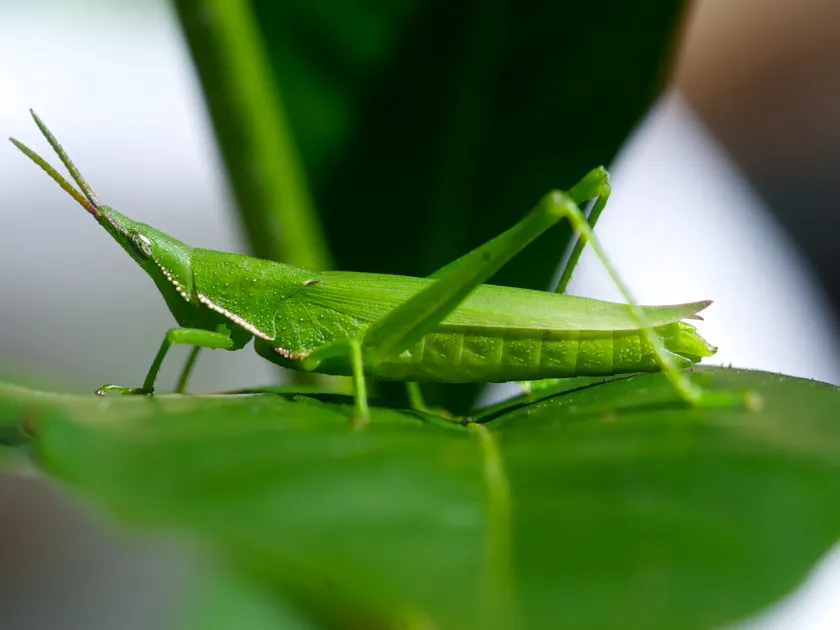
The Himalayan conehead (Atractomorpha himalayica) is a member of the Pyrgomorphidae family within the order Orthoptera. It is recognized by its distinctly elongated, cone-shaped head.
Adult specimens typically exhibit green or brown coloration, providing excellent camouflage against vegetation. The females are notably larger than the males in this species.
A key morphological feature includes the structure of the pronotum and the mandibles, which are specialized for chewing tough plant tissues found in their habitat.
Unlike migratory locusts, this species tends to be more solitary and sedentary, often found hiding near the base of plants or within dense foliage during the heat of the day.
The life cycle proceeds through gradual metamorphosis: egg, nymph, and adult. Nymphs resemble miniature versions of adults but lack functional wings, gradually developing them through successive molts.
What it damages
As a polyphagous insect, the Himalayan conehead feeds on a broad range of plant species, including vegetables, cereals, and legumes in mountainous agricultural regions.
The pest primarily damages leaves and tender shoots. By consuming the leaf lamina, the insect reduces the photosynthetic area, which significantly impacts the overall growth and vitality of the host plant.
In cases of high infestation, the coneheads can cause severe defoliation, leading to stunted plant growth and a substantial decrease in crop yield quality and quantity.
Beyond vegetative parts, adults and older nymphs may feed on developing flowers and buds, preventing proper fruit or seed set, which directly affects the harvestable output.
The damage severity is often correlated with environmental conditions, as hot and dry seasons tend to favor the reproduction and feeding activity of this specific grasshopper species.
Signs of infestation
The most common sign of infestation is irregular, ragged feeding marks on the edges of leaves. Unlike lepidopteran larvae, these marks are often uneven and scattered across the plant.
Visible scarring or grazing on the epidermis of stems and petioles indicates the presence of the pest, often leading to weakened stems that may bend or collapse under stress.
During the early morning or late afternoon, one might spot the insects resting on the underside of leaves or deep within the canopy, where they rely on their camouflage to avoid detection.
The accumulation of granular fecal matter on the leaf surfaces or at the base of the plant is a strong indicator of recent feeding activity by the Himalayan conehead.
Withered or yellowing sections of foliage, occurring without obvious soil-borne pathogen symptoms, often point to localized feeding by this pest throughout the canopy.
Control measures
Cultural control is the first line of defense, focusing on rigorous weed management to eliminate alternative host plants and overwintering sites for the nymphs.
Deep plowing of the soil during the off-season effectively destroys egg pods, reducing the potential population density for the upcoming planting cycle significantly.
Biological control options, including the application of entomopathogenic fungi or bacteria, offer a sustainable alternative to broad-spectrum chemical pesticides in integrated pest management programs.
Chemical intervention should be reserved for scenarios where economic thresholds are exceeded, utilizing insecticides compatible with local environmental regulations and target crop safety.
- Regular monitoring and field scouting during peak activity periods.
- Implementation of crop rotation to break the pest's life cycle.
- Use of physical barriers or light traps on small-scale farms.
Discussion
No discussions yet — be the first.