
Athetis lepigone
Athetis lepigone
Description
How to identify
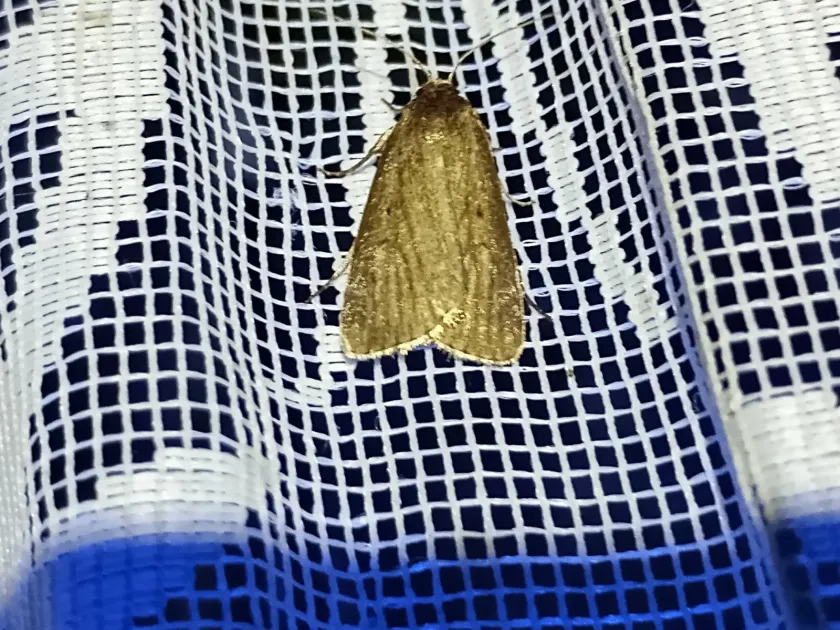
Athetis lepigone is a moth species belonging to the Noctuidae family. The adult moth typically has a wingspan of approximately 28–32 mm.
The forewings exhibit a grayish-brown pattern with distinct transverse lines, providing excellent camouflage against soil and plant debris.
The larvae are typically brownish-gray with dark longitudinal stripes, allowing them to remain hidden while feeding on host plants.
Pupation occurs in the soil or within plant residues, where the insect remains protected during the winter months.
Adult moths are primarily nocturnal, showing little activity during the day and preferring to hide in secluded, shaded areas.
What it damages
This species is a known polyphage, meaning it feeds on a wide range of agricultural crops, particularly cereal grains and various row crops.
The larvae feed on leaves, creating irregular holes and consuming plant tissues, which can severely impact the plant's photosynthetic capacity.
In cases of high infestation levels, the larvae can damage stems and young shoots, leading to stunted plant growth and significant yield loss.
The pest is capable of spreading rapidly across fields, utilizing both crops and associated weeds as reliable food sources throughout the season.
Early-stage damage to young plants is particularly critical, as it can reduce plant stands and negatively affect the overall field uniformity.
When it appears
The development cycle of Athetis lepigone typically consists of two generations per year, depending on regional temperature and climate.
The emergence of the first generation of adults usually occurs in late spring or early summer, coinciding with the early growth stages of crops.
The second generation appears later in the season, with larvae actively feeding before entering the pupal stage for the winter.
Environmental conditions, particularly warm and humid summers, significantly influence the population dynamics and reproductive success of this moth.
The entire growth season requires careful monitoring, as overlapping generations can maintain continuous pressure on the agricultural fields.
Signs of infestation
Visible damage to foliage, such as irregularly shaped holes and skeletal remains of leaves, is a primary indicator of larval feeding activity.
Presence of larval excrement on the leaf surface or around the base of the plant serves as a clear sign of an ongoing infestation.
Visual inspection of the soil near the base of plants during the day may reveal hiding larvae, as they seek protection from sunlight.
Wilted or damaged stems are also a sign of severe larval activity, indicating that the population level has reached a critical threshold.
Using pheromone traps is an effective diagnostic tool for farmers to confirm the presence of Athetis lepigone and track adult moth flights.
Control measures
Crop rotation remains the most effective long-term strategy for reducing the buildup of Athetis lepigone populations in agricultural soil.
Deep autumn plowing is a recommended cultural practice that disrupts the pupation cycle and reduces the survival rate of the overwintering generation.
Weed management is crucial, as removing wild host plants prevents the moth from establishing and feeding outside of the main crop cycle.
Chemical control with registered insecticides should be applied when population thresholds are exceeded, preferably during the evening hours.
Integrating biological control agents or Bacillus-based biopesticides can help manage populations sustainably while preserving beneficial insect species.
Taxonomy
- Latin name
- Athetis lepigone
- Order
- Lepidoptera (butterflies)
- Family
- Noctuidae
- EPPO code
- ATTSLE
Discussion
No discussions yet — be the first.