
Athetis moth
Athetis
Description
How to identify
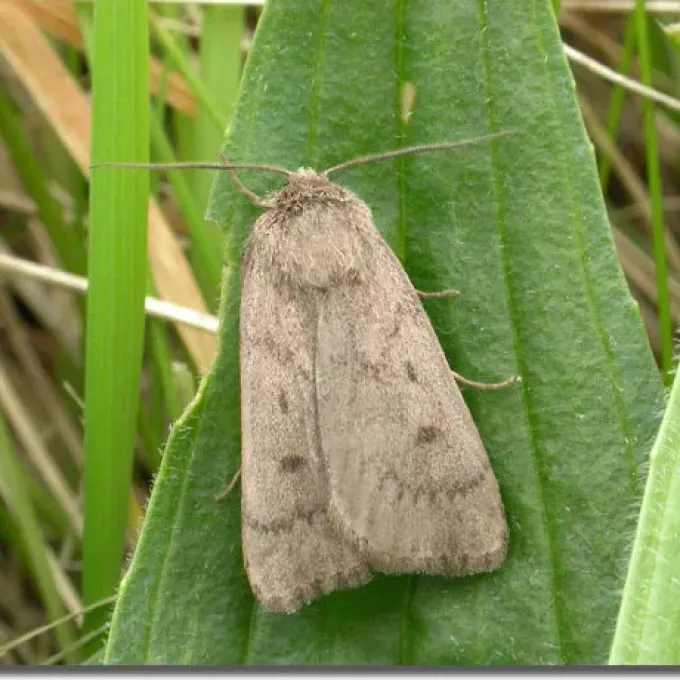
The Athetis moth (genus Athetis) belongs to the Noctuidae family, commonly known as owlet moths. The adult stage consists of relatively small, inconspicuous moths with a wingspan of approximately 25–30 mm. Their coloration typically mimics the soil or dry plant litter, providing effective camouflage.
Larvae, or caterpillars, are the primary stage of concern for growers. They possess a soil-toned, brownish-grey body with longitudinal markings. Their habit of feeding at night and hiding in the soil or at the base of plants during the day makes early detection difficult.
The life cycle involves four stages: egg, larva, pupa, and adult. Hibernation usually takes place in the soil at a depth of 10–15 cm, where larvae or pupae survive the winter. This subterranean behavior protects them from extreme frost and sudden temperature fluctuations.
Adult moths emerge in spring when temperatures become suitable. Females lay eggs in clusters on the undersides of leaves or directly onto the soil surface near preferred host plants. This strategic placement ensures that larvae can access food immediately upon hatching.
Depending on regional climates, these moths can produce multiple generations per year. Peak infestation often occurs in mid-to-late summer, coinciding with the active growth stages of many popular vegetable and ornamental crops.
What it damages
Athetis species are polyphagous, meaning they feed on a diverse array of plants. Their host range includes various vegetable crops like tomatoes, peppers, and cucumbers, as well as field crops and certain flowering garden plants.
Early-instar larvae typically skeletonize leaves, consuming the leaf tissue while leaving behind a network of veins. This behavior reduces the plant's photosynthetic capacity, causing stunted growth and lower vigor, which can negatively impact the final yield.
Later larval stages consume entire leaf sections and may migrate to reproductive parts of the plant. They frequently damage flower buds, blossoms, and developing fruit, leading to significant loss of commercial value and opening wounds for secondary infections.
A particularly damaging habit is the feeding on the plant stem at the soil line. By severing the vascular tissue of young seedlings, these larvae cause the plants to wilt rapidly and eventually die, leading to reduced stand density and economic losses.
Wounds caused by larval feeding are highly susceptible to secondary pathogens. Bacteria and fungi often infiltrate these feeding sites, causing soft rot or blight symptoms that further destroy the plant tissue beyond what the insect itself consumed.
Signs of infestation
The first sign of an Athetis infestation is the presence of irregular holes in the lower leaves. Because larvae feed at night, the sudden appearance of leaf damage in the morning without seeing the culprit is a strong indicator of nocturnal pests.
Small, dark, pellet-like frass (droppings) near the base of plants is a key diagnostic sign. Finding these droppings on the soil surface confirms that caterpillars are feeding nearby and are likely hiding just beneath the soil crust during the day.
Wilting plants that appear healthy in the evening but collapse by morning are a classic sign of stem-cutting larvae. Gently uncovering the soil around the base of the wilted plant will often reveal the caterpillar coiled in a resting position.
Using light traps is a highly effective way to detect the presence of adult moths in the area. Early detection of the adult flight period allows farmers to prepare their defense strategies before the next generation of larvae hatches.
Checking the underside of leaves and fruit calyxes can reveal the presence of eggs. Eggs are usually laid in clusters and can be identified as small, translucent, or yellowish spheres that darken slightly as they approach hatching.
Control measures
Cultural control is the foundation of management for Athetis. Deep plowing in autumn exposes overwintering pupae and larvae to frost and natural predators, such as birds and ground beetles, effectively reducing the population for the next season.
Sanitation is equally important. Removing crop debris and managing weeds around the field eliminates secondary food sources and daytime hiding spots for the caterpillars. This makes the environment less conducive to their survival and reproduction.
Biological controls, such as the application of Bacillus thuringiensis (Bt) or releasing natural egg parasitoids like Trichogramma wasps, can provide effective and environmentally friendly suppression of the pest population.
When infestation levels exceed the economic injury threshold, chemical intervention may be required. Insecticides should be applied during the evening when the larvae are actively feeding on the surface, ensuring higher efficacy and less impact on beneficial insects.
- Monitor adult activity using pheromone or light traps.
- Practice crop rotation to disrupt the life cycle.
- Avoid over-fertilization, as succulent tissue attracts more pests.
- Ensure proper irrigation to maintain plant health and vigor.
Taxonomy
- Latin name
- Athetis
- Order
- Lepidoptera (butterflies)
- Family
- Noctuidae
- EPPO code
- ATTSSP
Discussion
No discussions yet — be the first.