
Oleander scale
Aspidiotus hederae
Description
How to identify
The Oleander scale (Aspidiotus hederae) is a member of the Diaspididae family, which are armored scale insects known for their protective coverings.
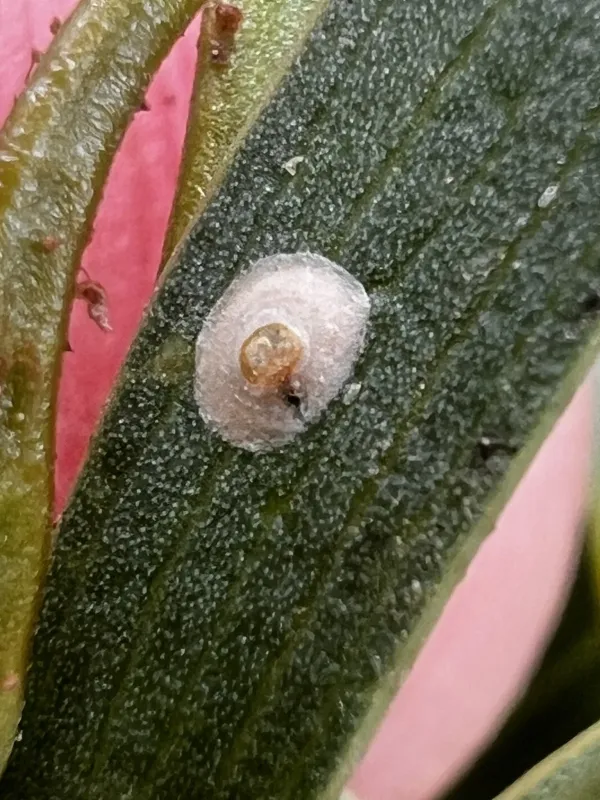
The female scale is roughly circular or oval, measuring about 1.5 to 2 millimeters in diameter, and possesses a grayish-white to light brown waxy shield.
The insect body underneath the scale is soft, pear-shaped, and usually bright yellow, which is characteristic of this particular species.
Male scales are significantly smaller and have wings, allowing them to fly and mate, while the females remain permanently attached to the host plant.
This species is found worldwide, especially in warmer climates, and is often reported as a major pest in greenhouses and nursery environments.
What it damages
Oleander scale is a polyphagous pest, meaning it attacks a wide variety of plants, ranging from oleanders and palms to various ivy and citrus species.
The pest uses its specialized mouthparts to extract sap from plant tissues, which disrupts the normal nutrient flow within the plant.
Heavy infestations result in leaf chlorosis, which presents as yellow spotting, followed by stunted growth and eventual leaf drop if not managed.
On fruit-bearing plants, the insects settle on the skin of the fruit, causing unsightly blemishes that reduce the market quality and shelf life.
Severe cases can weaken the plant to the point where it becomes susceptible to secondary infections, viruses, or environmental stress.
When it appears
In temperate zones, the life cycle of Aspidiotus hederae is strictly tied to indoor or greenhouse conditions where it breeds year-round.
Outdoors in subtropical regions, the pest can undergo multiple overlapping generations depending on the temperature and host availability.
The developmental stages include the egg, the crawler (first instar larva), the nymph, and the adult, with the crawler being the only mobile stage.
Crawlers usually emerge in the spring and move to new feeding sites on the same or adjacent plants, often aided by wind or animal contact.
Because generations overlap, all life stages of the insect may be present on the host plant at the same time, complicating treatment schedules.
Signs of infestation
The most prominent sign of infestation is the presence of hard, bump-like structures on the foliage, stems, and fruits of the plant.
Yellowing leaves or sections of foliage that appear dull and dehydrated despite adequate watering are strong indicators of a scale problem.
In many cases, the plant may show reduced vigor, and in severe infestations, twigs or entire small branches may die back.
Lack of sticky honeydew is a diagnostic feature that helps distinguish armored scales, like Aspidiotus hederae, from soft scale insects.
Observing a persistent, sandpaper-like texture on the bark or leaf undersides often confirms a large colony of the scale insect.
Control measures
Mechanical control is effective for small-scale infestations; this involves gently scrubbing the scales off using a soft brush dipped in a mild soapy solution.
Systemic insecticides, particularly those containing neonicotinoids, can be applied to the soil or foliage to effectively kill the feeding insects.
Horticultural oils or neem oil-based products are excellent options, as they work by suffocating the insects through the armored shell.
Regular monitoring and physical isolation of new or symptomatic plants are crucial strategies to prevent the scale from spreading through a greenhouse.
Biological control, utilizing parasitic wasps or predatory beetles, can be integrated into management programs to minimize the need for chemical intervention.
Discussion
No discussions yet — be the first.