
Argyrogramma signata
Argyrogramma signata
Description
How to identify
Argyrogramma signata is a species of moth belonging to the order Lepidoptera and the family Noctuidae. It is recognized as an agricultural pest in various regions where it affects diverse botanical hosts.
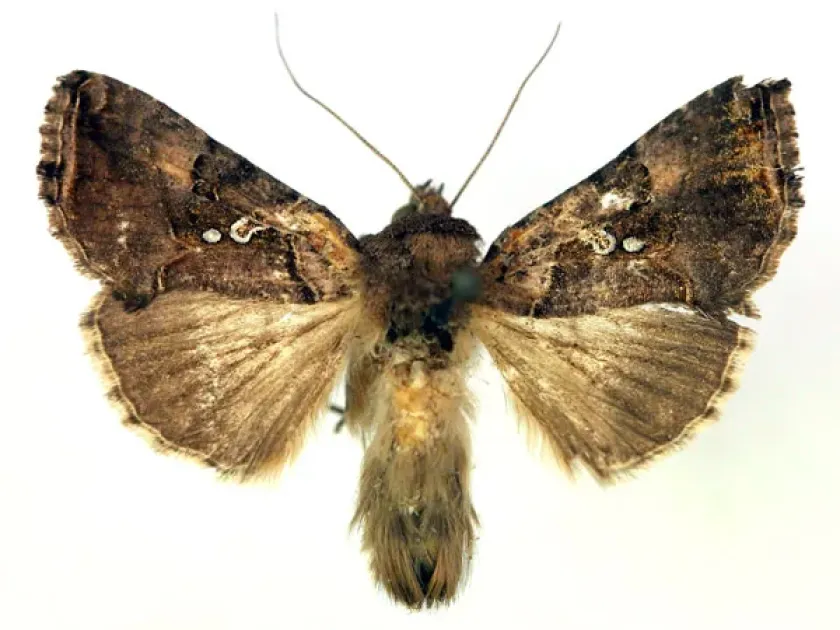
The adult moth is characterized by forewings that exhibit a distinct pattern with metallic, often silvery or golden, patches. This shiny appearance is a hallmark of the subfamily Plusiinae to which it belongs.
The larvae are typically green in color, allowing them to blend into the foliage of their host plants. Their movement is unique, often described as a looping gait due to the arrangement of their prolegs.
Pupation occurs within a loose silken cocoon, which the larva constructs on the underside of a leaf or near the base of the plant. The duration of each developmental stage is heavily influenced by ambient temperature and humidity.
The life cycle consists of the egg, larva, pupa, and adult stages. Under favorable conditions, multiple generations can occur within a single growing season, leading to rapid population growth.
What it damages
Argyrogramma signata is a polyphagous insect, meaning it feeds on a wide range of vegetable, legume, and ornamental crops. It is highly adaptable and can transition between different host plants as the season progresses.
Larval feeding is the primary cause of damage. Young larvae begin by creating small holes in the leaf tissue, while older larvae consume larger portions of the lamina, leading to severe defoliation.
Heavy infestations can result in the skeletonization of leaves, where only the major veins remain. This drastic reduction in photosynthetic surface area severely stresses the plant and stunts its overall growth.
The physical damage caused by larval feeding often acts as an entry point for secondary pathogens, including bacteria and fungi, which can exacerbate the decline of the affected plants.
In addition to foliage damage, the presence of these larvae can reduce the marketability of crops by affecting the overall vigor and quality of the produce, which is particularly critical for leafy vegetables.
Signs of infestation
The most evident sign of an infestation is the appearance of irregular holes in the leaves. These patterns often start in the lower and mid-canopy sections of the plant where the moths prefer to lay eggs.
The accumulation of frass (larval excrement) on the upper surface of leaves or on the ground below the plant serves as a clear indicator of active feeding by the larvae.
Careful inspection of the underside of leaves usually reveals the presence of larvae. They are often stationary during the hottest parts of the day and become more active as light levels decrease.
The presence of fine, silken cocoons attached to the plant indicates the pupal stage. This serves as a warning that the next generation of adult moths will soon emerge to continue the cycle.
Stunted plant growth, yellowing of leaves, or general wilting without apparent drought stress can also be secondary signs that an infestation has reached a level that impacts plant health.
Control measures
Monitoring using pheromone traps is highly recommended to detect the arrival of adult moths. This data allows growers to time insecticide applications precisely for the most vulnerable larval stages.
Integrated pest management strategies include maintaining clean fields by removing weeds that may serve as alternative food sources or shelter for the pest between growing seasons.
Chemical control should be employed only when thresholds are exceeded, utilizing selective insecticides that target the larvae while preserving beneficial predatory insects within the ecosystem.
Biological control agents, such as microbial insecticides based on Bacillus thuringiensis, are effective and environmentally friendly options for managing early-instar larvae without harmful residue.
Encouraging natural enemies, including parasitoid wasps and predatory bugs, can help regulate populations of Argyrogramma signata naturally, reducing the need for intensive chemical interventions.
Taxonomy
- Latin name
- Argyrogramma signata
- Order
- Lepidoptera (butterflies)
- Family
- Noctuidae
- EPPO code
- PYTOSI
Discussion
No discussions yet — be the first.