
Argyrogramma
Argyrogramma
Description
How to identify
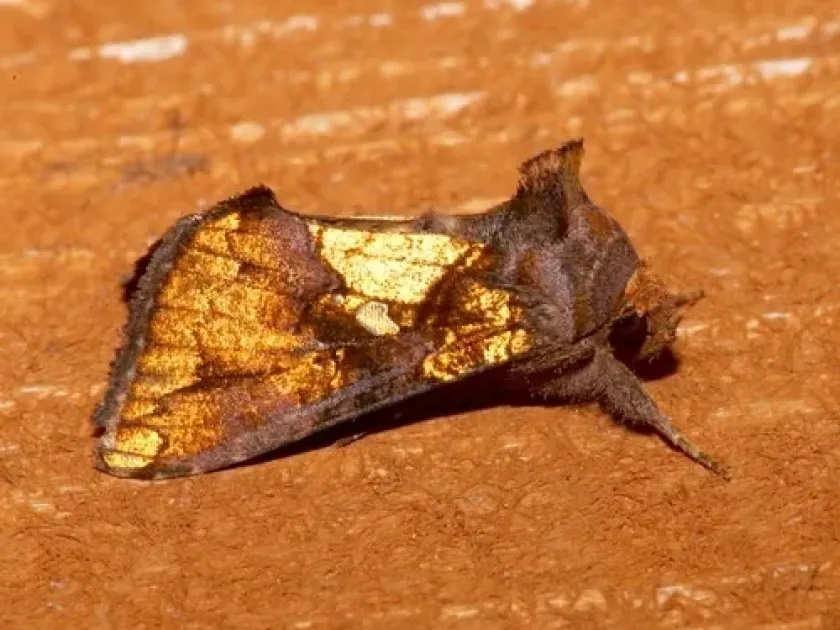
Argyrogramma is a genus of moths belonging to the family Noctuidae (cutworms and loopers). These insects are recognized by their nocturnal habits and the distinctive metallic or silver-colored markings on their forewings, which serve as a camouflage mechanism.
The larvae, commonly known as loopers, are characterized by their green, cylindrical bodies and a specific movement pattern where they arch their backs to move forward. They possess a well-developed head capsule and chewing mouthparts for intensive feeding.
The life cycle follows a complete metamorphosis: egg, larva, pupa, and adult moth. The pupal stage is often protected within a loose silken cocoon, which is typically found attached to the underside of host plant leaves or within debris.
Environmental factors such as temperature and humidity significantly influence the developmental rate of Argyrogramma. In warm climates, they can complete multiple generations per season, leading to potential outbreaks during the peak of the growing period.
Overwintering usually occurs in the pupal stage, buried in the soil or hidden within plant residues. This adaptation allows the species to survive low winter temperatures and emerge in the spring to initiate the next generation.
What it damages
Argyrogramma species are polyphagous, meaning they feed on a broad range of plant species. Common host crops include soybeans, sunflowers, legumes, and various vegetables, making them a significant pest in agricultural production.
The larvae are the primary cause of damage, especially in their intermediate and late larval instars. They feed aggressively on leaf tissue, starting with skeletonization and eventually consuming the entire leaf blade.
During heavy infestations, the feeding pressure can lead to severe defoliation of the crop. This loss of photosynthetic area directly impacts plant growth, reduces biomass accumulation, and ultimately leads to lower crop yields.
In addition to direct tissue consumption, the feeding activity disrupts the plant's physiological integrity. The damaged leaf surfaces are more susceptible to secondary pathogens, including various fungal and bacterial infections.
Economic damage is most pronounced when the population density exceeds the threshold, requiring timely intervention to prevent complete destruction of the crop canopy and subsequent yield losses.
Signs of infestation
Early signs of an infestation include the appearance of tiny, translucent "windows" on the undersides of leaves, caused by young larvae scraping away the surface tissue while leaving the epidermis intact.
The presence of small, dark, granular frass (excrement) on the leaves below the feeding sites is a key diagnostic feature indicating the recent activity of the larvae in that part of the canopy.
Silk webbing may be observed where the larvae are feeding. They use these threads to anchor themselves to the plant or to fold leaf edges to create protected refuges against predators and harsh environmental conditions.
Larvae are often elusive, remaining hidden on the undersides of leaves or deep within the plant canopy during the day. Inspecting these shaded areas is essential for accurate population assessment.
Yellowing, localized wilting, or ragged leaf margins that continue to expand are clear indicators of larval feeding. If left unchecked, these symptoms quickly progress as the larvae mature and increase their food intake.
Control measures
Integrated pest management (IPM) for Argyrogramma starts with consistent field monitoring. Using pheromone traps is highly effective for detecting the arrival of adult moths and tracking population trends.
Cultural practices, such as deep autumn plowing, are highly effective as they disturb the soil and expose overwintering pupae to predators and adverse weather, significantly reducing the pest population for the next season.
Biological control agents, including parasitic wasps like Trichogramma or microbial insecticides containing Bacillus thuringiensis, provide effective management options that are environmentally friendly and safe for beneficial insect populations.
Chemical control should be applied strictly based on the economic injury level. It is crucial to rotate insecticides with different modes of action to delay the development of resistance in the pest population.
Maintaining clean fields by removing weeds that act as alternative hosts is another vital step in minimizing the establishment of Argyrogramma colonies within the main crop fields.
Taxonomy
- Latin name
- Argyrogramma
- Order
- Lepidoptera (butterflies)
- Family
- Noctuidae
- EPPO code
- ARGGSP
Discussion
No discussions yet — be the first.