
Apple bud moth
Argyresthia cornella
Description
How to identify
The apple bud moth (Argyresthia cornella) is a small lepidopteran insect belonging to the family Yponomeutidae, often referred to as the ermine moth family.
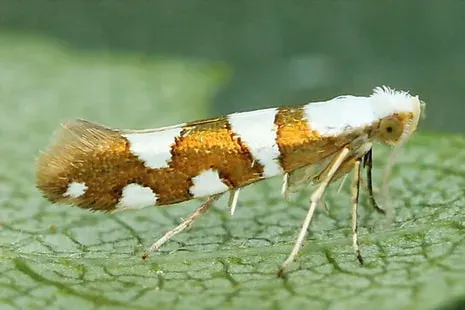
Adult moths are quite small, typically with a wingspan ranging from 10 to 12 mm. Their forewings are usually a golden-brown or yellowish color with distinct dark patterns.
The larvae are spindle-shaped and grow up to 6-8 mm in length. They are typically light green or yellowish with a darker head capsule and thoracic shield.
The life cycle includes the egg, larva, pupa, and adult stage. The species overwinters as eggs placed near the buds of host plants.
The moth is recognized primarily by its specialized feeding behavior on the buds of apple and related fruit tree species during the spring season.
What it damages
The primary hosts of this pest are apple trees, though it may occasionally attack pears and other plants within the Rosaceae family.
The larvae cause significant damage by boring into the swelling buds in early spring, consuming the internal tissues before the leaves or flowers can develop.
Buds that have been infested often dry out and fail to open, resulting in stunted growth or the total loss of the fruit-bearing potential of those specific buds.
High population densities of the moth can severely affect the structural development of the tree and lead to reduced harvest volume in commercial orchards.
In cases of severe infestation, the loss of early shoots can weaken the entire tree, making it more susceptible to environmental stress and secondary diseases.
When it appears
The larval activity commences in early spring, strictly synchronized with the phenological stage of bud break and swelling in apple trees.
The most critical period for plant protection is in April, when larvae actively feed inside the expanding buds during the green-tip growth stage.
After completing their larval stage, the caterpillars move to pupate, which usually occurs in the soil or within crevices on the tree bark.
Adult moths emerge during the summer months, mate, and deposit their eggs near the buds, where they will remain dormant throughout the autumn and winter.
Warmer spring weather tends to accelerate the development of the larvae, potentially increasing the severity of damage to the host trees.
Signs of infestation
The earliest sign of an infestation is the presence of small, granular frass (insect excrement) on the exterior of the developing buds.
Infested buds appear unhealthy compared to neighboring buds; they may be shriveled, brown, or show signs of incomplete growth due to internal damage.
Upon closer inspection, such as dissecting a suspected bud, one may find the larva itself or evidence of internal tunneling and fine silk webbing.
A lack of new foliage growth at the tips of shoots in the spring often serves as a late-stage indicator of previous bud infestation.
Orchardists should conduct regular surveys during the early spring to detect these symptoms before the damage becomes widespread across the trees.
Control measures
Managing the apple bud moth requires a combination of monitoring, biological practices, and the strategic application of chemical control agents.
Dormant oil sprays applied before bud break are effective at reducing the population of overwintering eggs located on the tree bark.
During the active larval feeding phase, systemic insecticides are the most effective method to reach the pests hidden inside the bud tissues.
- Regular orchard sanitation by removing infested plant material.
- Encouraging natural predator populations like birds and beneficial insects.
- Using pheromone traps for monitoring moth flight timing.
Integrated Pest Management (IPM) practices, including proper tree pruning and canopy management, are essential for long-term population control.
Discussion
No discussions yet — be the first.