
Blue rose sawfly
Arge cyanella
Description
How to identify
The blue rose sawfly (Arge cyanella) is a member of the Hymenoptera order, family Argidae. The adult insect is characterized by a distinctive metallic blue or bluish-black body, typically measuring around 10 mm in length.
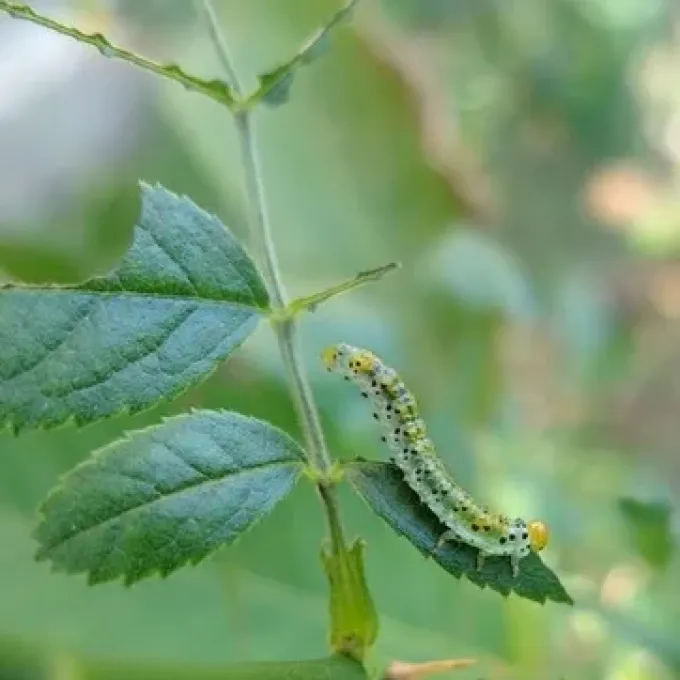
Larvae of this species are often confused with moth caterpillars but can be distinguished by the number of abdominal prolegs. They typically display a yellowish-green body with small dark spots for camouflage.
The life cycle involves complete metamorphosis, consisting of egg, larval, pupal, and adult stages. The female uses a saw-like ovipositor to insert eggs into the tissues of rose stems or petioles.
Overwintering occurs as mature larvae inside cocoons, which are typically found within the top layer of soil or sheltered near the base of the host plant.
Depending on climatic conditions, the sawfly can complete multiple generations per year, leading to prolonged infestation periods throughout the growing season.
What it damages
The primary hosts for the blue rose sawfly are plants belonging to the Rosaceae family, particularly cultivated roses and wild rose species (Rosa spp.), which suffer from defoliation.
Signs of infestation
Typical signs of infestation include irregular holes or scalloped edges on the leaves, as larvae feed along the margins of the foliage.
In cases of heavy infestation, plants may show signs of stunted growth or twisted stems resulting from the larval feeding on terminal shoots and buds.
Oviposition scars appear as small, brownish, or raised slits on young stems, which can sometimes lead to localized tissue necrosis or shoot deformity.
Frass (larval droppings) left on the foliage is a primary visual indicator that the pests are actively feeding on the plant during the day or night.
The loss of photosynthetic area due to leaf damage weakens the plant overall, making it more susceptible to environmental stress and opportunistic diseases.
Control measures
Cultural control practices, such as removing debris and lightly cultivating the soil around the base of rose bushes, can effectively destroy overwintering cocoons.
Physical removal is highly effective in small gardens; carefully inspecting plants and hand-picking larvae or pruning infested shoots can keep populations under control.
When infestation levels are high, targeted applications of systemic or contact insecticides are necessary to prevent severe defoliation of the rose bushes.
Encouraging natural predators, such as parasitic wasps and birds, provides a balanced ecosystem that helps manage sawfly numbers naturally.
- Prune and destroy stems containing egg clusters.
- Apply systemic insecticides during the peak larval stage.
- Ensure adequate plant nutrition to improve resistance.
Discussion
No discussions yet — be the first.