
Fen Wainscot
Arenostola phragmitidis
Description
How to identify
The Fen Wainscot (Arenostola phragmitidis) is a moth belonging to the Noctuidae family. It is a specialized species primarily found in wetland habitats and reed beds.
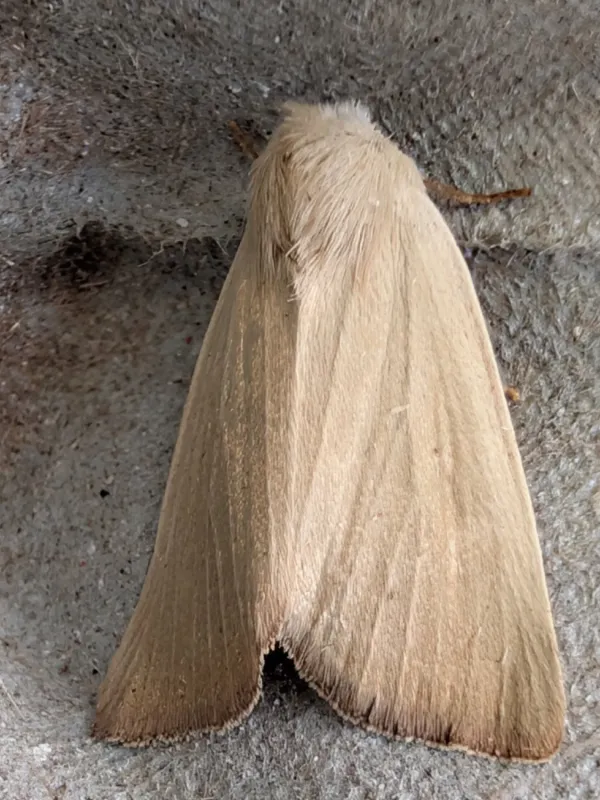
The adult moth has a wingspan of approximately 30–35 mm. Its forewings are ochre-yellow with indistinct brownish markings, while the hindwings are a lighter, whitish-grey color.
The larva (caterpillar) grows up to 40 mm in length. It features a pale, whitish body with a dark-colored head, which is typical for stem-boring noctuid larvae.
This species is univoltine, meaning it completes only one generation per year, with its life cycle strictly synchronized with the growth of its host plants.
The moth is nocturnal, and because of its coloration, it is well-camouflaged against the stems of reeds, making it difficult to detect during daylight hours.
What it damages
The larvae of the Fen Wainscot are specialized feeders on common reed (Phragmites australis). They bore into the stems of the plants to feed on the internal tissues.
While primarily affecting wild reeds, the moth can pose a risk to cultivated grains or energy crops grown in reclaimed wetlands or areas adjacent to infested marshes.
The boring activity destroys the inner vascular tissues, which prevents the plant from transporting water and nutrients, leading to the yellowing and death of the stem.
Larval feeding creates entry points that often become infected by secondary fungi or bacteria, causing further degradation of the plant tissue.
Severe infestations can lead to a significant reduction in biomass, which can be detrimental in cases where the vegetation is utilized for industrial or forage purposes.
When it appears
Adult moths are typically on the wing from July to August. During this period, mating occurs, and females lay eggs on the host plants.
The species overwinters primarily in the egg stage. Hatching occurs in early spring, coinciding with the rapid growth phase of the reed stalks.
The larval stage is the period of maximum damage, extending throughout the spring and into early summer as the caterpillars feed inside the growing stems.
Pupation takes place within the hollowed-out stem of the host plant, providing the pupa with protection against environmental hazards and predators.
The developmental rate of the larvae is heavily dependent on ambient spring temperatures and moisture levels within the reed bed ecosystem.
Signs of infestation
The most noticeable sign of an infestation is the premature wilting or yellowing of the central leaf of the reed shoot, often referred to as a "dead heart."
Close inspection of the lower stem will reveal small boreholes made by the larvae, often accompanied by frass (larval excrement) around the entry point.
Upon splitting the stem, a clear tunnel can be observed, indicating the movement of the caterpillar within the shoot structure.
Stems affected by the Fen Wainscot become brittle and often snap under pressure, leading to an irregular, damaged appearance of the entire reed stand.
The presence of the larvae themselves within the stem, particularly in late spring, is the definitive sign of the species' activity.
Control measures
Cultural control is the most effective approach, involving the clearing of old reed stalks and invasive wild grasses during the dormant winter season to destroy eggs.
Maintaining clear buffers between commercial crops and marshlands can prevent the spread of the pest into agricultural production areas.
Biological control using Bacillus thuringiensis sprays can be applied in spring during the early larval stage to mitigate damage before the caterpillars bore deep into the stems.
Chemical intervention is generally discouraged in natural habitats but may be considered for border protection if the infestation reaches critical economic thresholds.
Monitoring populations using light traps during the adult flight period helps in assessing the severity of the infestation and timing potential control measures.
Taxonomy
- Latin name
- Arenostola phragmitidis
- Order
- Lepidoptera (butterflies)
- Family
- Noctuidae
- EPPO code
- AREOPH
Discussion
No discussions yet — be the first.