
Arenostola
Arenostola
Description
How to identify
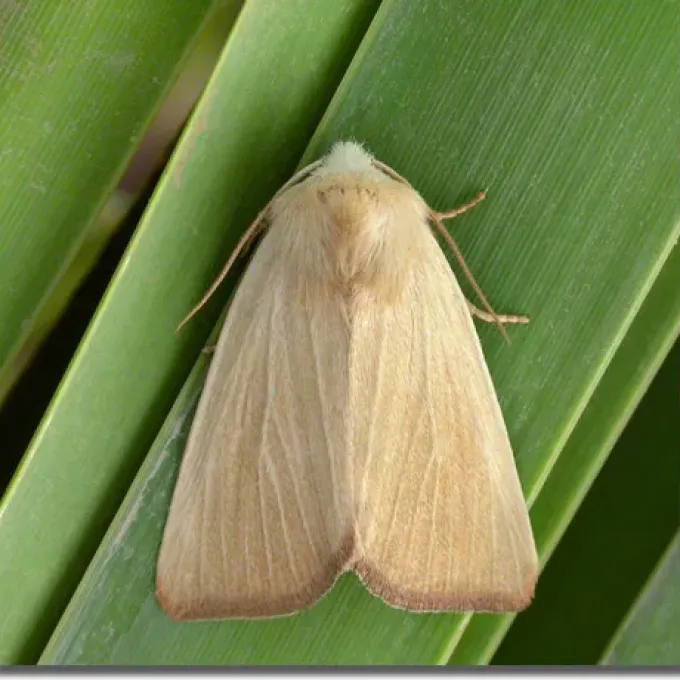
Arenostola is a genus of moths belonging to the family Noctuidae (cutworms and owlet moths). Adult moths are of medium size, typically characterized by pale, ocherous-yellow, or brownish forewings with faintly marked cross-lines.
The larvae (caterpillars) of this genus have cylindrical bodies, usually yellowish or off-white, which allows them to remain concealed inside plant stems. They possess well-developed mouthparts adapted for active boring into plant tissues.
The life cycle undergoes complete metamorphosis, including egg, larva, pupa, and adult stages. Overwintering usually occurs at the egg stage, with eggs deposited by females on host plants or plant debris.
The most active flight period for adults occurs during the summer months. Species identification often requires examination of genitalia due to the high morphological similarity among various members of the genus.
Arenostola species prefer humid habitats, frequently appearing along field edges, near water bodies, and in low-lying areas where their wild host grasses thrive.
What it damages
This pest specializes in attacking monocots, particularly wild and cultivated cereals. The primary damage is caused by the larvae, which are stem-boring pests that remain hidden throughout their development.
Crops at risk include wheat, barley, rye, and various perennial grasses, as well as reeds commonly found in agricultural ecosystems.
Larvae penetrate the stem and consume the pith (center), which damages the plant's vascular bundles and interrupts nutrient flow to the upper parts of the plant.
Damaged stems stop growing, and in cases of high infestation, the central leaf dies, leading to the eventual wilting of the entire ear or panicle, significantly reducing overall yield.
Beyond direct crop destruction, the tunnels bored inside the stems provide an entry point for various fungal and bacterial infections, further compromising crop health.
Signs of infestation
The first sign of infestation is the yellowing and wilting of the central leaf, which eventually turns whitish and can be easily pulled out from the leaf sheath.
Upon inspecting the stem, one may notice small entrance holes created by the larvae, as well as frass (excrement) accumulating at the base of the stem or on the leaf blades.
In cases of mass outbreaks, the crop may appear thin with distinct patches where plants look stunted, underdeveloped, or have completely died.
When splitting a stem vertically, one can often find the larva itself actively feeding on the tissues or observe the remnants of its activity in the form of a hollowed-out stem center.
The appearance of adult moths near light traps in the evening serves as a key indicator of the start of the flight period, signaling the need for field monitoring.
Control measures
The primary control measure involves thorough agronomic practices, including the removal of weeds during the off-season and deep plowing of fields after harvest.
Implementing a proper crop rotation strategy helps disrupt the pest's life cycle, preventing annual re-infestation of the same plots where larvae may have overwintered.
Insecticide applications are most effective during the larval hatching period, before they bore deep into the stem tissues and become protected from contact sprays.
The use of systemic insecticides is recommended, as these can penetrate plant tissues to reach and eliminate the larvae feeding within the stems.
- Routine monitoring of adult moth populations using pheromone or light traps.
- Timely chemical treatment of crops according to pesticide application regulations.
- Clearing field borders and verges of wild grasses that serve as reservoirs for the pest.
Taxonomy
- Latin name
- Arenostola
- Order
- Lepidoptera (butterflies)
- Family
- Noctuidae
- EPPO code
- AREOSP
Discussion
No discussions yet — be the first.