
Spruce tortrix
Archips piceana
Description
How to identify
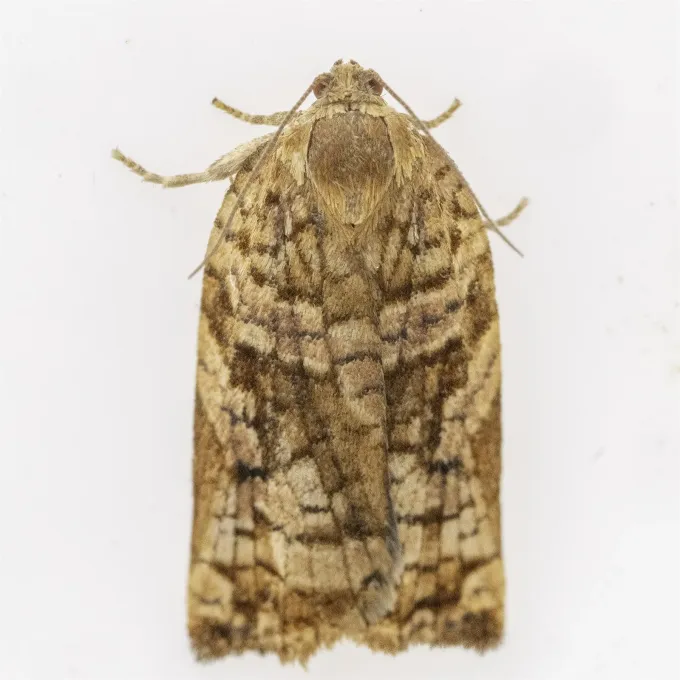
The spruce tortrix (Archips piceana) belongs to the Tortricidae family and the Lepidoptera order. The adult moth typically has a wingspan of 20–25 mm, with forewings displaying mottled brown or greyish patterns that provide excellent camouflage against coniferous bark.
The larvae are approximately 15–20 mm long, featuring a greenish or greyish body and a dark head capsule. They are known for their habit of spinning silk to bind needles together, which serves as a protective larval chamber during their development.
What it damages
This moth primarily targets spruce, fir, and occasionally pine species. The larvae feed on new needles and buds, which significantly stunts the growth of the tree and can lead to severe crown thinning if the infestation is heavy.
The damage caused by Archips piceana results in chlorosis, needle drop, and the death of young shoots. In commercial forests and nurseries, this can lead to reduced tree vigor, making them susceptible to secondary pests like bark beetles or pathogens.
Extensive feeding activity destroys the tree's photosynthetic capacity, which is detrimental to younger trees. Without intervention, a large population of spruce tortrix can cause noticeable aesthetic and economic damage to ornamental plantings and Christmas tree farms.
When it appears
The spruce tortrix typically completes one generation per year. It overwinters as a young larva in a small silken hibernaculum hidden deep within the bark crevices of the host tree, allowing it to survive winter conditions.
In spring, as the spruce buds begin to swell, the overwintered larvae emerge to feed. They move rapidly to the tender buds and young needles, where they construct their silk nests. This phase is critical as the larvae grow quickly during the warm spring weather.
Signs of infestation
The most visible sign of an infestation is the presence of silk-webbed needle clusters. The caterpillars pull needles together, creating a messy webbed nest that is often filled with larval frass and debris.
When inspecting the trees, look for brownish, skeletonized needles and partially eaten buds. If the tree is heavily infested, the outer crown will appear sparse, discolored, or "scorched" due to the loss of foliage caused by the feeding larvae.
Control measures
Effective management begins with early detection. Regular scouting of the canopy during the late spring months is essential to identify nests before they reach high density levels, allowing for targeted intervention.
Chemical control involving systemic insecticides is the most effective approach for large infestations. These products are absorbed by the plant, ensuring that the larvae, which are hidden within their silken structures, ingest the toxin.
Biological control using Bacillus thuringiensis sprays is a preferred, environmentally friendly option. Additionally, implementing good silvicultural practices, such as maintaining tree health and removing dead or heavily infested branches, can help reduce the local population of the pest.
Discussion
No discussions yet — be the first.