
Twin-spotted wainscot
Archanara geminipuncta
Description
How to identify
The Twin-spotted wainscot (Archanara geminipuncta) is a moth belonging to the Noctuidae family, known for its specific habitat requirements in wetland areas.
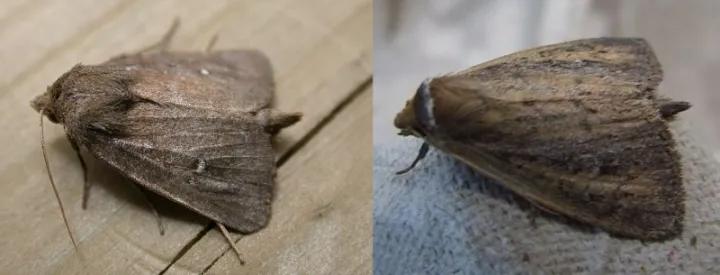
Adult moths have a wingspan ranging from 35 to 40 mm, with distinct ocher-brown forewings featuring two white spots, which is the main diagnostic feature.
The hindwings are generally lighter, with a grayish-brown hue, and the body is covered in dense hair-like scales typical of the wainscot moths group.
The larvae, or caterpillars, grow up to 40 mm in length and exhibit a pale yellowish-white color with a dark brown head and prominent dorsal plates.
Pupation occurs internally within the hollow stems of reeds, providing the insect with a stable microclimate and protection against environmental stress.
What it damages
This species primarily targets common reed (Phragmites australis), but it may also affect other tall grasses found in moist agricultural environments.
The damage is caused by the larvae, which bore into the stems and consume the internal tissues, effectively hollowing out the plant from within.
Feeding often results in the death of the main shoot, causing the plant to wither and preventing the development of the terminal inflorescence.
Heavy infestations can lead to significant localized destruction of reed beds, which may have cascading effects on the surrounding plant community structure.
While not a major pest for commercial grain crops, it can impact biomass production and the overall health of wetland ecosystems or forage grass stands.
When it appears
Adult moths are typically active during late summer, specifically appearing between August and September, which constitutes their main mating season.
Eggs are laid in batches, usually hidden under the leaf sheaths of host plants, where they successfully overwinter until the following spring.
Larval emergence generally begins in May, coinciding with the rapid growth of reed shoots, providing the young caterpillars with fresh, nutritious tissue.
The larval development stage spans several months, with the insects moving between stems to satisfy their nutritional requirements as they grow.
Pupation takes place mid-summer, and the life cycle is strictly univoltine, meaning there is only one generation of this moth produced per year.
Signs of infestation
The most recognizable sign of an infestation is the premature wilting or yellowing of the reed's terminal leaves and the flower spike.
Close observation of the stems reveals small, circular entry holes where the larva bored into the plant, often accompanied by frass accumulation.
If a damaged stem is split open, one will find internal galleries bored vertically along the central axis of the plant, often filled with larval waste.
Affected plants are significantly weaker, display stunted growth, and lack the vigor of surrounding non-infested reeds in the immediate vicinity.
In areas of high density, large patches of the reed bed may appear thin or brown, indicating a widespread population of feeding larvae.
Control measures
Mechanical control, such as cutting and burning reed stems in late autumn or winter, is highly effective for destroying overwintering egg clusters.
Proper water management in drainage ditches can alter the habitat, making it less suitable for the development of both the eggs and the larvae.
Biological control methods involve supporting local populations of parasitic wasps and other natural enemies that prey on the moth's larvae and eggs.
Chemical intervention should be avoided in wetland areas to protect aquatic biodiversity, opting for environmentally friendly biological alternatives if necessary.
Monitoring adult populations using light traps helps in determining the timing and scale of potential outbreaks, allowing for timely preventative actions.
Taxonomy
- Latin name
- Archanara geminipuncta
- Order
- Lepidoptera (butterflies)
- Family
- Noctuidae
- EPPO code
- ARKAGE
Discussion
No discussions yet — be the first.