
Apina callisto
Apina callisto
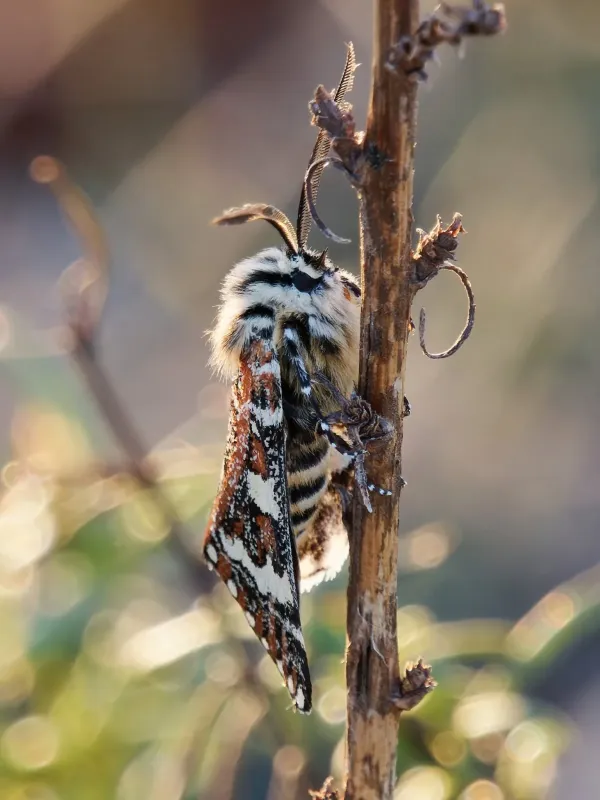
Description
How to identify
Apina callisto is a moth species belonging to the family Noctuidae, often recognized as a significant defoliator in specific regions, particularly in Australia.
The adult moth is typically dark-colored with distinctive markings on the wings, which help it blend into the environment during the day.
The larval stage, or caterpillar, is characterized by vibrant colors, serving as an aposematic signal to predators that the insect is unpalatable or toxic.
As a member of the Lepidoptera order, its life cycle follows a complete metamorphosis: egg, larva, pupa, and adult moth.
Identification is primarily achieved through observing the larvae on the host plants or by identifying the moth during its flight period at night.
What it damages
The primary hosts of this pest include various species from the Liliaceae family, particularly plants belonging to the Bulbine and Phormium genera.
Caterpillars feed extensively on the foliage, often resulting in complete skeletonization of the leaves and destruction of the plant's aesthetic value.
Heavy infestations lead to stunted growth and, in severe cases, the complete death of the plant due to the loss of photosynthetic area.
Secondary infections often take hold at the sites of larval feeding, especially if the weather is humid and prone to fungal growth.
Commercial growers of ornamental plants suffer significant economic losses when foliage is damaged, rendering the crops unsuitable for sale.
When it appears
The seasonal appearance of this pest is strongly linked to the spring and summer growth cycles of its host plants.
Adult moths generally emerge from their overwintering pupae once local temperatures remain consistently warm throughout the night.
Multiple generations can occur within a single year, provided that the climate remains favorable and food sources are abundant.
During the cooler months, the population survives in the pupal stage, typically buried within the soil or protected by debris.
Monitoring for egg-laying activity is most critical during the early weeks of the plant growth phase, just as the foliage matures.
Signs of infestation
Early symptoms include irregular holes along the leaf margins, which are characteristic of young caterpillar feeding patterns.
Frass (larval droppings) left behind on leaves or the surrounding soil is a clear indicator of recent pest activity.
As the infestation progresses, leaves may show significant tattered edges and yellowing due to the loss of tissue and stress.
Severe infestations reveal large, colorful caterpillars feeding openly on the plants, particularly during the cooler parts of the day.
In the final stages, plants may lose their structural integrity, with leaves drooping or collapsing entirely from severe damage.
Control measures
Mechanical removal by hand-picking caterpillars is effective for small gardens and helps to significantly reduce local populations.
Biological pesticides containing Bacillus thuringiensis provide an environmentally friendly option that targets the larvae specifically.
Chemical control involving broad-spectrum or selective insecticides should be applied only when thresholds are exceeded and infestation is high.
Soil cultivation during the off-season helps to disturb pupation sites, reducing the likelihood of emergence for the next cycle.
Using light traps allows for accurate monitoring of adult populations, ensuring that control measures are timed perfectly for maximum impact.
Taxonomy
- Latin name
- Apina callisto
- Order
- Lepidoptera (butterflies)
- Family
- Noctuidae
- EPPO code
- APINCA
Discussion
No discussions yet — be the first.