
Aphidius fabarum
Aphidius fabarum
Description
How to identify
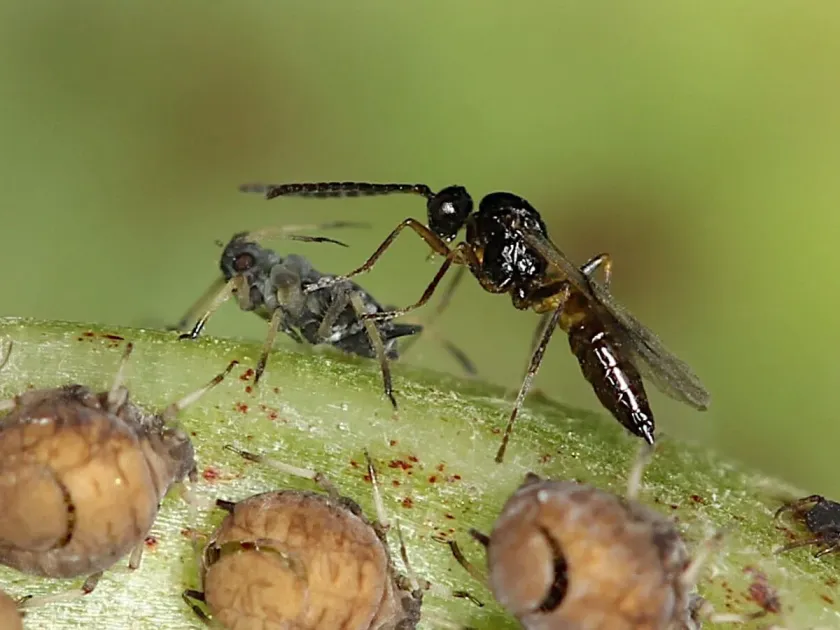
Aphidius fabarum is a species of parasitic wasp belonging to the family Braconidae. These insects are microscopic, typically measuring about 2 to 3 mm in length, with a slim, dark-colored body.
As endoparasitoids, they lead a specialized lifestyle. The adult female is highly efficient at locating aphid colonies using sensory receptors on its antennae to detect honeydew and volatile compounds.
The life cycle begins when the female deposits a single egg inside the body of a host aphid. This process is rapid, and one female is capable of parasitizing many aphids over its lifespan.
Morphologically, these wasps are adapted to navigate within dense aphid colonies. Their agility and size allow them to reach hosts efficiently, ensuring the survival of their offspring.
Unlike predators that consume multiple prey, Aphidius fabarum invests its energy in specific parasitism, making it a highly targeted agent for biological suppression.
What it damages
It is important to emphasize that Aphidius fabarum is not a pest; it is a beneficial organism. It causes no damage to crops and serves as a natural enemy to aphids.
The primary host for this wasp is the bean aphid (Aphis fabae), which frequently attacks legumes, sugar beets, and various ornamental plants, causing stunted growth and viral transmissions.
By parasitizing the aphids, the wasp effectively reduces the population pressure on the crops. The larvae consume the aphid from the inside, preventing the host from reproducing.
This natural control method prevents the exponential population growth of aphids, which is a major concern in commercial vegetable and field crop production.
Using this parasitoid as part of an integrated pest management strategy helps maintain a healthy ecological balance, reducing the economic impact of aphid infestations.
When it appears
The emergence of Aphidius fabarum typically coincides with the arrival of the first aphid infestations in the spring. They are highly attuned to the phenology of their hosts.
Throughout the growing season, multiple generations of the wasp are produced. The duration of each generation is highly dependent on ambient temperature and host availability.
The peak activity period occurs during moderate temperatures. Extreme heat can temporarily suppress their activity, but they are resilient and recover quickly when conditions improve.
As the season draws to a close, the parasitoids prepare for dormancy. They typically overwinter as pupae within the mummified remains of the host aphids, often in crop debris.
Agronomic planning must account for these seasonal cycles, particularly when scheduling field maintenance to ensure the survival of overwintering populations.
Signs of infestation
The most distinctive sign of Aphidius fabarum presence is the formation of aphid "mummies." These are dead aphids that have turned a hardened, light-brown or straw-like color.
The mummies are often bloated compared to healthy aphids. Upon close inspection, you may observe small, circular exit holes, which indicate that a new adult wasp has emerged.
Reduced honeydew secretion is another indicator of successful parasitism. Because the parasitized aphids stop feeding shortly after being stung, the plant health often improves.
A noticeable decline in the number of live aphids within a colony suggests the successful establishment of the parasitoid population. This is a sign for growers to avoid unnecessary chemical applications.
Monitoring for these mummies provides an accurate assessment of the natural control occurring in the field without the need for sophisticated equipment.
Control measures
To maximize the benefits of Aphidius fabarum, agricultural practices must prioritize the conservation of beneficial insects through reduced chemical usage.
- Utilize selective insecticides that target specific pests without harming parasitoids.
- Plant floral borders to provide nectar sources for adult wasps, increasing their lifespan.
- Avoid over-cleaning fields in autumn, as overwintering populations rely on crop residues.
- Implement regular field scouting to identify parasitism levels before applying any control measures.
Integrating biological control agents like Aphidius fabarum into modern farming systems creates a sustainable approach to crop protection and long-term soil and ecosystem health.
Discussion
No discussions yet — be the first.