
Rustic shoulder-knot
Apamea sordens
Description
How to identify
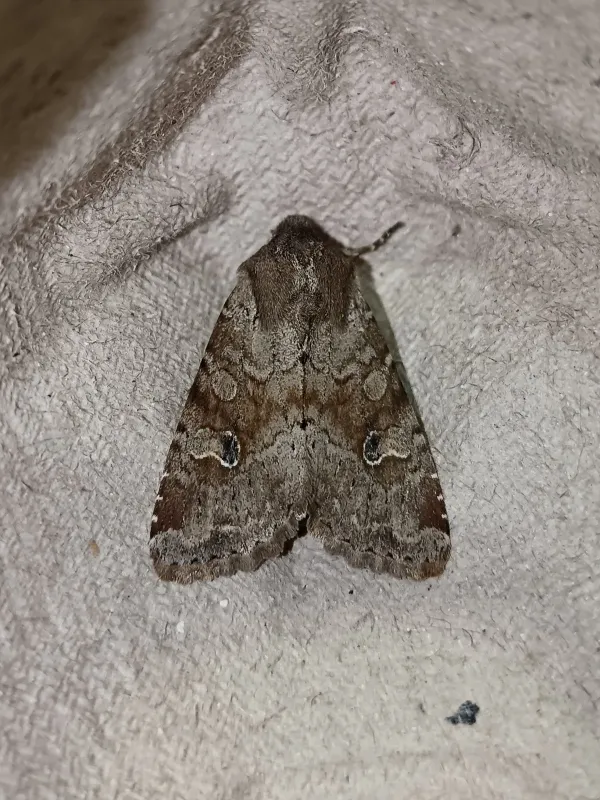
The Rustic shoulder-knot (Apamea sordens) belongs to the order Lepidoptera, family Noctuidae. The adult moth has a wingspan of up to 40 mm and is characterized by its brownish-grey coloration with complex patterns on the forewings.
The larvae, or caterpillars, reach lengths of 30-40 mm. They are generally earthy grey or brownish-yellow with three light dorsal stripes and short bristles covering their bodies, which are key diagnostic features.
The pupae are dark brown, shiny, and approximately 20 mm long. They are located in the soil at a depth of 3 to 8 cm, where the transformation into an adult occurs during late spring.
This species typically completes one generation per year. Older larvae overwinter in the upper soil layers or beneath plant debris, emerging in the spring to complete their development.
Adult moths are nocturnal, spending the day hidden in dense vegetation or soil crevices. Their flight activity is most intense during the early summer months, often coinciding with the heading stage of cereals.
What it damages
The primary hosts for this pest are cereal crops, including winter wheat, barley, rye, and oats. It is considered a significant pest in intensive grain farming regions.
While cereals are preferred, the larvae can also feed on maize, millet, and various wild grass species that serve as alternative hosts throughout the season.
In the early vegetative stages, caterpillars feed on leaves, leaving ragged edges or holes. This damage reduces the overall photosynthetic capacity of the young plants.
As the larvae grow, they shift their focus to the stems and developing heads. By boring into the stalks, they damage the plant's vascular tissue, leading to stunted growth or total death of the tiller.
In severe infestations, the cumulative damage can result in significant yield losses and lower grain quality due to the formation of empty or partially filled ears.
When it appears
The flight period of adult moths occurs from late May through June. Monitoring flight peaks is crucial for timing potential insecticide applications.
Females lay eggs on the undersides of leaves in small batches. A single female can produce several hundred eggs during her lifespan, ensuring high reproductive potential.
The embryonic stage lasts roughly 8 to 12 days, depending on environmental temperatures. Upon hatching, the young larvae immediately begin feeding on the host tissue.
By late summer, the larvae move into the soil to enter a state of diapause. This overwintering behavior is a defensive mechanism against cold temperatures and harsh winter conditions.
Spring activity resumes once soil temperatures rise, usually aligning with the tillering phase of winter cereals, which makes the crops particularly vulnerable to early-season damage.
Signs of infestation
Early signs of an infestation include the appearance of irregular, chewed patches on the leaves of young cereal plants, often visible upon close inspection.
Damage to the stem manifests as wilting or yellowing of the central leaf, which eventually turns brown as the stem dies from the internal feeding of the larva.
The presence of whiteheads, where the grain head remains bleached and empty, is a common indicator of stem damage caused by the larvae during the reproductive stage.
Frass (larval excrement) found at the base of the plant or in the soil near the damage site is a definitive sign of active feeding by the caterpillars.
In larger infestations, the patches of damaged plants expand rapidly, creating noticeable gaps or thin areas within the field, which can be observed from a distance.
Control measures
Effective management begins with cultural practices, particularly deep autumn plowing (stubble cultivation), which destroys the overwintering larvae and pupae in the soil.
Crop rotation is vital; avoiding successive plantings of cereals on the same ground helps disrupt the pest's life cycle and prevents population buildup.
Chemical control is most effective when applied at the stage of the first and second larval instars, before the pests burrow into the stems where they are protected from insecticides.
Regular field scouting and the use of pheromone traps allow agronomists to determine the precise timing for intervention based on flight dynamics and egg-laying activity.
- Use of systemic insecticide seed treatments to protect young seedlings.
- Biological control through the application of Bacillus thuringiensis during the early vegetative phase.
- Maintaining field borders free of weeds that could host the pest population.
Taxonomy
- Latin name
- Apamea sordens
- Order
- Lepidoptera (butterflies)
- Family
- Noctuidae
- EPPO code
- PARIBA
Discussion
No discussions yet — be the first.