
Dark Arches
Apamea monoglypha
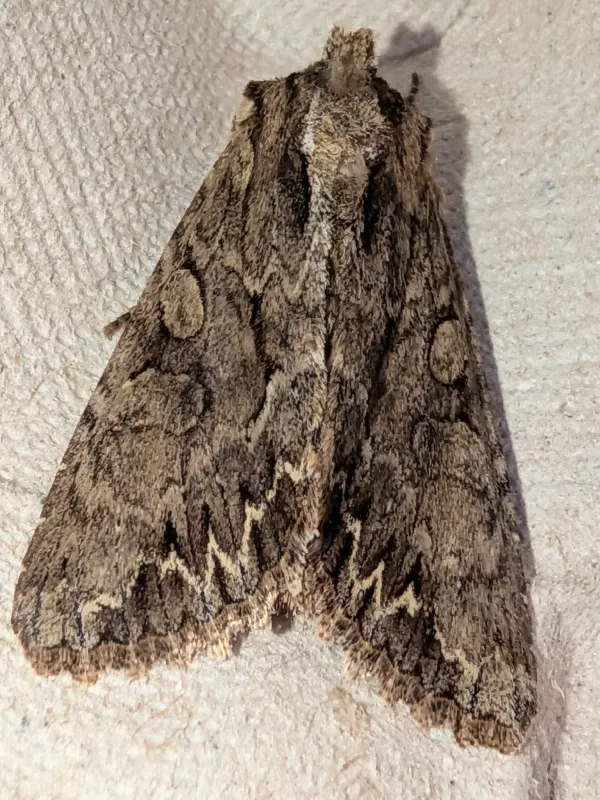
Description
How to identify
The Dark Arches (Apamea monoglypha) is a moth belonging to the family Noctuidae within the order Lepidoptera. Adult moths typically have a wingspan of approximately 45–50 mm.
The forewings are characterized by a mottled grey-brown or dark brown color with distinct darker markings and wavy lines, providing excellent camouflage against soil and tree bark.
The larvae, known as caterpillars, can reach lengths of up to 50 mm. They possess a greyish or brownish body with three distinct pale lines running along the back and a shiny, dark-brown head capsule.
The life cycle consists of four distinct stages: egg, larva, pupa, and adult. They typically overwinter as partially grown larvae within the soil or deep inside the base of grasses.
Adult moths are nocturnal, remaining hidden during the day and becoming active at dusk. They are attracted to light, which makes monitoring with light traps a common practice for population assessment.
What it damages
This pest primarily affects cereal crops such as winter and spring wheat, rye, barley, and oats. In some instances, it may also attack various wild grass species in pastures.
Larval feeding activity occurs at night. The caterpillars cut through the stems near the root crown or consume the inner tissues of the developing stems, leading to stunted growth or plant death.
Heavy infestations can result in significant thinning of crop stands, potentially leading to substantial yield losses if not managed during the early stages of plant development.
The larvae are opportunistic feeders, often surviving on the roots and lower stems of common weeds when crop density is low, which sustains the pest population in the field.
Signs of infestation include wilting or yellowing of individual shoots or entire plants, which may initially be mistaken for drought stress or root disease, complicating early detection.
Control measures
Effective control starts with deep autumn plowing (tillage), which disrupts the soil structure and exposes overwintering larvae to predators and unfavorable environmental conditions.
Maintaining clean fields by removing wild grasses and weeds is crucial, as these plants serve as alternative hosts and reservoirs for the pest population throughout the season.
Chemical control using insecticides should be applied based on economic thresholds, targeting the early larval stages before significant damage to the crop occurs.
Implementing crop rotation is a highly effective strategy to break the life cycle of the pest, as it prevents the continuous availability of preferred host plants for successive generations.
Integrated pest management includes the preservation and augmentation of natural enemies, such as parasitic wasps (ichneumonids), which can significantly reduce larval mortality rates in the field.
Taxonomy
- Latin name
- Apamea monoglypha
- Order
- Lepidoptera (butterflies)
- Family
- Noctuidae
- EPPO code
- PARIMO
Discussion
No discussions yet — be the first.